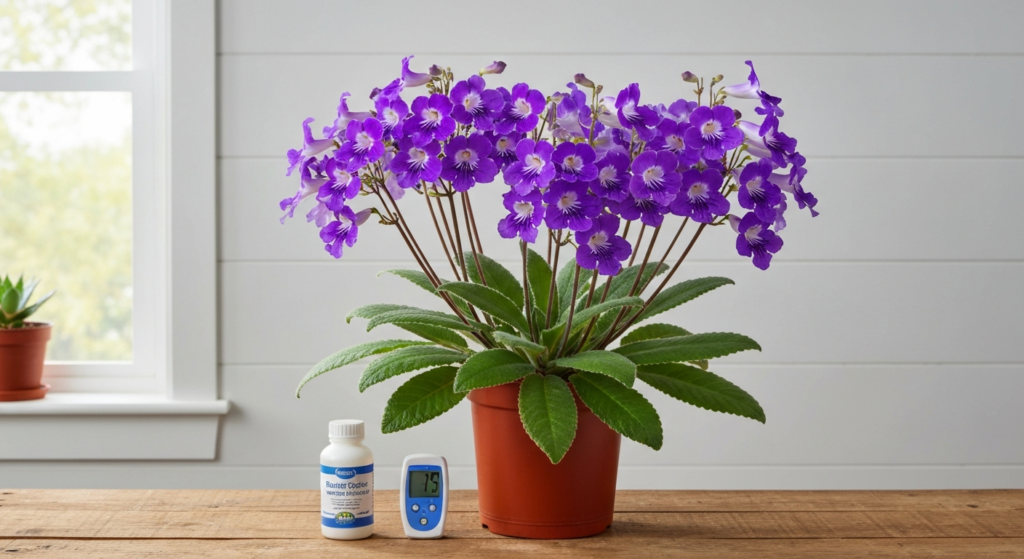

You bought a Streptocarpus because of those gorgeous trumpet-shaped flowers. But now? You’re staring at a plant with healthy leaves and maybe one or two lonely flower stalks. Meanwhile, the photo on the nursery tag showed dozens of blooms cascading over the pot.
Here’s what’s frustrating: Your plant isn’t sick. The leaves look fine. It’s just… not flowering like it should. You water it, give it light, and yet those multiple flower stalks everyone raves about refuse to appear.
The good news? Getting your Streptocarpus to pump out multiple flower stalks isn’t about luck or magic fertilizer. It’s about understanding what triggers bloom production and then giving your plant exactly those conditions. In this guide, I’ll walk you through the specific steps that actually work—from the right fertilizer ratios to the temperature tricks that signal “time to flower.”
I’m Darcey Wren, and I’ve been growing and writing about indoor flowering houseplants for years. My fascination with Streptocarpus started when a friend gave me a struggling plant that had one sad flower stalk. After researching African violet relatives and testing different growing methods, that same plant now produces 15-20 flower stalks at once. I’ve since propagated dozens of plants, experimented with various fertilizer schedules, and learned which conditions actually make a difference versus which advice is just repeated nonsense from online forums.
Understanding Streptocarpus Flowering Cycles
Streptocarpus plants don’t bloom randomly. Each flower stalk emerges from the base of a mature leaf, and here’s the important part: one healthy leaf can produce multiple flower stalks over time, but only under the right conditions.
Think of your plant as having an energy budget. When conditions are just right, it diverts resources into flower production. When something is off—wrong nutrients, poor light, or stable temperatures—it focuses on leaf growth instead.
Most healthy Streptocarpus plants can support 10-20 flower stalks simultaneously once they’re mature (typically 12-18 months old). Each stalk produces 4-8 flowers that open in succession over 3-4 weeks. But getting there requires hitting several specific triggers.
The plants originate from the Eastern Cape mountains in South Africa, where they grow in rocky areas with bright indirect light, consistent moisture, and temperature fluctuations between day and night. Replicating these conditions—especially the temperature variation—is what separates plants with continuous blooms from those that flower sporadically.
Light Requirements for Maximum Bloom Production
Streptocarpus needs bright indirect light to produce multiple flower stalks. Here’s what that actually means in your home:
Place your plant where it gets light from an east or west-facing window. East windows work best because the morning sun is gentler. If you only have south-facing windows, set the plant 3-4 feet back from the glass or use a sheer curtain to filter the afternoon sun.
I learned this the hard way when I kept a plant on a north-facing windowsill for six months. The leaves stayed healthy and green, but I got maybe three flower stalks total. After moving it to an east window, the plant produced eight new stalks within a month.
Light intensity directly affects how many flower buds form. Under low light, your plant may produce one or two stalks. Under optimal light, that same plant will generate 5-10 stalks from the same leaf bases.
Key light indicators:
- Leaves that are dark green and floppy: Not enough light
- Leaves that bleach yellow or show brown spots: Too much direct sun
- Medium green leaves that feel slightly firm: Perfect light levels
If natural light is limited, use a full-spectrum LED grow light positioned 12-18 inches above the plant. Run it for 12-14 hours daily. This setup works well for consistent year-round flowering.
The Right Fertilizer Makes All the Difference
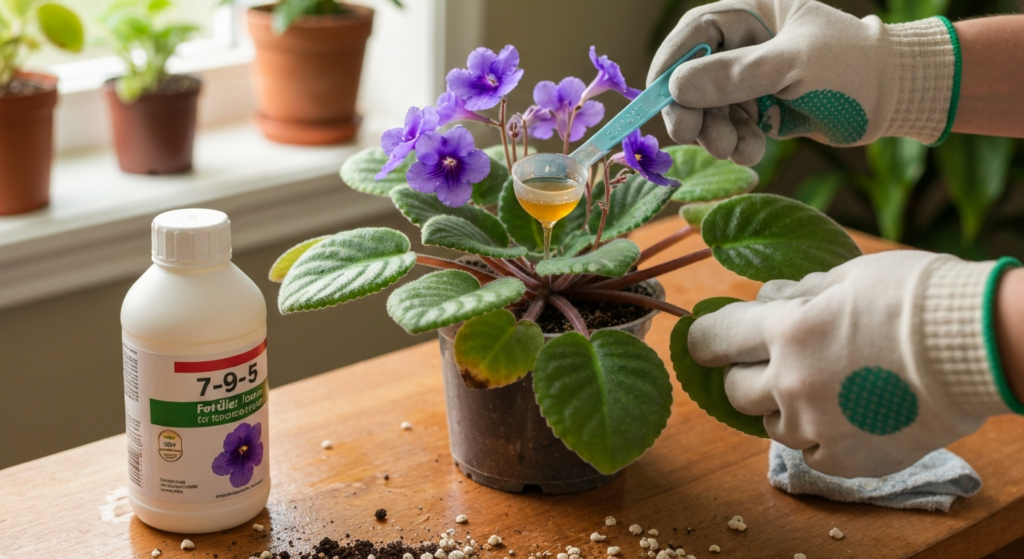
This is where most growers make mistakes. Streptocarpus needs different nutrients during growth phases versus flowering phases, and using the wrong fertilizer keeps your plant in “vegetative mode” instead of “flowering mode.”
NPK Ratios for Bloom Production
NPK stands for nitrogen-phosphorus-potassium, the three primary nutrients in fertilizer. The ratio matters more than most people realize.
During active growth (spring/early summer): Use a balanced fertilizer like 14-14-14 or 20-20-20 diluted to quarter strength. Apply every two weeks.
When you want flowers (summer through fall): Switch to a high-phosphorus formula. Look for ratios like 7-9-5 or 10-30-20. Phosphorus (the middle number) promotes bud formation and flower development.
Here’s a comparison of what different fertilizers do:
| Fertilizer Ratio | Primary Effect | When to Use | Result |
|---|---|---|---|
| 20-20-20 | Balanced growth | Early spring | Healthy leaves, moderate flowers |
| 7-9-5 | Bloom boost | Summer-fall | Multiple flower stalks |
| 10-30-20 | Maximum flowering | Peak bloom season | Heavy flower production |
| 5-10-5 | Gentle bloom support | Year-round | Steady flowering without stress |
I use a 7-9-5 African violet fertilizer (Streptocarpus is in the same family) diluted to half strength every week during growing season. This keeps flower production consistent without causing fertilizer burn.
Important: Always dilute more than the package recommends. Streptocarpus has sensitive roots that develop brown tips from excess salts. Quarter to half strength is safer than full strength.
Temperature Fluctuation: The Secret Trigger
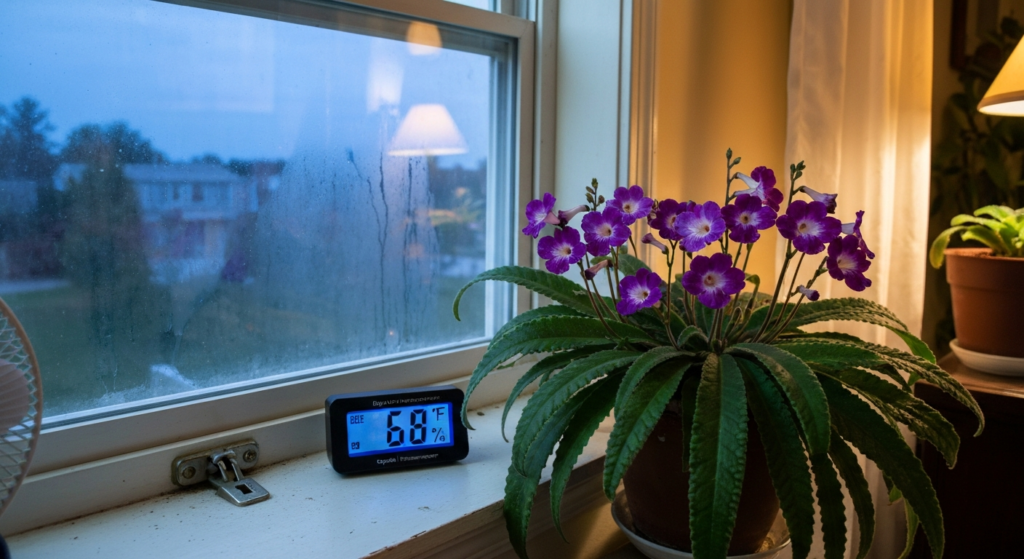
This is the tip that changed everything for my plants. Streptocarpus needs a temperature drop between day and night to trigger heavy flowering. Most indoor growers never hear this, which is why their plants stay in perpetual leaf-production mode.
Ideal temperature range:
- Daytime: 65-75°F (18-24°C)
- Nighttime: 55-65°F (13-18°C)
That 10-15 degree drop signals the plant to shift energy into reproduction (flowering) instead of just vegetative growth. In nature, this happens naturally as mountain temperatures cool at night.
How to create this at home:
- Keep the plant in a room that cools down at night (not a heated bedroom that stays 72°F constantly)
- Position it near a window where it feels the cooler glass temperature after sunset
- In summer, use a fan to circulate cooler evening air
- In winter, move the plant slightly away from heating vents at night
I keep my plants in a sunroom where daytime temps reach 72°F but drop to 60°F overnight. The flower production tripled compared to when they lived in my climate-controlled living room.
Avoid extreme cold though. Temperatures below 50°F damage the plant and cause flower buds to abort before opening.
Humidity Levels That Support Flowering
Streptocarpus needs moderate humidity to produce and maintain healthy flowers. Too dry, and buds abort or flowers shrivel quickly. Too humid, and you risk fungal issues.
Target range: 40-60% relative humidity
Most homes sit around 30-40% humidity, especially in winter with heating systems running. This isn’t quite enough for optimal flowering.
Signs your humidity is too low:
- Flower buds turn brown and drop before opening
- Leaf edges become crispy and brown
- Flowers open but wilt within days instead of lasting 2-3 weeks
Signs humidity is too high:
- Gray mold (botrytis) on flowers or leaves
- Mushy brown spots on foliage
- Flowers last but stems rot at the base
How to raise humidity safely:
Place the pot on a pebble tray filled with water (pot sitting on pebbles above water line, not in water). As water evaporates, it raises humidity around the plant without making the soil soggy.
Group multiple plants together. They create a shared microclimate with higher humidity through transpiration.
Run a small humidifier nearby during dry winter months, aiming for that 50% sweet spot.
I measured humidity with a cheap hygrometer and discovered my grow area was only at 35%. After adding pebble trays under each plant, humidity rose to 48%, and flower stalks became much more abundant. The flowers also lasted an extra week before fading.
Proper Watering Technique for Bloom Support
Inconsistent watering stresses Streptocarpus and reduces flowering. The goal is evenly moist soil that never fully dries out but also never sits waterlogged.
Water from the bottom or carefully at the base of the plant, avoiding water on the leaves and crown (the fuzzy leaves rot easily if water sits on them).
My watering schedule:
Check soil moisture every 3-4 days by sticking your finger 1 inch down. If it feels dry, water thoroughly until it drains from the bottom. If still moist, wait another day or two.
In active growth (spring/summer), this usually means watering every 3-5 days. In winter, it stretches to every 7-10 days.
Use room-temperature water. Cold water shocks the roots and can cause existing flower buds to drop.
Here’s what different moisture levels mean for flowering:
| Soil Condition | Watering Frequency | Effect on Flowering |
|---|---|---|
| Bone dry between waterings | Every 10+ days | Few or no flowers, stressed plant |
| Slightly dry top inch | Every 5-7 days | Moderate flowering |
| Evenly moist | Every 3-5 days | Maximum flower production |
| Soggy/waterlogged | Too frequent | Root rot, no flowers |
The quality of your potting mix matters too. Use a mix designed for African violets or make your own with equal parts peat moss, perlite, and vermiculite. Good drainage supports healthy roots, which in turn supports heavy flowering.
Removing Spent Flower Stems Correctly
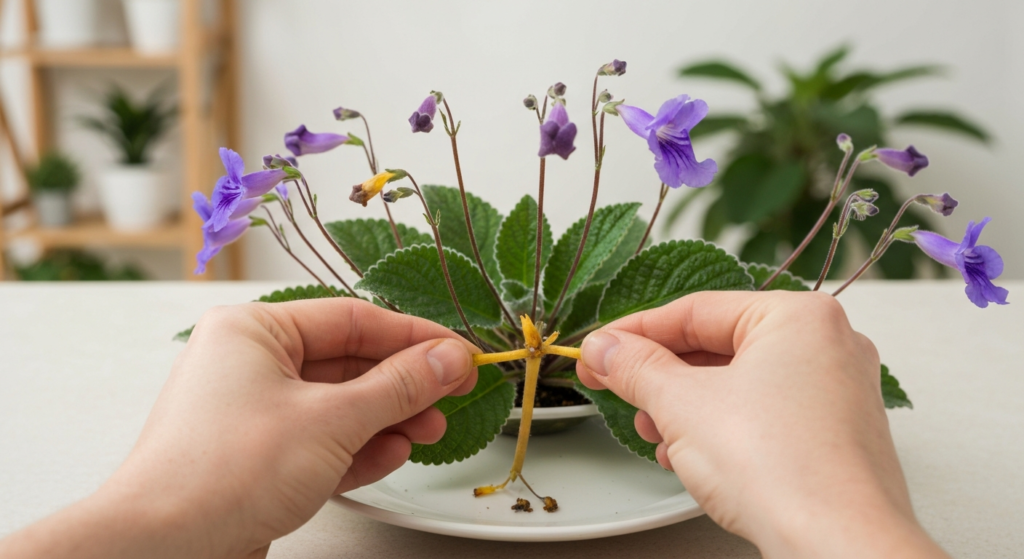
How you remove old flower stalks affects whether new ones appear. Do it wrong, and you can damage the leaf base where future stalks emerge.
Wait until all flowers on a stalk have finished blooming and the stem begins to yellow or brown. Then grasp the stem firmly at its base, right where it emerges from the leaf, and give a quick sideways twist while pulling gently. The stem should pop off cleanly.
If it doesn’t come free easily, wait another few days. Trying to force it can tear the leaf tissue.
Never cut the stem with scissors or pruners. Cutting leaves a stub that can rot back into the leaf base, potentially damaging the nodes where new flower stalks form.
I remove spent stems every week during peak blooming season. This tidies the plant and seems to encourage new stalks to develop faster—possibly because the plant isn’t putting energy into supporting dead flower stems.
Some growers report that removing spent stems immediately after the last flower fades triggers the plant to produce replacement stalks within 2-3 weeks. I’ve found this to be true as long as other conditions (light, temperature, fertilizer) remain optimal.
Leaf Propagation for More Flowering Plants
Once you get one Streptocarpus blooming heavily, you’ll want more. Leaf propagation is straightforward and gives you multiple plants from a single healthy leaf.
Step-by-step method:
- Select a mature, healthy leaf from the middle row of the plant (not the oldest outer leaves or youngest inner leaves)
- Cut the leaf horizontally into 2-3 sections, each about 2-3 inches long
- Remove the center vein from each section by making two cuts along either side of it, creating two pieces per section
- Insert the cut edge (the part that was closer to the leaf base) about half an inch deep into moist seed-starting mix or African violet potting soil
- Cover with a clear plastic dome or bag to maintain humidity
- Place in bright indirect light at 70-75°F
- New plantlets emerge along the cut edge in 4-8 weeks
Each piece can produce 2-5 new plants. I’ve gotten 15 new plants from a single large leaf.
Propagation timing advantage: Plants grown from leaf cuttings often bloom sooner than seed-grown plants. A well-rooted propagation can produce its first flower stalks at 8-10 months old, compared to 12-18 months for seed-grown plants.
Once the new plantlets have 2-3 leaves of their own, separate them gently and pot individually. Treat them like mature plants with the same fertilizer and light requirements, and they’ll start flowering within a few months.
Seasonal Adjustments for Year-Round Blooms
Streptocarpus can flower year-round with proper care, but you need to adjust your approach by season.
Spring (March-May):
- Increase watering as growth accelerates
- Resume regular fertilizing after winter rest
- Provide 12-14 hours of light daily
- Expect flower stalks to increase as days lengthen
Summer (June-August):
- Peak blooming period for most varieties
- Water more frequently in heat
- Watch for temperatures above 80°F, which can reduce flowering
- Continue high-phosphorus fertilizer weekly
Fall (September-November):
- Maintain fertilizer schedule through October
- Reduce watering slightly as growth slows
- Keep temperature fluctuations consistent for continued blooms
- This is often a second flowering peak
Winter (December-February):
- Reduce fertilizer to monthly or stop entirely
- Water less frequently but don’t let soil fully dry
- Provide supplemental light if days are short
- Some varieties take a natural rest period with fewer flowers
I keep detailed notes on when each of my plants produces the most stalks. The pattern is clear: plants with consistent conditions (light, temperature drops, humidity, fertilizer) flower continuously, while those with interrupted care go dormant and take weeks to resume blooming.
Troubleshooting Common Flowering Problems
Plant Has Healthy Leaves But No Flowers
Most likely cause: Insufficient light or wrong fertilizer
Solution: Move to brighter location and switch to bloom-formula fertilizer. Give it 4-6 weeks to respond.
Flower Buds Form But Drop Before Opening
Most likely cause: Low humidity, temperature stress, or inconsistent watering
Solution: Increase humidity with pebble trays, ensure consistent watering, and protect from temperature extremes.
Only 1-2 Flower Stalks Instead of Multiple Stalks
Most likely cause: No day-night temperature variation or plant is too young
Solution: Create a 10-15 degree nighttime temperature drop. If the plant is less than a year old, it simply needs more time to mature.
Flowers Open But Fade Quickly
Most likely cause: Low humidity, too much direct sun, or overfertilizing
Solution: Increase humidity to 50%, filter harsh afternoon sun, and reduce fertilizer concentration.
Here’s a quick diagnostic table:
| Symptom | Likely Cause | Fix |
|---|---|---|
| No buds form | Low light, high nitrogen fertilizer | More light, switch to bloom fertilizer |
| Buds drop before opening | Dry air, watering stress | Raise humidity, water consistently |
| Few flower stalks | No temperature drop, young plant | Cool nights, wait for maturity |
| Short bloom period | Low humidity, overfertilizing | Pebble trays, dilute fertilizer more |
| Leggy flower stems | Insufficient light | Move to brighter location |
Selecting Varieties for Heavy Flowering
Not all Streptocarpus varieties produce the same number of flower stalks. Some are naturally more prolific bloomers than others.
Heavy bloomers to look for:
- ‘Crystal Ice’ – produces 15-20 stalks at maturity, white flowers with purple veining
- ‘Concord Blue’ – deep purple blooms, 12-18 stalks per cycle
- ‘Salmon Sunset’ – coral-pink flowers, compact plant with 10-15 stalks
- ‘DS-Raspberry’ – Russian hybrid, known for 20+ stalks simultaneously
Moderate bloomers:
- Most species Streptocarpus (saxorum, rexii) – 5-8 stalks typical
- Many older hybrids – 8-12 stalks
Standard hybrids from garden centers usually fall in the moderate category. If you want maximum flower power, seek out cultivars specifically bred for heavy blooming from specialty growers.
I started with random grocery store plants and got decent flowers. After buying ‘Crystal Ice’ from a specialty nursery, I understood what “heavy blooming” actually means—that plant produces twice as many stalks as my original plants under identical conditions.
Soil and Pot Selection Impact
The right growing medium and container size affect how many flower stalks your plant can support.
Soil requirements:
Use a light, well-draining mix. Standard potting soil is too heavy and stays too wet, which leads to root rot and reduced flowering.
Best mix formula:
- 40% peat moss or coco coir
- 30% perlite
- 30% vermiculite
- Add a tablespoon of ground limestone per quart of mix (Streptocarpus likes slightly acidic to neutral pH around 6.0-6.5)
Repot every 12-18 months or when roots circle the pot. Old, compacted soil reduces root health and flowering capacity.
Container considerations:
Streptocarpus doesn’t need a large pot. A 4-6 inch pot suits most plants. Going too large means excess soil that stays wet and promotes root problems instead of flowers.
Plastic pots work better than terra cotta for these plants. Plastic retains moisture more evenly, while terra cotta dries out too quickly and pulls moisture from the soil.
Drainage holes are non-negotiable. I killed my first Streptocarpus by keeping it in a decorative pot without drainage. The roots rotted within weeks, and all flower production stopped long before the plant died.
Frequently Asked Questions
How long does it take for a Streptocarpus to produce multiple flower stalks after getting proper care?
If you just adjusted light, temperature, or fertilizer, expect 3-6 weeks before seeing new flower stalks emerge. The plant needs time to build up energy reserves and develop buds at the leaf bases. Young plants (under 12 months) may take longer since they’re still establishing their root systems. A mature plant in good health should produce continuous flower stalks once conditions are right—you’ll see new stalks appearing every 2-3 weeks throughout the growing season.
Can I use regular houseplant fertilizer for Streptocarpus or do I need a special formula?
Regular balanced houseplant fertilizer (like 20-20-20) works during spring growth but won’t maximize flowering. For multiple flower stalks, you really need a bloom-formula fertilizer with higher phosphorus (middle number). African violet fertilizer is ideal since they’re in the same plant family and have similar nutrient needs. Whatever you use, dilute it to quarter or half strength—Streptocarpus roots are sensitive to fertilizer salts, and full-strength applications cause more harm than good.
Why do some leaves produce many flower stalks while others produce none?
Older outer leaves and very young inner leaves typically don’t produce flowers. The mature middle leaves are the most productive. Each leaf has multiple nodes at its base where flower stalks can emerge, but those nodes only activate under proper conditions. A single healthy middle leaf can produce 3-5 stalks over a few months if light, temperature variation, and nutrients are optimal. If a leaf isn’t producing stalks, it’s either too young, too old, or missing a key environmental trigger.
Is it normal for flower production to slow down or stop temporarily?
Yes, particularly in winter or after a heavy blooming period. Streptocarpus sometimes takes a 4-8 week rest where it produces few or no flowers while building energy reserves. This is natural and not a sign of problems. Reduce fertilizer during rest periods and maintain basic care. Flowering will resume when the plant is ready, usually when days lengthen in spring or when you create better temperature fluctuations. Forced constant blooming without rest periods can exhaust the plant and reduce overall health.
Conclusion
Getting your Streptocarpus to produce multiple flower stalks comes down to replicating its natural mountain habitat: bright indirect light, consistent moisture, moderate humidity, and especially those cooler nighttime temperatures that trigger flowering mode.
The fertilizer switch from balanced to high-phosphorus formulas makes a measurable difference—I’ve seen it transform plants from producing 2-3 stalks to 15-20 stalks within two months. Combined with proper light and that 10-15 degree nighttime temperature drop, your plant will shift from conserving energy to putting it all into flower production.
Start with one change if this feels overwhelming. Move the plant to better light or adjust your fertilizer, then add the temperature variation once you see results. Each improvement builds on the last.
What’s been your biggest challenge getting your Streptocarpus to bloom heavily? Drop a comment below—I’d love to hear what’s working (or not working) for your plants.