
Indoor window boxes transform plain windowsills into vibrant gardens that bloom through every season. If you’ve ever walked past a restaurant with gorgeous cascading flowers framing their windows and wondered how they maintain that look year-round, you’re not alone. Most people assume these displays require professional care or special growing conditions. The truth is simpler: success comes from understanding bloom timing, plant heights, and basic color coordination.
The real challenge isn’t getting plants to flower—it’s keeping the show going when one plant finishes blooming and another takes over. Without a plan, you end up with gaps, leggy growth, or a jumbled mess that looks more chaotic than charming. Indoor window boxes need strategic plant selection because unlike outdoor boxes that can rely on seasonal replacements, indoor displays should maintain their appeal through winter cold snaps and summer heat waves.
This guide breaks down exactly how to pair early, mid, and late bloomers, arrange plants by height for visual impact, use color theory to create cohesive displays, and maintain everything without dismantling your entire arrangement every few weeks.
I’ve spent years growing and writing about indoor flowering houseplants, testing different combinations in my own windowsills and documenting what actually works versus what just looks good in theory. My background in horticultural research has taught me that successful window boxes aren’t about luck—they’re about matching plant needs with available light, understanding bloom cycles, and planning for maintenance access before you fill your box with soil.
Understanding Bloom Timing for Continuous Color
The secret to year-round blooms lies in selecting plants with staggered flowering periods. Early bloomers peak from late winter through spring, mid-season bloomers take over from late spring into summer, and late bloomers carry you through fall and early winter.
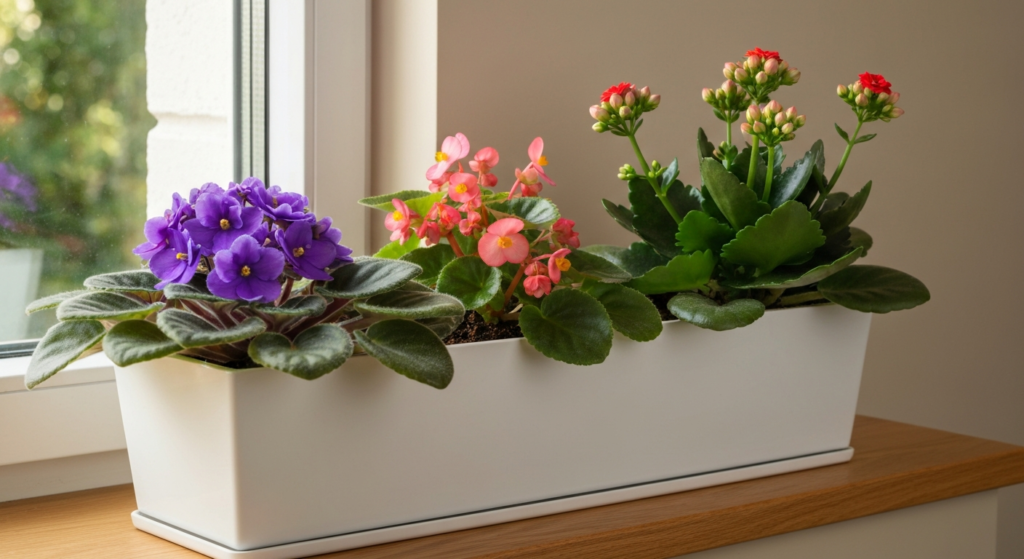
Early bloomers (February-April) include African violets, primroses, and cyclamen. These plants respond to increasing day length and start their show when most indoor gardens look dull. African violets, in particular, will rebloom multiple times if you remove spent flowers promptly.
Mid-season bloomers (May-August) bring the largest selection: begonias, impatiens, geraniums, and petunias all thrive during longer days. Begonias stand out because they tolerate lower light than most flowering plants, making them ideal for east or north-facing windows.
Late bloomers (September-January) keep things interesting when outdoor gardens fade. Kalanchoe, Christmas cacti, and certain orchid varieties time their blooms for shorter days. I’ve found that moving Christmas cacti to a slightly cooler spot near the window in October triggers more reliable blooming.
The overlap between these categories matters more than strict timing. You want at least two plants flowering at any given time, with a third preparing to bloom. This creates visual continuity without overcrowding your box.
Height Variation Strategies That Actually Work
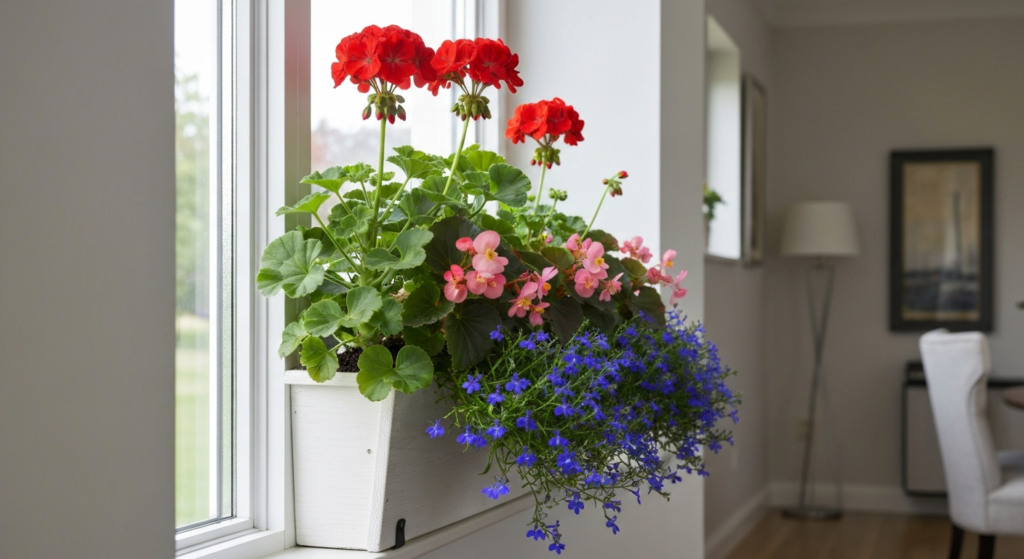
Proper height arrangement prevents your window box from looking flat or having shorter plants hidden behind taller ones. The standard formula—tall in back, medium in middle, short in front—works, but understanding why each layer matters helps you adapt to your specific window.
Back row plants (12-18 inches) create the backdrop. Geraniums, tall begonias, and upright fuchsias work well here. These plants should have sturdy stems that won’t flop forward into shorter plants. Position them 2-3 inches from the back edge so leaves don’t press against the window glass, which can cause rot or sun scald.
Middle layer plants (6-10 inches) fill the central space. Compact impatiens, smaller begonia varieties, and African violets fit this tier. These plants often produce the most blooms, so they deserve prominent placement. Space them 4-5 inches apart to allow air circulation while still creating a full appearance.
Front edge plants (3-6 inches) should trail or stay naturally compact. Lobelia, sweet alyssum, and trailing petunias work beautifully here. These plants soften the container edge and draw the eye downward, making the entire display feel more natural.
Here’s a practical height comparison for common window box plants:
| Plant Type | Mature Height | Best Position | Light Needs |
|---|---|---|---|
| Geranium | 12-16 inches | Back row | Bright, direct |
| Upright Begonia | 10-14 inches | Back/middle | Bright, indirect |
| Impatiens | 8-12 inches | Middle | Moderate to bright |
| African Violet | 6-8 inches | Middle/front | Bright, indirect |
| Lobelia | 4-6 inches (trailing) | Front edge | Bright, indirect |
| Sweet Alyssum | 3-5 inches | Front edge | Bright, direct |
I learned the hard way that height planning must account for growth patterns, not just current size. Geraniums can add 6 inches in a single growing season, while African violets stay relatively compact. Check each plant’s mature size before positioning it.
Color Theory for Window Box Arrangements
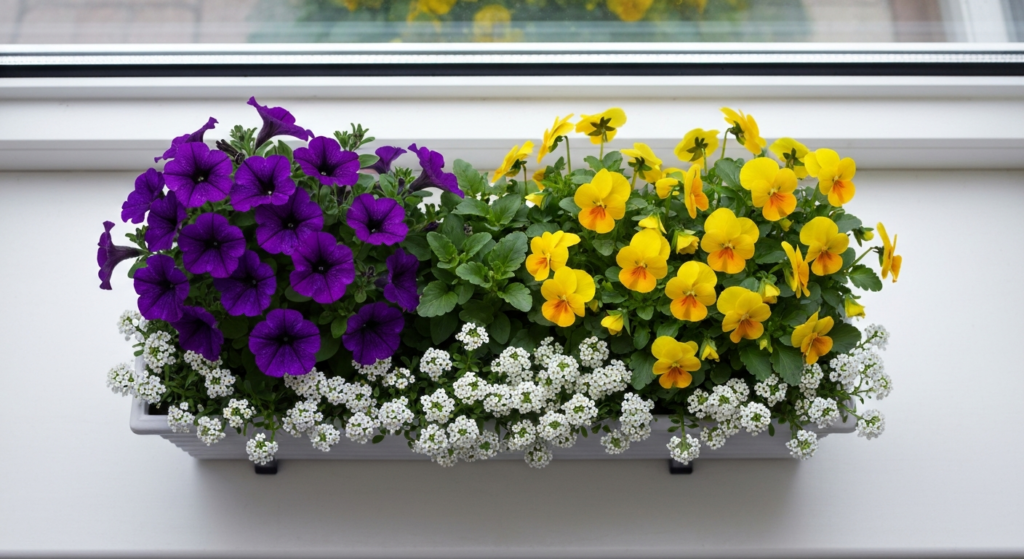
Color coordination separates amateur window boxes from professional-looking displays. You don’t need an art degree—just understand three basic approaches and pick one for each box.
Monochromatic schemes use different shades of one color. An all-pink box might include coral geraniums, light pink begonias, and deep rose impatiens. This approach creates sophistication and works especially well in formal settings. The trick is varying the shade intensity so plants don’t blend together.
Complementary color schemes pair opposites from the color wheel: purple and yellow, orange and blue, red and green. These combinations create vibrant contrast that catches attention from across the room. Purple petunias with yellow pansies make a classic pairing that blooms for months.
Analogous color schemes combine colors that sit next to each other on the wheel: red-orange-yellow or blue-purple-pink. These arrangements feel harmonious and natural. I use this approach most often because it’s forgiving—if one plant stops blooming, the remaining colors still work together.
Foliage color matters as much as flowers. Silver dusty miller brightens any color scheme, while dark coleus adds drama. Green foliage serves as a neutral that ties everything together.
Here’s how different color schemes affect visual perception:
| Color Scheme | Emotional Effect | Best Room Types | Example Combinations |
|---|---|---|---|
| Warm (red, orange, yellow) | Energizing, welcoming | Living rooms, kitchens | Red geraniums, orange begonias, yellow marigolds |
| Cool (blue, purple, white) | Calming, spacious | Bedrooms, bathrooms | Purple petunias, white impatiens, blue lobelia |
| Pastel (soft pinks, yellows, blues) | Gentle, romantic | Dining rooms, offices | Pink begonias, pale yellow primrose, soft blue ageratum |
| Bold contrast | Dynamic, modern | Contemporary spaces | Orange marigolds with purple petunias |
One mistake I see often: using too many colors. Limit yourself to three flower colors plus foliage. More than that creates visual chaos rather than an intentional design.
Selecting Plants for Year-Round Performance
Not every flowering plant suits indoor window boxes. Some need more root space than a shallow box provides, others demand humidity levels that typical homes can’t maintain, and many simply stop blooming after one flush.
Best choices for continuous indoor blooming:
African violets top the list because they bloom almost constantly under the right conditions. They need bright, indirect light and consistently moist (not wet) soil. Modern varieties come in every color from white to deep purple, making them easy to fit into any color scheme.
Begonias (both wax and tuberous types) handle lower light better than most bloomers. They flower repeatedly if you deadhead regularly. The wax-leaf varieties tolerate more neglect, while tuberous types produce showier blooms but need a dormant period in winter.
Miniature roses work surprisingly well indoors if you have a south-facing window. They need at least 6 hours of direct sun and good air circulation. Expect them to take breaks between bloom cycles—that’s normal.
Kalanchoe brings reliable winter blooms with minimal care. These succulents need bright light and infrequent watering. After blooming, cut back the flower stalks and they’ll rebloom in 6-8 weeks.
Plants to avoid in indoor window boxes:
Petunias struggle indoors despite being outdoor window box favorites. They need more light than most indoor windows provide and often develop leggy growth.
Full-size roses demand too much root space and air circulation for indoor boxes. Stick with miniature varieties bred for containers.
Herbs that bolt quickly (like cilantro and dill) waste space in ornamental displays. If you want herbs, choose slower-growing types like thyme or oregano that tolerate frequent trimming.
Lightweight Soil Mix Formulas
Standard potting soil works for indoor window boxes, but it’s heavier than necessary and can hold too much moisture. A custom lightweight mix drains better, weighs less (important for wall-mounted boxes), and gives you better control over nutrients.
Basic lightweight formula:
- 40% peat moss or coir (moisture retention)
- 30% perlite (drainage and air pockets)
- 20% compost (nutrients)
- 10% vermiculite (moisture regulation)
This mix weighs roughly 30% less than traditional potting soil when dry and drains excess water quickly while still holding enough moisture between waterings.
Succulent-adapted formula (for boxes with kalanchoe, jade plants, or other drought-tolerant bloomers):
- 50% standard potting mix
- 30% coarse sand or fine gravel
- 20% perlite
This version prevents the root rot that kills succulents in overly moist conditions.
I’ve tested dozens of soil recipes, and the biggest lesson is this: your mix should feel light and fluffy, not dense and heavy. When you squeeze a handful of moistened mix, it should hold together but break apart easily when poked. If it stays in a tight ball, add more perlite.
Amendment timing and purpose:
| Amendment | When to Add | Purpose | Amount per Gallon |
|---|---|---|---|
| Perlite | Initial mix | Drainage, aeration | 3-4 cups |
| Vermiculite | Initial mix | Water retention | 1-2 cups |
| Slow-release fertilizer | Planting time | Long-term nutrition | 2 tablespoons |
| Worm castings | Every 3 months | Gentle nutrient boost | 1/4 cup |
| Horticultural charcoal | Initial mix (optional) | Odor control, drainage | 1/4 cup |
One thing worth mentioning: don’t reuse old soil from failed plants without sterilizing it first. Bake it at 180°F for 30 minutes to kill diseases and pests, then amend it with fresh perlite and compost.
Maintenance Access and Plant Positioning
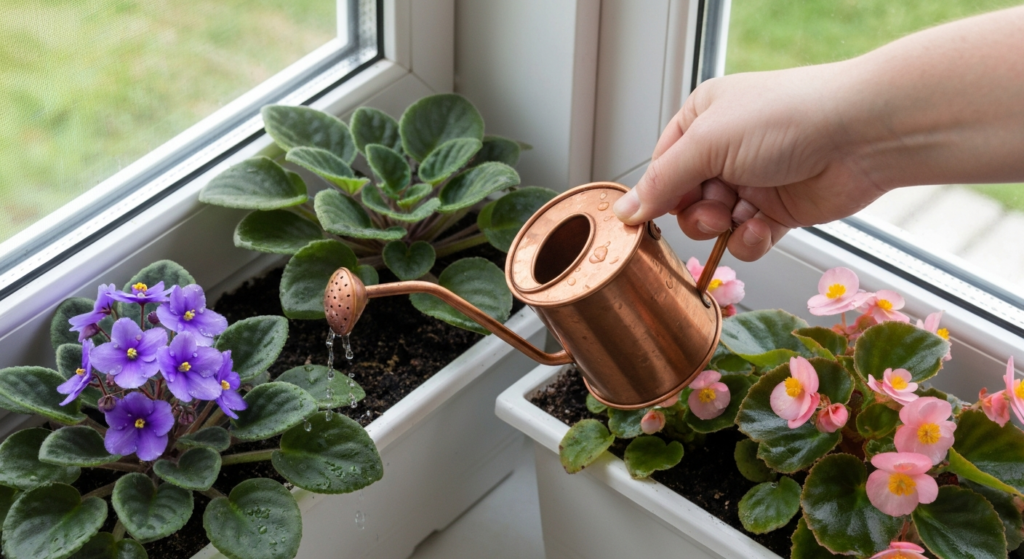
The most beautiful window box fails if you can’t reach plants for deadheading, watering, or pest inspection. Planning for maintenance before you plant saves countless headaches.
Front-to-back accessibility: Place plants you’ll need to tend most often (frequent bloomers requiring deadheading) toward the front. Position low-maintenance plants like kalanchoe toward the back where they’re harder to reach.
Watering access points: Leave 1-2 inches of space between plants and the back corners of your box. These gaps let you insert a watering can spout or hose without disturbing foliage. I mark these spots with small stones so I remember where to water.
Removable sections: For boxes longer than 24 inches, use two smaller containers instead of one long one. This lets you rotate sections for better light exposure or pull one out for thorough maintenance without disrupting the entire display.
Height considerations for hanging boxes: If your box hangs above eye level, choose plants that look attractive from below. Trailing varieties with flowers on the undersides work better than upright plants where you mainly see foliage undersides.
Create a maintenance schedule based on bloom type:
Weekly tasks:
- Deadhead African violets, begonias, and geraniums
- Check soil moisture in top 2 inches
- Inspect for pests on leaf undersides
- Rotate box 180 degrees for even light exposure
Monthly tasks:
- Fertilize with half-strength liquid fertilizer
- Trim back leggy growth
- Clean dust from leaves with damp cloth
- Check drainage holes for clogs
Seasonal tasks:
- Replace spent plants with new bloomers
- Refresh top 2 inches of soil
- Clean and sanitize empty boxes before replanting
Strategic Bloom Sequence Planning
Here’s where theory meets practice. You need an actual plan for which plants go where and when they’ll bloom. Random selection creates gaps in flowering or a cluttered look when everything blooms at once.
Spring-dominant box (February-May peak):
- Back: Upright primrose (blooms February-April)
- Middle: African violets in pink and purple (blooms continuously)
- Front: White sweet alyssum (blooms March-June)
This combination starts strong in late winter, maintains interest through spring with the violets, and transitions into early summer with the alyssum.
Summer-dominant box (June-September peak):
- Back: Coral geraniums (blooms May-October)
- Middle: Wax begonias in red and white (blooms June-frost)
- Front: Trailing lobelia in blue (blooms June-September)
These plants handle heat well and provide color through the warmest months when indoor air can stress other bloomers.
Fall-winter box (October-January peak):
- Back: Pink kalanchoe (blooms October-March)
- Middle: White cyclamen (blooms November-March)
- Front: Purple African violets (blooms continuously)
This combination thrives in cooler temperatures near windows during winter months. The violets bridge any gaps between other plants’ bloom cycles.
Troubleshooting Common Indoor Window Box Problems
Even with careful planning, problems crop up. Here’s how to address the most common issues before they ruin your display.
Leggy growth: Plants stretch toward light when they don’t get enough. Rotate your box weekly and consider supplemental grow lights if natural light is insufficient. Pinch back leggy stems to encourage bushier growth—this works especially well with begonias and impatiens.
Uneven blooming: If plants on one side bloom heavily while the other side produces few flowers, you have a light distribution problem. Either rotate the box more frequently or rearrange plants so light-hungry bloomers sit in the brightest spots.
Root crowding: When plants stop blooming despite good care, they may be root-bound. This happens faster in shallow window boxes than deeper containers. Plan to replace plants every 12-18 months, or divide and replant African violets that have outgrown their space.
Pest infestations: Aphids, spider mites, and fungus gnats find their way to indoor plants. Inspect new plants thoroughly before adding them to your box. Isolate any plant showing pest signs and treat with insecticidal soap before returning it to the display.
Watering mistakes: Overwatering kills more indoor plants than any other single factor. Your lightweight soil mix should dry slightly between waterings. Stick your finger 2 inches deep—if it feels moist, wait another day. If bone dry, water thoroughly until it drains from the bottom.
Here’s a quick diagnostic for common problems:
| Symptom | Most Likely Cause | Solution |
|---|---|---|
| Yellow lower leaves | Overwatering or nitrogen deficiency | Let soil dry more between waterings; fertilize |
| Crispy brown leaf edges | Low humidity or underwatering | Increase watering frequency; add pebble tray |
| Stretched stems with few leaves | Insufficient light | Move to brighter location or add grow light |
| Buds drop before opening | Temperature fluctuation or low humidity | Stabilize temperature; increase humidity |
| White powdery coating on leaves | Powdery mildew (fungal) | Improve air circulation; remove affected leaves |
| Sudden wilting despite moist soil | Root rot | Stop watering; check roots; repot if mushy |
Light Requirements and Window Orientation
Window direction determines which plants will thrive in your box. Matching plants to available light eliminates most growing problems before they start.
South-facing windows provide the strongest, most direct light. These spots support sun-loving geraniums, miniature roses, and kalanchoe. During summer, you may need sheer curtains to prevent leaf scorch during the hottest afternoon hours.
East-facing windows offer bright morning light that’s gentler than afternoon sun. This orientation suits the widest range of flowering plants: begonias, African violets, impatiens, and most herbs thrive here. Morning light energizes plants without stressing them.
West-facing windows deliver intense afternoon light and heat. This works for heat-tolerant bloomers like geraniums and kalanchoe but can stress more delicate plants like African violets unless you provide afternoon shade.
North-facing windows receive the least direct light. Only shade-tolerant bloomers like certain begonia varieties and impatiens will flower here. Consider supplemental lighting if this is your only option.
Light intensity changes with seasons. A south-facing window in December provides roughly 50% less light than the same window in June. Plants that thrive there in summer may struggle in winter without supplemental lighting.
Professional-Level Color Combinations
Moving beyond basic color theory, these specific combinations create the polished look seen in high-end restaurants and boutique hotels:
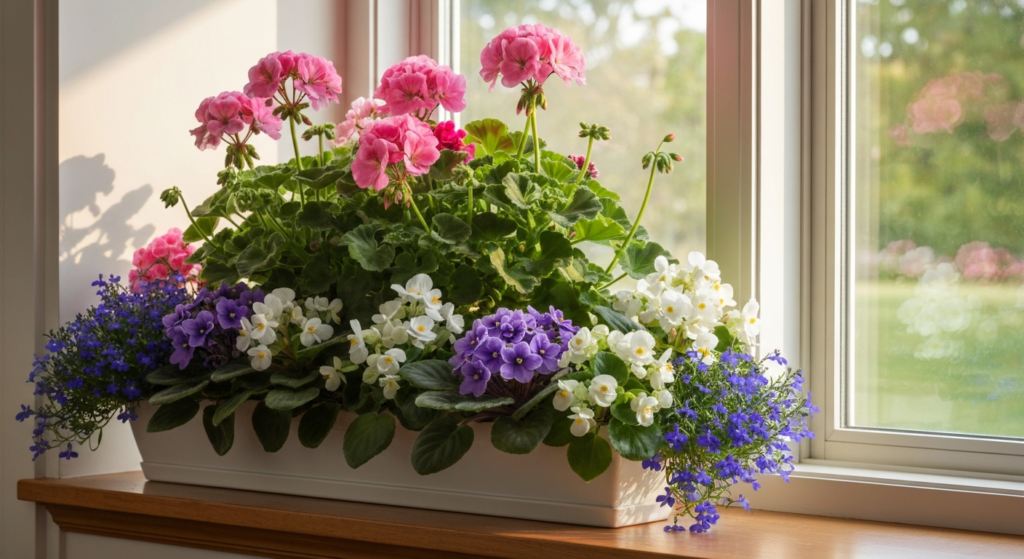
Classic cottage mix: Pink geraniums, white sweet alyssum, purple lobelia. This combination works in bright light and blooms prolifically. The white alyssum brightens the entire display and makes other colors appear more vibrant.
Modern minimalist: White kalanchoe, silver dusty miller, white begonias. This monochromatic scheme suits contemporary spaces. The varied textures prevent it from looking flat despite limited color range.
Warm sunset palette: Orange begonias, yellow marigolds, red geraniums. This energizing combination demands bright light but delivers constant color from spring through fall.
Cool serenity mix: Purple African violets, white cyclamen, blue lobelia. These colors create a calming effect perfect for bedrooms or meditation spaces. The combination works in moderate light and handles cooler temperatures well.
Bold contrast statement: Deep purple petunias, bright yellow pansies, white alyssum. This high-impact combination works in spaces where you want the window box to serve as a focal point.
Fertilizing Strategies for Continuous Blooms
Flowering plants need more nutrients than foliage-only varieties. Your lightweight soil mix provides initial nutrition, but sustained blooming requires regular feeding.
Liquid fertilizer approach: Use a balanced 10-10-10 or bloom-boosting 5-10-5 formula at half the recommended strength every two weeks during active growth. This method gives you precise control and allows you to adjust based on plant response.
Slow-release pellets: Mix granular fertilizer into soil at planting time. These pellets release nutrients gradually over 3-6 months. This works well if you travel frequently or prefer low-maintenance feeding. Supplement with liquid fertilizer during peak blooming.
Organic options: Worm castings, fish emulsion, and compost tea feed plants while improving soil structure. These amendments release nutrients slowly and won’t burn roots if you accidentally overfeed. Apply worm castings as a top dressing every 6-8 weeks.
Different plants have different feeding needs:
| Plant Type | Fertilizer Ratio | Frequency | Special Notes |
|---|---|---|---|
| African violets | 14-12-14 (high nitrogen) | Every 2 weeks | Use specialized African violet food |
| Geraniums | 5-10-5 (bloom booster) | Weekly during bloom | Reduce nitrogen in summer |
| Begonias | 10-10-10 (balanced) | Every 2-3 weeks | Light feeders; less is more |
| Kalanchoe | 5-10-10 (low nitrogen) | Monthly | Succulents need minimal feeding |
| Impatiens | 10-10-10 (balanced) | Every 2 weeks | Heavy feeders during bloom |
One lesson from years of trial: underfed plants produce fewer, smaller blooms but survive; overfed plants develop burned leaf tips, excessive foliage, and fewer flowers. When in doubt, feed less.
Dealing with Seasonal Light Changes
Indoor light quality and intensity shift dramatically through the year. Windows that provide ample light in June may offer insufficient light by December, while summer’s intense rays can scorch leaves that thrived in spring.
Summer adjustments (June-August): South and west windows may deliver too much direct afternoon light. Move boxes a few inches back from the glass, add sheer curtains, or shift your arrangement to include more heat-tolerant plants.
Fall transition (September-November): As days shorten, flowering may slow. This is natural. Increase fertilizer frequency slightly to support any plants still blooming actively. Remove summer annuals that have finished their cycle and replace with fall bloomers like kalanchoe.
Winter strategy (December-February): North and east windows may not provide enough light for heavy bloomers. Add supplemental LED grow lights on timers (12-14 hours daily) to maintain bloom production. Focus on plants that naturally bloom in winter conditions.
Spring recovery (March-May): Light levels increase rapidly. Watch for leggy growth as plants respond to longer days. Pinch back stems to encourage bushier growth. This is the ideal time to introduce new plants and replace any that declined over winter.
I track light levels using a simple smartphone light meter app. Readings below 1000 foot-candles indicate insufficient light for most flowering plants; readings above 5000 might require shading delicate bloomers.
Container Selection and Preparation
The box itself matters more than many beginners realize. Material, depth, and drainage affect plant health directly.
Material options:
Plastic boxes are lightweight, retain moisture well, and come in countless styles. They work fine for most situations but can look less sophisticated than natural materials. Look for UV-resistant plastic if your window receives direct sun.
Wooden boxes offer classic appeal and good insulation for roots. Cedar and redwood resist rot naturally. Line wooden boxes with plastic to prevent soil contact with wood, which extends the box’s lifespan.
Metal boxes (especially galvanized steel) create modern looks but conduct heat and cold directly to roots. Use them only if your window maintains stable temperatures, or add a plastic liner with an air gap between metal and soil.
Ceramic and terracotta bring beauty but add weight. Reserve these for sturdy windowsills that can support the load. Terracotta breathes, which helps prevent overwatering but requires more frequent watering.
Size specifications:
Depth: Minimum 6 inches for adequate root growth. Eight inches is ideal for mixed plantings. Shallow boxes (4 inches) work only for succulents and very small plants.
Width: Match your window width or go slightly narrower. Boxes extending beyond the window frame look unbalanced.
Length: For long windows, use multiple shorter boxes (18-24 inches each) rather than one continuous box. This makes maintenance easier and lets you create distinct mini-gardens.
Drainage requirements:
Every window box needs drainage holes. Without them, roots rot. Drill 1/4-inch holes every 4-6 inches along the bottom if your box lacks them.
Add a waterproof tray underneath to catch drainage. Empty this tray within an hour after watering—standing water breeds mosquitoes and can damage windowsills.
Frequently Asked Questions
How often should I water an indoor window box?
Check soil moisture every 2-3 days by inserting your finger 2 inches deep. Water when the top 1-2 inches feel dry to the touch. This typically means watering every 3-5 days, but frequency varies with season, plant types, and indoor humidity. Flowering plants in active growth need more water than dormant plants. The lightweight soil mix described earlier dries faster than standard potting soil, which prevents overwatering but requires more frequent monitoring.
Can I use artificial light instead of a window for my flower box?
Yes, but you’ll need proper full-spectrum grow lights. LED grow lights work best—position them 6-12 inches above plants and run them 12-14 hours daily. Regular household bulbs don’t provide the right light spectrum for flowering. I’ve successfully grown African violets, begonias, and kalanchoe under artificial light alone, but plants grown in natural window light plus supplemental artificial light typically bloom more prolifically.
What’s the easiest combination for beginners?
Start with three plants: pink or red wax begonias in the back, purple African violets in the middle, and white sweet alyssum in front. All three tolerate similar conditions, bloom reliably, and forgive minor watering mistakes. This combination works in east or west-facing windows with moderate to bright indirect light. Water when the top inch of soil dries, fertilize every 2 weeks, and deadhead spent blooms weekly.
How do I prevent my window box from looking bare when plants aren’t blooming?
Include foliage plants with interesting leaves between your flowering plants. Silver dusty miller, colorful coleus, or trailing ivy fills spaces during bloom gaps. Choose bloomers with staggered flowering times as described earlier—when one finishes, another should be starting. Keep a few backup plants in small pots on a nearby shelf. When you remove a spent bloomer, you can immediately drop in a fresh replacement without leaving an obvious gap.
Creating Your Personal Window Garden
Indoor window boxes succeed when you match plant selection to your specific light conditions, choose varieties with overlapping bloom times, and plan for regular maintenance. The combinations and strategies above work because they account for real-world limitations—limited light in winter, variable watering schedules, and the need to access plants without dismantling entire arrangements.
Start with one box in your brightest window. Focus on getting the basics right: appropriate plants for your light level, the lightweight soil mix for better drainage, and a realistic assessment of how often you’ll actually deadhead and fertilize. Once that first box thrives, you can expand to other windows using the same principles adapted to different light conditions.
The goal isn’t creating a perfect display immediately. It’s building a sustainable system that provides color and interest year-round without demanding professional expertise or daily attention.
What’s your biggest challenge with indoor gardening—finding plants that bloom consistently, dealing with limited light, or maintaining everything during busy periods? Share your specific situation in the comments below, and I’ll suggest targeted solutions.