
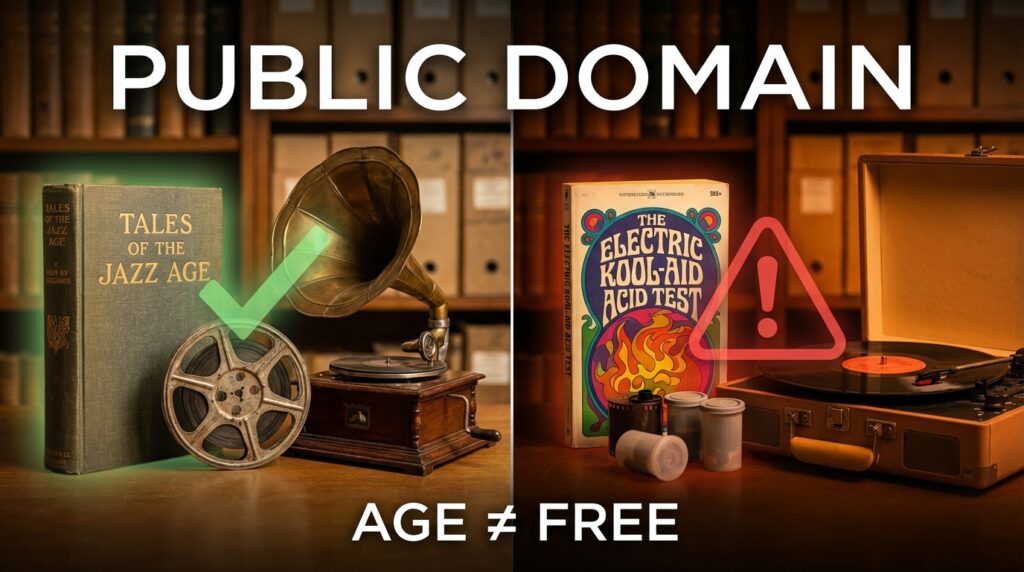

You’ve found the perfect vintage poster for your project. It’s from 1952, so it’s free to use, right? Not necessarily. You might’ve just stumbled into one of the most expensive mistakes creators make.
Copyright law doesn’t work the way most people think. The age of something doesn’t automatically make it public domain, and believing otherwise has cost people thousands in legal fees. Whether you’re adapting a story, using vintage images, or sampling old music, understanding what’s actually free versus what’s still protected can save you from serious trouble.
Key Takeaways
• Calculate copyright expiration using the creation date plus applicable terms—age alone doesn’t determine public domain status • Check if works published before 1929 are automatically in the US public domain, while most items from 1929-1977 require renewal research • Verify that unpublished works follow different rules based on the author’s death date, not publication year • Recognize that international copyright laws differ significantly from US rules, requiring separate verification for global use • Confirm public domain status through official databases before using any vintage content commercially
Why “Old Equals Free” Gets People in Trouble
The confusion makes sense. You see a black-and-white photo or hear about a classic novel, and your brain connects “old” with “available.” But copyright protection in the United States can last over 100 years for some works.
Here’s what actually happens: Copyright duration depends on when something was published, whether it was renewed, and who created it. A song from 1950 might be protected until 2045. A painting from 1960 could remain under copyright until 2055 or beyond.
The problem gets worse when you realize different countries have different rules. Something that’s public domain in the US might still be protected in Europe, and vice versa. This catches people off guard when they plan to distribute content internationally.
How Copyright Duration Actually Works
Understanding the timeline requires looking at specific date ranges. The rules have changed multiple times, creating different protection periods for different eras.
Works Published Before 1929
Anything published in the United States before January 1, 1929, is now in the public domain. This includes books, music, films, and photographs. No exceptions, no renewals to check—these works are free to use.
This is why you’ll see 1920s content everywhere. The Great Gatsby entered the public domain in 2021 because it was published in 1925. Silent films from the era are widely available and legally usable.
The Tricky Period: 1929-1977
Works published during these years follow complicated rules. Copyright initially lasted 28 years, but owners could file for a 67-year renewal. If they didn’t renew, the work entered the public domain after 28 years.
The catch? You need to verify whether renewal happened. Thousands of works from this era entered the public domain because publishers never filed the paperwork. But thousands more were renewed and remain protected.
For items published between 1929 and 1963, you’ll need to check renewal records at the US Copyright Office. Works published from 1964-1977 received automatic renewal, so they’re protected for 95 years from publication.
Modern Works: 1978 to Present
The Copyright Act of 1976 changed everything. For works created after January 1, 1978, protection lasts for the author’s life plus 70 years. If it’s a corporate work or made-for-hire, protection extends 95 years from publication or 120 years from creation, whichever is shorter.
This means a novel written by someone who died in 2000 won’t enter the public domain until 2071. A corporate publication from 1980 stays protected until 2075.
Unpublished Works Follow Different Rules
Many people don’t realize that unpublished materials have their own protection timeline. Letters, manuscripts, private recordings, and personal photographs weren’t covered by the same publication-based rules.
For unpublished works created before 1978, protection generally lasts until 70 years after the author’s death, with a minimum term ending in 2047. This means your grandmother’s unpublished diary from 1940 might still be under copyright if she passed away after 1952.
Anonymous or pseudonymous unpublished works created before 1978 are protected until 2047, regardless of the author’s death date. This applies to many historical documents where authorship remains unclear.
International Copyright Creates More Confusion
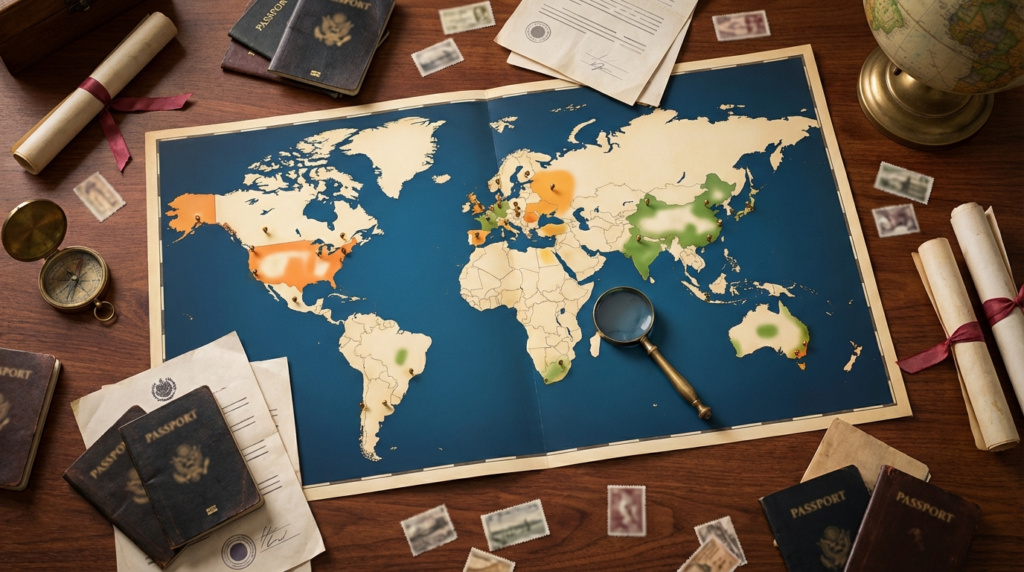
US public domain status doesn’t mean global freedom. Most countries follow different rules, and the differences matter if you’re distributing content online or selling products internationally.
| Region | Copyright Term | Key Difference from US |
|---|---|---|
| European Union | Life + 70 years | No publication-based rules |
| Canada | Life + 70 years | Different cutoff dates for older works |
| Australia | Life + 70 years | Crown copyright lasts 50 years |
| Japan | Life + 70 years | War-related extensions apply |
| Mexico | Life + 100 years | Longer protection than most countries |
The European Union extends copyright for 70 years after death regardless of publication date. Works that entered the US public domain might still be protected in Europe because the author died less than 70 years ago.
Peter Pan provides a famous example. The play is public domain in the US, but Great Ormond Street Hospital holds special rights in the UK. Using Peter Pan content commercially requires understanding where you’ll distribute it.
Common Misconceptions That Cost Money
Believing these myths has led to lawsuits, cease-and-desist letters, and expensive settlements.
Myth: Anything without a copyright notice is public domain.
False. Copyright notice became optional in 1989. Most works created after that date are protected even without the © symbol.
Myth: If I can’t find the copyright owner, it’s abandoned.
Wrong. Orphan works—where the owner can’t be located—are still protected. Using them without permission creates legal risk, even if nobody complains for years.
Myth: Changing 10% of something makes it original.
No such rule exists. Creating a derivative work without permission violates copyright, regardless of how much you change.
Myth: Public domain in one medium means public domain everywhere.
Not true. A book might be public domain while movie adaptations remain protected. Sheet music could be free while specific recordings stay copyrighted.
How to Verify Public Domain Status
Guessing leads to problems. Proper verification takes research but prevents legal headaches.
Start with the Copyright Office’s records. You can search registrations and renewals for works published since 1978. For older materials, their digitized card catalog covers 1870-1977.
Project Gutenberg maintains a reliable database of public domain books. If they host it, you can trust the status has been verified. However, remember this applies only to US public domain—other countries might differ.
Check the Stanford Copyright Renewal Database for books published 1923-1963. This tells you whether renewal was filed, which determines current protection status.
For music, the process gets complicated because you’re dealing with multiple copyrights: composition (the written music and lyrics) and sound recording (the specific performance). Both need verification separately.
Special Cases That Break the Normal Rules
Some works don’t fit standard copyright patterns, creating additional confusion.
Government works: US federal government publications are automatically public domain. This includes reports, photographs, and documents created by federal employees. State and local government works follow different rules depending on the jurisdiction.
Works published without proper notice: Before 1989, published works needed a copyright notice. Items published without one between 1978-1989 might be public domain if the omission wasn’t corrected within five years.
Foreign works restored under GATT: The 1994 trade agreement restored copyright to many foreign works that had fallen into the public domain in the US. Films, books, and music from other countries might have regained protection even after Americans had been using them freely.
The Reality of Fair Use Versus Public Domain
People often confuse these concepts. Fair use isn’t the same as public domain—it’s a defense for using copyrighted material in specific ways.
Fair use allows limited use of protected works for purposes like criticism, commentary, news reporting, teaching, or research. Courts evaluate it case-by-case using four factors: purpose, nature of the work, amount used, and market effect.
Public domain means no permission is needed at all. The work isn’t protected, so you can use it however you want—commercially, in adaptations, in derivative works.
Relying on fair use involves risk. You might believe your use qualifies, but a copyright owner could disagree and sue. Public domain materials eliminate that risk entirely.
Practical Steps Before Using Vintage Content
Don’t assume. Follow this process to protect yourself legally.
Identify the publication date and author. For books, check the copyright page. For images, research when and where they first appeared. For music, determine both composition and recording dates.
Calculate protection based on the applicable term. Use the date ranges discussed earlier to estimate whether protection likely expired.
Search official records to confirm. The Copyright Office, renewal databases, and specialized resources for different media types provide verification.
Consider hiring an attorney for high-value projects. If you’re adapting a novel into a film or building a business around vintage content, legal advice costs less than defending a lawsuit.
Document your research. Keep records showing how you determined public domain status. If questions arise later, you can demonstrate due diligence.
When “Safe” Isn’t Actually Safe
Even verified public domain content can create problems in specific situations.
Trademark law still applies. Mickey Mouse’s early films might enter the public domain, but Disney’s trademark on the character remains active. You can show the old cartoons, but creating Mickey Mouse merchandise could violate trademark protection.
Moral rights exist in some countries, giving creators control over how their work is used even after copyright expires. This mainly affects visual art and applies more in Europe than the US.
Multiple rights holders complicate adaptations. A movie might combine public domain source material with copyrighted music, effects, and screenplay elements. You can’t freely use the film just because the original book is public domain.
Frequently Asked Questions
Can I use a 1950s photograph I found in an attic?
Not automatically. Unpublished photos follow the life-plus-70-years rule based on the photographer’s death. If the photographer died after 1952, the image likely remains protected. Published photos from the 1950s might be public domain if they weren’t renewed, but you’d need to verify renewal status.
Are all classical music recordings free to use?
The compositions themselves are public domain—Beethoven’s music isn’t protected. But specific recordings remain copyrighted. A 1960 orchestra performance of a Beethoven symphony stays protected until 2055. You can record your own performance freely, but you can’t use someone else’s recording without permission.
What happens if I use something thinking it’s public domain but I’m wrong?
You could face copyright infringement claims. Penalties range from being required to remove the content to paying damages and attorney fees. Honest mistakes might reduce damages, but ignorance doesn’t eliminate liability. This is why verification matters.
Do I need to credit public domain sources?
Legally, no. Public domain works can be used without attribution. However, ethical standards and professional norms often call for crediting sources. Academic work, journalism, and professional publishing typically require citations even for public domain material.
Conclusion
Copyright protection doesn’t expire when something looks old or feels vintage. The rules depend on publication dates, renewal filings, author lifespans, and the type of work involved. A piece from 1925 is definitely free to use, but something from 1965 requires research before you can safely incorporate it into your project.
Stop guessing based on how old something appears. Instead, identify the publication date, check which rules apply to that period, and verify status through official sources. For anything beyond personal use, consider professional legal advice—especially if you’re building a business or creating commercial products.
Taking these steps now prevents expensive problems later. The internet makes it easy to find vintage content, but finding it doesn’t mean you can use it legally.
Have you encountered confusing copyright situations with older works? Drop a comment sharing what you found—your experience might help others avoid the same confusion.