

You snap what feels like the perfect street photograph—the light’s hitting just right, the composition is flawless, and there’s a stranger in the frame who makes the whole shot come alive. Then doubt creeps in. Can you post this? Do you need their signature on some legal form? Will you get sued if it ends up in your portfolio?
This confusion keeps countless great photos buried in hard drives. The rules around model releases aren’t as straightforward as “always get permission” or “never worry about it.” The truth sits somewhere in the middle, and understanding exactly where that line falls can mean the difference between confidently sharing your work and second-guessing every upload.
Key Takeaways
- Use photos of strangers for editorial purposes (news, education, art) without a model release in most cases
- Obtain signed releases before using anyone’s image for commercial advertising or product endorsement
- Recognize that social media portfolio posts typically don’t require releases, but sponsored content does
- Protect yourself by understanding your state’s privacy laws and right of publicity statutes
- Document the context of your shoots to prove editorial intent if questions arise later
What a Model Release Actually Does
A model release is a legal contract between you and the person you’ve photographed. When someone signs it, they’re giving you permission to use their image for specific purposes. Think of it as proof that the person agreed to appear in your work and understood how you plan to use it.
The document protects you from lawsuits claiming invasion of privacy or unauthorized commercial use of someone’s likeness. Without one, you’re relying on legal protections like the First Amendment and public space photography rights—which work great in some situations but fall apart in others.
Most releases spell out where the images can appear, how long you can use them, and whether the person gets paid. Professional photographers keep stacks of these forms ready, but casual shooters often skip them entirely. Whether you need one depends entirely on what you plan to do with the photo.
Editorial vs. Commercial Use: The Dividing Line
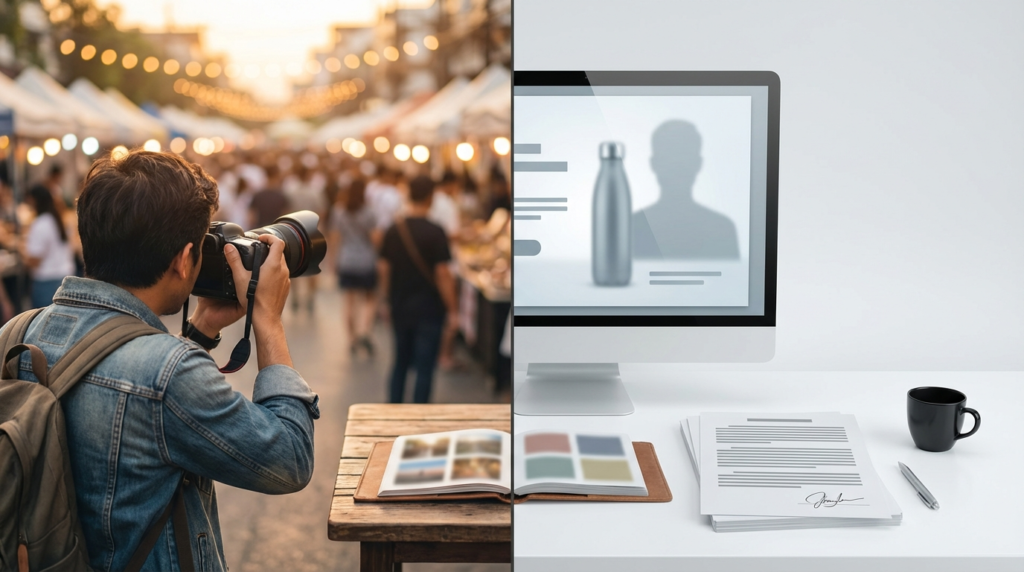
This distinction matters more than anything else when it comes to model releases.
Editorial use covers newsworthy content, educational material, artistic expression, and commentary on public interest topics. If you photograph a protest and publish those images in a news article or use them in a documentary about social movements, that’s editorial. The photos serve to inform or educate the public about something that matters beyond selling products.
You generally don’t need a model release for editorial work. The First Amendment protects your right to document what happens in public spaces and share those observations. Courts have consistently ruled that the public’s right to information outweighs an individual’s control over their image in these contexts.
Commercial use means selling products or services. If that same protest photo appears in an ad campaign for a political consulting firm or gets slapped on a billboard promoting a new smartphone, you’ve crossed into commercial territory. The person’s image now helps sell something, which requires their explicit permission.
The shift from editorial to commercial isn’t always obvious. A photo that starts as journalism can become commercial if you later license it to a brand. Context changes everything.
When You Can Skip the Release
Public spaces give you broad freedom. If you’re shooting on sidewalks, in parks, at public events, or anywhere people don’t have a reasonable expectation of privacy, you can photograph strangers and use those images editorially without permission.
Your portfolio site falls into a gray area that usually works in your favor. Posting street photography to showcase your skills typically counts as artistic expression rather than commercial advertising. You’re not selling the person’s image—you’re demonstrating your photographic ability. Courts generally protect this kind of self-promotion under First Amendment principles.
News and documentary projects get similar protection. Photographing a farmer’s market for a photo essay about local food culture doesn’t require releases from every vendor and customer in the frame. The public interest in documenting community life outweighs individual privacy concerns.
Fine art exhibitions, even when you sell prints, usually don’t need releases either. Galleries and art buyers understand they’re purchasing your creative work, not using someone’s likeness to promote unrelated products. The person in your photo is the subject of art, not a spokesperson for something else.
When the Release Becomes Essential
Advertising flips all those protections on their head. The moment you use someone’s photo to sell a product, service, or brand, you need their written consent. This includes obvious ads like billboards and magazine spreads, but it also covers less obvious commercial uses.
Social media gets tricky here. Regular posts showing your work don’t usually need releases, but sponsored content does. If a camera company pays you to post a street portrait while mentioning their lens, you’ve created an advertisement. The person in that photo is now associated with promoting that product, which requires their permission.
Product packaging, promotional materials, and marketing campaigns all demand releases. Using a stranger’s face on a coffee bag, in a brochure for a real estate company, or as part of a fitness center’s membership drive will land you in legal trouble without documentation.
Endorsement issues create another layer of complexity. Even if you’re not directly advertising, using someone’s image in a way that suggests they support your business or ideas needs their consent. A photo of someone at a political rally can’t later appear on campaign materials for a candidate they might oppose.
| Use Case | Release Required? | Reason |
|---|---|---|
| News article photo | No | Editorial/First Amendment protection |
| Portfolio website display | Usually no | Artistic expression and self-promotion |
| Instagram ad partnership | Yes | Commercial promotion of products |
| Gallery print sale | Usually no | Fine art exemption |
| Product packaging | Yes | Direct commercial use |
| Documentary film | Usually no | Educational/informational content |
| Brand billboard | Yes | Advertising and endorsement |
Privacy Laws and Right of Publicity
State laws vary significantly on these issues. Some states recognize a “right of publicity” that gives people control over commercial uses of their name, image, and likeness even after death. California’s law, for example, protects celebrity images for 70 years after they die.
Privacy torts cover four main areas: intrusion upon seclusion, public disclosure of private facts, false light, and appropriation of name or likeness. The last one matters most for photographers. If you use someone’s photo for commercial gain without permission, they can sue for appropriation.
Different states set different standards. New York requires written consent for any advertising or trade use of someone’s image. Other states only prohibit uses that falsely suggest endorsement. You need to understand the laws where you shoot and where you publish.
Public figures face higher bars for privacy claims. Politicians, celebrities, and others who’ve entered public life can’t easily sue over editorial uses of their images. They’ve accepted reduced privacy as part of their public role. But even famous people retain rights against unauthorized commercial use.
Social Media Realities
Instagram, Facebook, and other platforms add modern complications. Your terms of service with these companies don’t override model release requirements, but the informal nature of social sharing creates confusion.
Posting street photography to your feed as an artist showcasing work falls under fair use in most situations. You’re creating a public gallery of your creative output. But the second you turn that post into an ad or accept money from a brand to feature the image, you need releases.
Influencer marketing blurs these lines constantly. If you photograph strangers and later those photos appear in posts promoting products you’re paid to showcase, you’ve created commercial content. The casual feel of social media doesn’t change the legal reality.
Some photographers include disclaimers noting that people appearing in public space photos haven’t endorsed anything. This doesn’t replace a release when one’s actually required, but it can help establish that you’re sharing artistic work rather than creating advertisements.
Special Situations That Change the Rules
Children require extra caution. Many states give parents control over commercial uses of their kids’ images. Even for editorial work, photographing minors can trigger different legal standards. Schools and youth events often prohibit photography entirely without pre-approval.
Private property shifts the rules too. Even if a space feels public—like a shopping mall or concert venue—the owner can restrict photography. You might need permission just to take photos, separate from release issues. Trespassing to get a shot creates bigger problems than release violations.
Sensitive contexts demand more care. Photos taken in medical facilities, support group meetings, or other situations where people expect privacy need releases even for editorial use. The location itself creates a reasonable expectation of privacy that overrides public space protections.
Crowd shots present practical challenges. If you photograph a protest and hundreds of people appear in the frame, getting releases from everyone is impossible. Courts generally accept that individuals in large crowds have reduced privacy expectations. But isolating one person from that crowd for commercial use brings release requirements back into play.
Building Your Safety Net
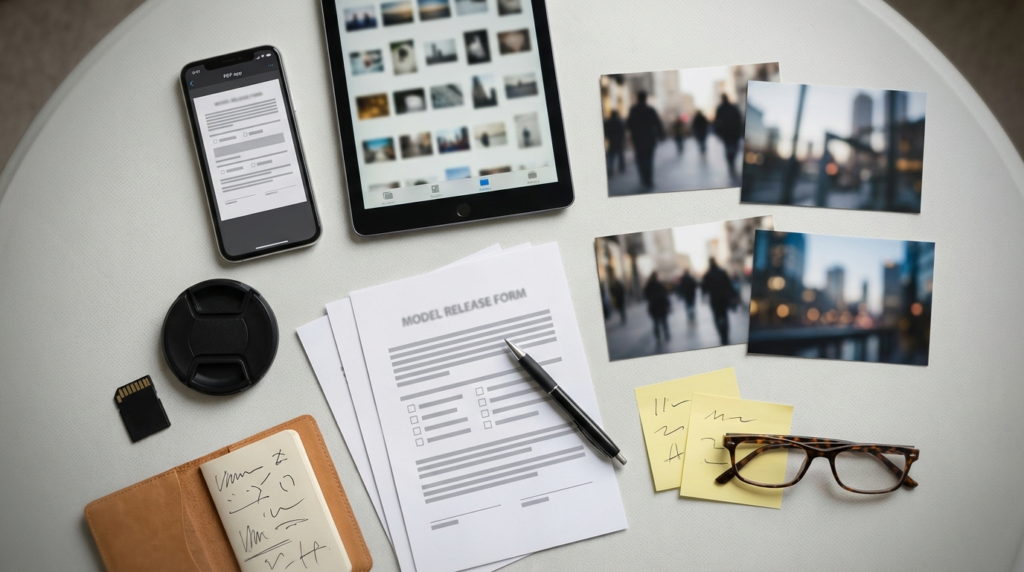
Smart photographers develop simple systems. Keep a stack of release forms on your phone as PDFs. When you shoot something that might have commercial potential, ask subjects to sign right then. Getting permission in the moment is infinitely easier than tracking someone down months later.
Document your shoots. Note dates, locations, and contexts. If someone questions your use of their image years after the fact, having records that prove editorial intent protects you. Screenshots of original posts showing artistic rather than commercial framing can serve as evidence.
Learn to recognize which shots need releases before you take them. If you’re shooting for a client who’ll use images in advertising, get releases from everyone recognizable. If you’re building a photo essay about urban life, you probably don’t need them. Thinking ahead saves headaches.
Consider your long-term plans. A photo that starts as pure art might later attract commercial interest. If you think an image could eventually sell to advertisers, getting a release when you shoot costs nothing and keeps options open. You can’t go back in time to get permission.
What Happens When You Mess Up
Lawsuits for unauthorized commercial use of someone’s image can get expensive. Damages often include the fee you would’ve paid for a model, plus penalties for willful infringement. Some plaintiffs have won hundreds of thousands of dollars when their faces appeared in major ad campaigns without permission.
Most disputes settle before court. If someone sees their photo in your commercial work and objects, you’ll typically receive a cease-and-desist letter first. Responding quickly by removing the image often resolves things. Ignoring these demands or continuing to use the photo escalates to litigation.
Insurance helps. Professional liability policies for photographers sometimes cover model release disputes. If you shoot commercially with any regularity, this coverage is worth the cost. It won’t prevent lawsuits, but it’ll pay legal fees and potential settlements.
The simplest solution remains not using images commercially without releases. No legal protection beats actually having permission documented. When in doubt, either get the release or use the photo only for editorial purposes.
Making the Decision
Before you post, license, or sell any photo containing a recognizable person, ask yourself three questions:
Am I using this to sell something or promote a brand? If yes, you need a release.
Would a reasonable viewer think this person endorses what I’m promoting? If yes, you need a release.
Could I defend this use as news, education, art, or public interest commentary? If no, you probably need a release.
These questions won’t solve every edge case, but they’ll catch most situations where releases matter. When you’re genuinely unsure, either get permission or consult a lawyer familiar with media law in your state.
Your photography career doesn’t have to stall over release anxiety. Understanding the actual rules—not the myths about them—lets you confidently share strong work while respecting both legal requirements and the people you photograph.
Frequently Asked Questions
Can I sell prints of street photography without model releases?
Yes, if you’re selling them as fine art through galleries or directly to collectors. The sale itself doesn’t make it commercial use—it’s still considered artistic expression. However, using the same image to advertise your photography services or selling it to a company for their marketing changes it to commercial use requiring releases.
Do I need a release if the person isn’t recognizable?
No. Model releases protect a person’s identifiable likeness. If someone’s face is obscured, shot from behind, or too distant to recognize, you don’t need their permission. However, “recognizable” has a low bar—distinctive tattoos, unique clothing, or contextual clues can make someone identifiable even without a clear face.
What if someone asks me to remove their photo from my portfolio?
Legally, you’re usually protected if the use is editorial or artistic. But removing it anyway often makes sense to avoid conflict. If the person threatens legal action, consider whether fighting over one image is worth potential legal costs. Most photographers just take the photo down and move on.
Are verbal agreements enough, or do I need written releases?
Always get written releases. Verbal permission is nearly impossible to prove in court. Even a text message or email is better than nothing, but proper release forms with signatures protect you far more effectively. Many model release apps let people sign electronically on your phone immediately after a shoot.
Wrapping Up
Model releases aren’t the universal requirement many photographers assume. Most street photography, documentary work, and portfolio sharing happens without them just fine. The protection you need kicks in when images cross from artistic expression into commercial advertising—and that line stays clearer than the confusion suggests.
Shoot confidently in public spaces for editorial and artistic purposes. Get releases when money and product promotion enter the picture. Document everything. This approach covers the vast majority of situations you’ll face.
What’s your biggest concern about using photos of strangers in your work? Drop a comment below—your question might help another photographer dealing with the same issue.