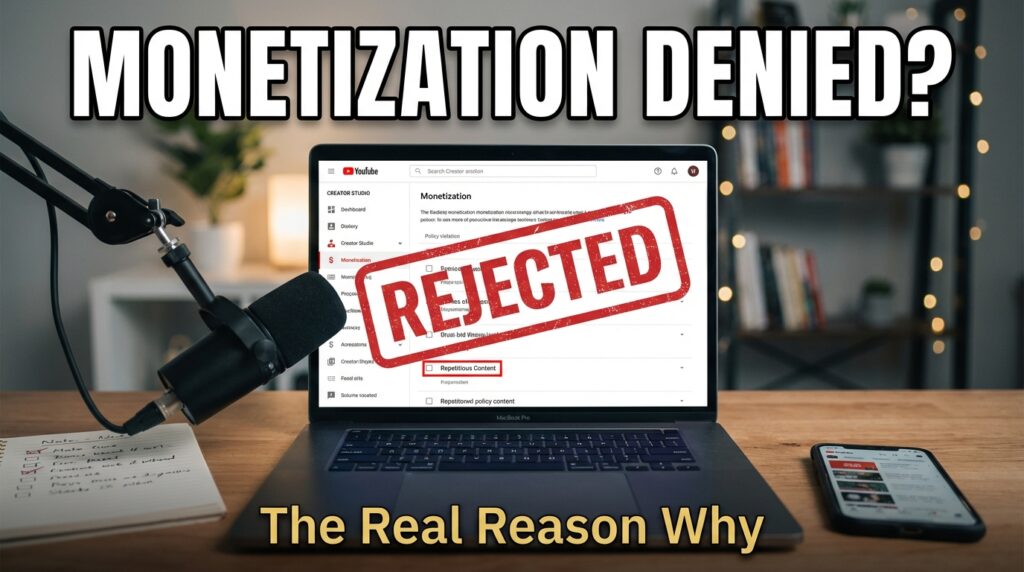

You’ve hit 1,000 subscribers and 4,000 watch hours. You submitted your application to the YouTube Partner Program, waited weeks, and then—rejection. The reason? “Repetitious content.”
You’re not alone. Thousands of creators face this exact denial every month, even with channels pulling 100K+ views. The frustrating part? YouTube’s explanation is vague, and you’re left wondering what you did wrong.
The truth is, YouTube doesn’t reject channels for being boring. They reject channels that automate content creation at scale without adding original value. If you’re using text-to-speech for Reddit compilations, AI voiceovers for automated videos, or churning out nearly identical content across multiple uploads, you’ve likely triggered their reused content policy—even if every view is legitimate.
This isn’t about your view count or watch time. It’s about whether YouTube believes a human actually created something new, or whether you’re running a content mill that floods the platform with low-effort material.
Key Takeaways
- Understand why text-to-speech content automatically flags YouTube’s reused content detectors
- Identify the specific patterns that trigger “repetitious content” rejections beyond just duplicate videos
- Learn what YouTube considers “original commentary” versus automated narration
- Discover how to audit your channel against YPP requirements before reapplying
- Recognize the difference between transformative content and content aggregation
What YouTube Actually Means by “Repetitious Content”
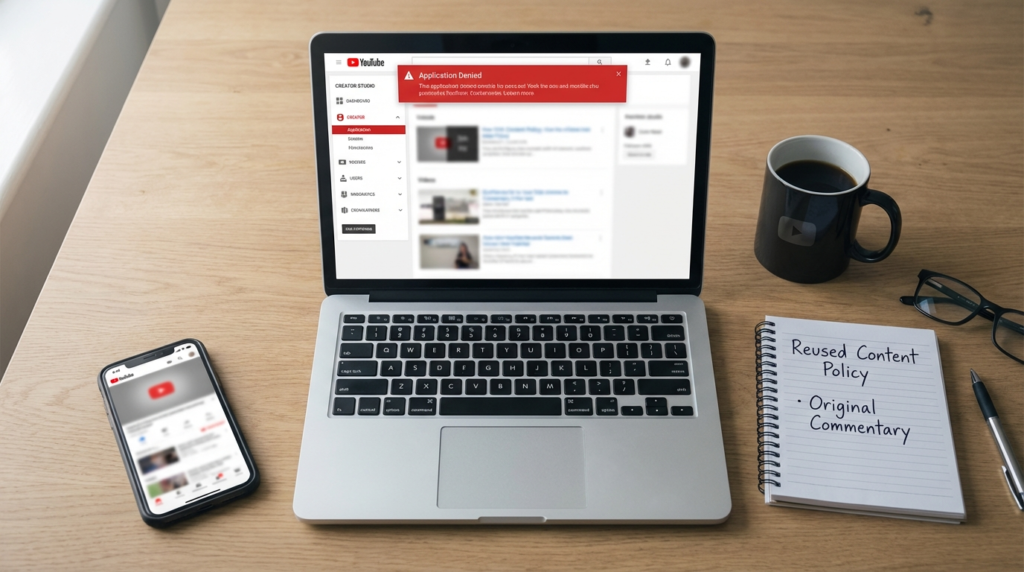
When YouTube says “repetitious content,” they’re not talking about uploading the same video twice. They’re flagging channels that produce content using templates, automation, or minimal creative input.
Here’s what falls under this policy:
Mass-produced videos that follow the same format across dozens of uploads. Think slideshows with background music, stock footage compilations, or Reddit story channels where only the text changes.
Reused content pulled from other sources without significant transformation. Reading someone else’s Reddit post word-for-word with text-to-speech doesn’t count as original work, even if you add subtitles or background gameplay.
Automated creation where software generates the bulk of your content. AI voiceovers, auto-generated captions, and template-based editing all raise red flags.
YouTube’s reviewers look for human involvement. Did someone write a script? Record their own voice? Edit with creative decisions? If your production process can run on autopilot, that’s the problem.
Why Text-to-Speech Gets You Rejected
Text-to-speech isn’t banned on YouTube. Major channels use it successfully. But here’s the catch—they add substantial original elements around it.
When you use TTS to narrate Reddit posts, Twitter threads, or web articles you didn’t write, YouTube sees this:
- No original writing (the post already exists)
- No human voice (automated narration)
- No unique perspective (you’re just republishing)
The algorithm can’t distinguish between your channel and the 5,000 other channels doing the exact same thing. From YouTube’s perspective, you’re duplicating content that already exists elsewhere.
Compare this to channels that pass monetization with TTS:
They write their own scripts. They add visual elements that support the narration. They provide context, analysis, or entertainment value beyond just reading text aloud. The TTS is a tool, not the entire production.
If 80% of your video is automated, you won’t get approved. It’s that simple.
The Reddit Story Channel Problem
Reddit compilation channels are a lightning rod for rejections. Thousands of creators have built channels around r/AskReddit, r/relationship_advice, or r/stories, and most hit a monetization wall.
Here’s why this format fails:
You’re not creating content—you’re curating it. Reddit users wrote the stories. You’re adding a voice (usually automated) and some background footage (usually reused). YouTube doesn’t consider this transformative.
Even channels with millions of views get denied because the format is inherently repetitive. Every video follows the same structure: open Reddit, find a thread, read comments, add stock footage or gameplay. Rinse and repeat.
The policy isn’t about whether people watch your videos. It’s about whether you’re adding enough original value to justify monetization.
How YouTube Reviews Channels for YPP
When you apply for monetization, a human reviewer watches your content. They’re not counting views or checking thumbnails. They’re asking one question: Did a person make this, or did software?
The review process focuses on these areas:
Voice and narration. Is there a real person speaking? If it’s TTS, is the script original? Do you add commentary or just read text?
Visual content. Did you film this? Create graphics? Or are you reusing stock footage, gameplay, or images from Google?
Editing and pacing. Are there creative cuts, transitions, or storytelling decisions? Or is it a slideshow with fade effects?
Repetition across uploads. Do all your videos follow the same template? If someone watches three videos, can they tell the difference?
Reviewers can spot patterns fast. If your last 20 uploads are Reddit posts over Subway Surfers gameplay, you’re getting rejected before they finish watching.
What Counts as Original Commentary
YouTube’s policy allows reused content if you add “original commentary.” But what does that actually mean?
It’s not enough to say “this story is crazy” or “let’s read this post.” Original commentary requires:
Analysis. Explain why something matters. Break down the implications. Provide context the original source doesn’t.
Reaction. Share your genuine response. What surprised you? What would you do differently? How does this connect to your experience?
Expertise. Offer knowledge the average viewer doesn’t have. If you’re a lawyer reacting to legal advice threads, that’s transformative. If you’re just reading, it’s not.
Entertainment value. Add humor, personality, or storytelling that changes how the content is experienced. Think reaction videos that transform the original through genuine engagement.
Reading a Reddit post in a funny voice isn’t commentary. Explaining why the advice is terrible, what OP should actually do, and why this situation happens—that’s commentary.
Channel Audit: What to Check Before Reapplying
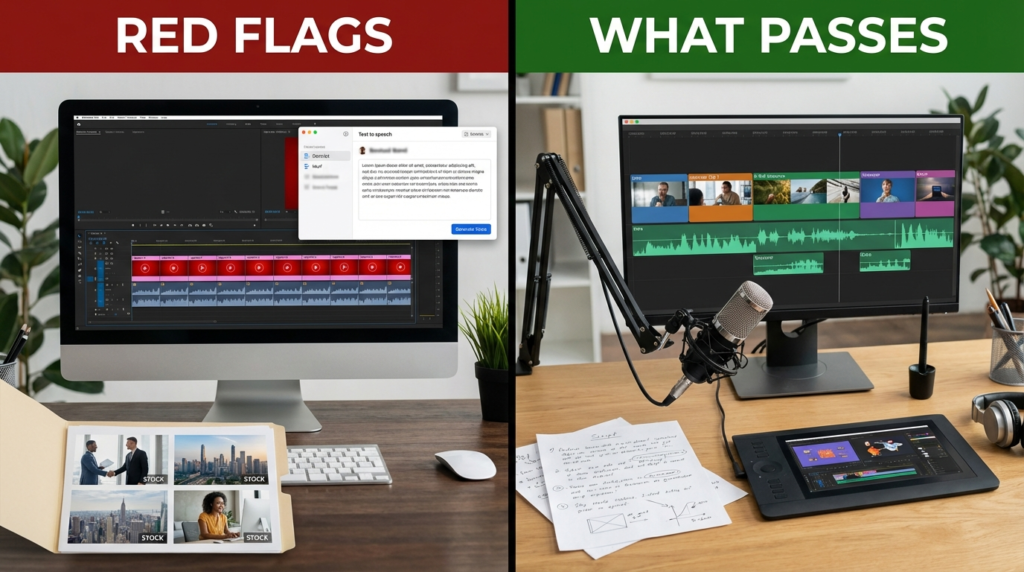
If you’ve been rejected, don’t reapply immediately. YouTube penalizes repeated failures. Instead, audit your content against these criteria:
| Review Area | Red Flag | What to Fix |
|---|---|---|
| Voice | TTS with no original script | Record your own voice or write unique scripts |
| Visuals | Stock footage or gameplay on loop | Film your own content or create custom graphics |
| Format | Every video uses same template | Vary structure, length, and presentation |
| Source Material | Reading others’ content verbatim | Write your own material or add substantial analysis |
| Editing | Minimal cuts, automated transitions | Add creative editing, pacing, visual storytelling |
Watch your last 10 uploads as if you’re the reviewer. Would you believe a human spent hours creating each one? Or does it look like a content factory?
Common Misconceptions About Monetization Denials
“I have high views, so my content must be good.” Views don’t equal eligibility. Clickbait works, but YouTube doesn’t monetize everything that gets clicks.
“Other channels do the same thing and they’re monetized.” They either got grandfathered in before policy changes, or they’re violating terms and haven’t been caught yet. Don’t use rule-breakers as your model.
“I added my own intro and outro.” Five seconds of original content doesn’t transform 10 minutes of reused material.
“I’m not copying videos, I’m using public posts.” Doesn’t matter. If you’re not adding significant value, it’s still reused content.
“I’ll just start a new channel.” YouTube tracks ownership. Multiple rejected channels can lead to permanent bans from monetization.
What Actually Gets Approved
Channels that pass monetization share specific traits. They put human effort into every upload.
Successful formats include:
Educational content where you explain concepts in your own words. You can reference sources, but the teaching is yours.
Commentary and critique where your perspective is the main value. The original content is secondary to your analysis.
How-to videos where you demonstrate skills, even if others have covered the same topic. Your execution is the original element.
Personal storytelling where you share your own experiences, even if you use visuals from elsewhere.
The pattern? The creator is the value, not the source material.
The Reapplication Process
You can reapply 30 days after rejection. But reapplying with the same content guarantees another rejection.
Before you resubmit:
Remove or private videos that violate the policy. You need at least 10-15 videos that demonstrate original work.
Create new content that shows human involvement. Film yourself. Write your own scripts. Edit with intention.
Check your channel against YouTube’s examples of reused content. They specifically call out compilations, TTS narration of others’ content, and template-based videos.
Wait the full 30 days. Reapplying early resets the timer and flags you as impatient.
When you reapply, YouTube reviews your entire public catalog. One good video won’t offset 50 automated ones.
Alternatives If You Can’t Get Monetized
If your content model won’t pass YPP, you have options outside AdSense.
Affiliate marketing. Link to products in your description. You don’t need monetization for this.
Sponsorships. Brands don’t care about YPP status if you have an engaged audience.
Patreon or memberships. Viewers can support you directly without YouTube’s cut.
Selling products or services. Use YouTube as a funnel to your own offers.
Content licensing. If you have viral videos, media outlets might pay to use them.
These methods often pay better than AdSense anyway. A channel with 10K loyal subscribers and a Patreon makes more than a channel with 100K passive viewers and ads.
How to Build a Monetizable Channel From Scratch
If you’re starting fresh, design your content model around YouTube’s policies from day one.
Start with what you know. Can you teach something? Review products? Share experiences? The topic matters less than your ability to add original value.
Invest in basic equipment. You don’t need $1,000 gear, but a decent microphone and editing software make you sound professional.
Develop a unique angle. If you’re covering popular topics, what makes your take different? Your background? Your humor? Your presentation style?
Focus on scripting. Write out what you’ll say, even if you ad-lib during recording. This forces you to add your own thoughts instead of just reading sources.
Edit intentionally. Every cut should have a reason. Remove dead air, add relevant visuals, control pacing. Editing is where content becomes engaging.
Final Checklist Before Submitting for Monetization
Before you hit apply, verify:
- At least 15 videos with original narration (your voice or unique TTS scripts you wrote)
- Visuals you created, filmed, or have clear rights to use
- No videos that simply read others’ content without transformation
- Varied content that doesn’t follow the exact same template every time
- Clear evidence of editing decisions beyond automated tools
- Content that would take hours to recreate, not minutes
If you can recreate your entire channel in a weekend using automation, you’re not getting approved.
Wrapping Up
YouTube’s repetitious content policy isn’t about preventing competition. It’s about maintaining platform quality and advertiser confidence. Brands don’t want to run ads on content mills that flood the platform with automated uploads.
Your path forward depends on honesty. Can you create content that requires human creativity, or is your model built on automation? If it’s the latter, you need a new approach.
Focus on the value you uniquely provide. What do you bring that no one else can? Build your channel around that answer, and monetization becomes achievable.
Have you been rejected for repetitious content? What changes did you make to get approved, or what’s holding you back from reapplying? Drop your experience in the comments—your insights might help someone else figure out their next step.
Frequently Asked Questions
Can I use text-to-speech and still get monetized? Yes, but only if you’re reading original scripts you wrote yourself. Using TTS to narrate Reddit posts, news articles, or other people’s content will get rejected. The narration method matters less than whether the words are yours.
How many videos do I need to delete before reapplying? Remove any video that’s primarily reused content. YouTube needs to see a clear pattern of original work across your public uploads. Most successful reapplications keep only videos that demonstrate significant human involvement—typically this means removing 50-80% of automated content.
What if other monetized channels are doing the same thing I got rejected for? Enforcement isn’t instant. Channels using prohibited methods either got approved before policy updates, haven’t been reviewed yet, or are violating terms without consequences so far. Don’t model your channel after rule-breakers—build something sustainable instead.
How long should I wait to reapply after making changes? Wait the full 30 days required by YouTube, but more importantly, wait until you have 10-15 new videos that clearly demonstrate original work. Reapplying with the same content just gets you rejected faster. Give reviewers evidence that you’ve changed your approach.