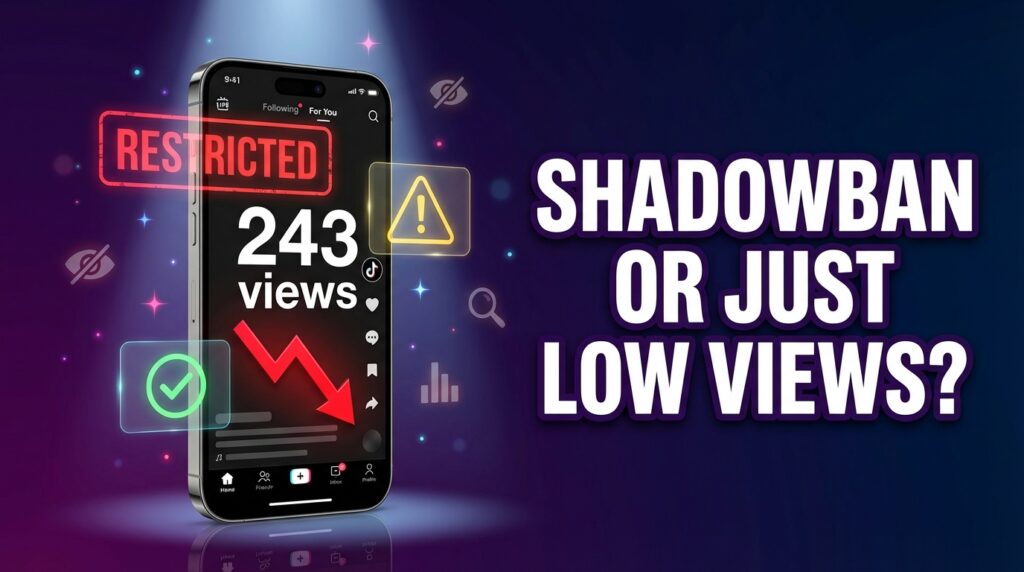

You’ve posted what you thought was fire content, but your views tanked from thousands to double digits overnight. Your first thought? “I’ve been shadowbanned.” But here’s what most creators don’t realize—what feels like a shadowban is often something completely different, and fixing it requires understanding what’s actually happening to your account.
TikTok doesn’t officially acknowledge shadowbans exist, yet creators experience sudden drops in reach all the time. The confusion comes from not knowing whether you’re dealing with a legitimate content restriction, an algorithmic hiccup, or just content that didn’t resonate. Each scenario has different fixes, and treating them all the same keeps you stuck in low-view hell.
This guide breaks down the real technical restrictions TikTok uses, the specific content triggers that flag your videos, and how to diagnose what’s actually affecting your account. You’ll learn the difference between being penalized and simply not performing well—because throwing away a perfectly good account over a bad week wastes months of growth.
Key Takeaways
- Distinguish between restrictions and performance: True account limitations show specific patterns (consistent triple-digit views, zero For You Page reach, search invisibility), while regular low performance varies by video
- Identify actual violation triggers: TikTok’s automated systems flag specific visual elements—visible weapons, smoke/vaping clouds, explicit text, copyrighted audio—not just your topic or niche
- Test your account status: Check if you appear in search results, verify your analytics show FYP impressions, and monitor if ALL videos underperform or just recent ones
- Fix content violations first: Remove flagged videos, switch to royalty-free sounds, avoid showing restricted items on-screen, and let your account reset for 48-72 hours
- Stop common mistakes: Don’t delete your entire posting history, don’t create new accounts immediately, and don’t spam-post trying to break through—all three make things worse
What TikTok Actually Restricts (And What They Call It)
TikTok doesn’t use the term “shadowban” in their documentation. Instead, they apply specific content restrictions that limit where your videos appear. These aren’t mysterious punishments—they’re automated responses to policy violations.
Account-Level Restrictions happen when TikTok detects repeated guideline violations. Your videos won’t appear on the For You Page, but followers can still see them. You’ll notice views cap around 200-300 per video regardless of quality. This usually lasts 1-2 weeks but can extend if you keep violating policies.
Video-Level Restrictions are more common and affect individual posts. The system flags specific content during upload, limiting its distribution immediately. The video might get 50-100 views then stop completely. It stays on your profile, but TikTok won’t push it to new viewers.
Search Suppression means your account doesn’t appear when people search your username or relevant hashtags. This typically indicates spam behavior—mass following/unfollowing, aggressive comment engagement, or using banned automation tools. According to TikTok’s Community Guidelines, this protection prevents artificial engagement manipulation.
The Specific Content Triggers That Actually Get You Flagged
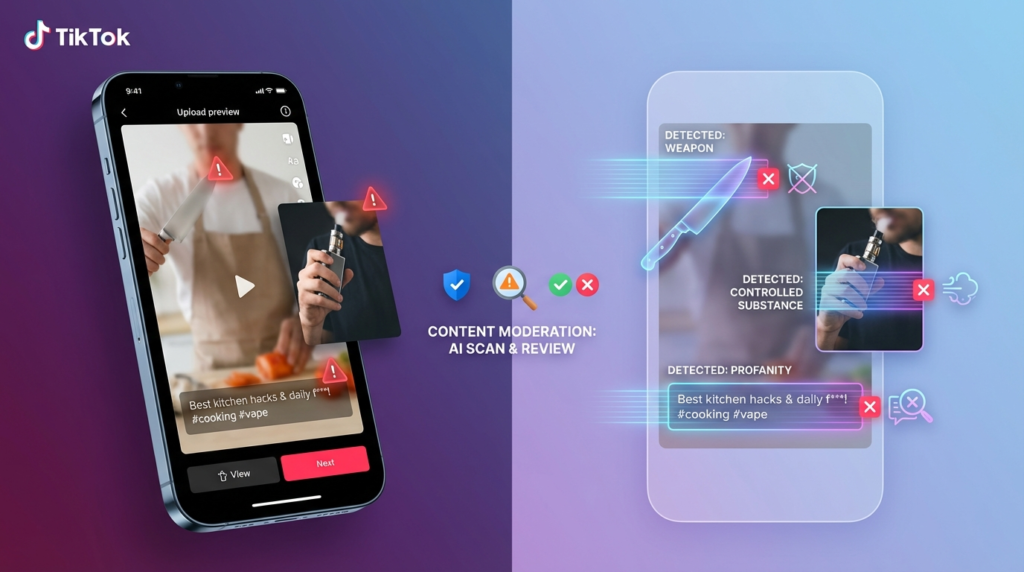
TikTok’s moderation uses visual recognition AI that scans every frame of your video before it goes live. Understanding these triggers matters more than guessing about algorithm preferences.
Weapons and Sharp Objects: The system detects knives, guns, brass knuckles, or anything resembling a weapon. Cooking videos showing knife skills get flagged constantly. The AI can’t tell context—it just sees the object. Even prop weapons from cosplay or historical reenactments trigger restrictions.
Smoke and Vapor: Vaping clouds, cigarette smoke, hookah, or even stage fog effects cause instant flags. The system interprets these as substance use. Steam from cooking might get caught too if it’s dense enough.
Visible Pills or Substances: Showing medication bottles, supplements, or any powder-like substance risks restriction. Health and wellness creators run into this when demonstrating vitamins or supplements.
Explicit Text Overlays: Curse words, sexual references, or drug-related terms in your on-screen text trigger content filters even if you bleep them in audio. The text recognition scans everything, including comments you screenshot.
Copyrighted Content: Using sounds flagged for copyright issues limits distribution automatically. TikTok won’t remove the video but will restrict its reach. The Copyright Policy explains how rights holders can claim content, which then affects anyone using that audio.
Nudity and Suggestive Content: Swimwear is allowed, but certain angles, movements, or combinations with suggestive captions trigger age restrictions. The AI looks for specific body positions and clothing combinations.
Repetitive Content: Posting the same video multiple times, using identical captions repeatedly, or uploading slight variations of the same content signals spam behavior.
| Content Type | What Gets Flagged | What’s Usually Safe |
|---|---|---|
| Kitchen/Cooking | Knife close-ups, chopping demonstrations | Finished dishes, cooking processes without blade focus |
| Fitness | Supplement pills visible, protein powder scooping | Workout demonstrations, form checks |
| Beauty/Lifestyle | Vaping, smoking references | Makeup tutorials, skincare routines |
| Gaming | Violent game footage with blood | Gameplay commentary, strategy guides |
| Music/Dance | Copyrighted full songs | Trending sounds, original audio |
How to Actually Test If You’re Restricted
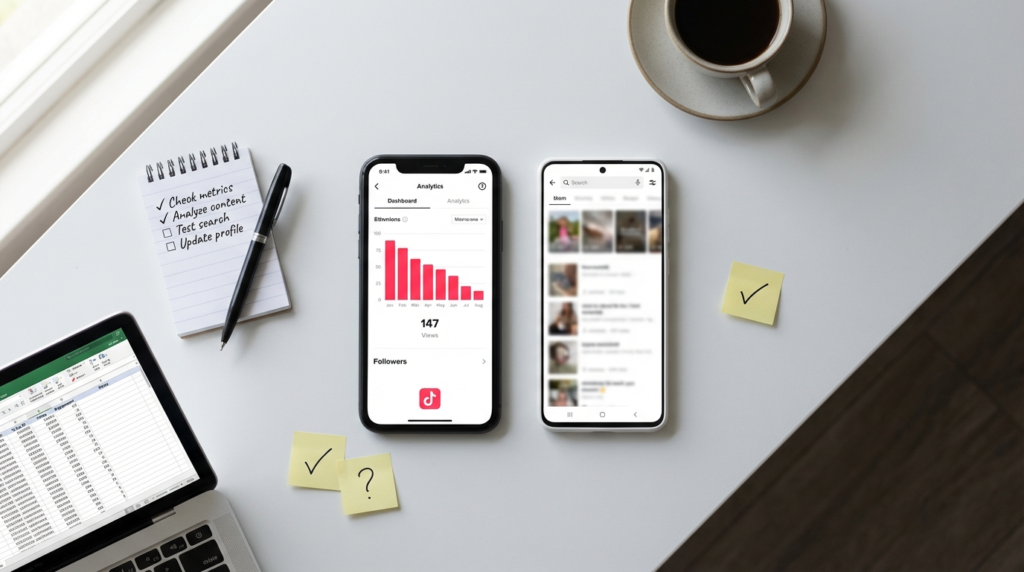
Stop guessing. Run these specific checks to determine your account status.
Search Visibility Test: Open TikTok in a private browser or logged-out session. Search your exact username. If you don’t appear in results at all, you’re experiencing search suppression. If you appear but your recent videos don’t show up when searching relevant hashtags, that’s content-level restriction.
For You Page Verification: Check your analytics for any video from the last week. Click into the video, tap the three dots, select “Analytics.” Look at traffic sources. If “For You” shows 0% or less than 5% consistently across multiple videos, you’re likely restricted. Normal accounts see 60-80% FYP traffic on decent content.
Follower-Only Pattern: Post a video and check views after 2 hours. If views match roughly 10-20% of your follower count and then flatline, your content isn’t leaving your existing audience. True restrictions keep you trapped there.
Timeline Comparison: Review your analytics for the past 30 days. If one video performed badly but others did fine, that’s normal variance. If every single video since a specific date gets identical low views (like all hitting 150-200), that suggests account restriction.
Engagement Ratio Check: Calculate your average engagement rate (likes + comments + shares / views). If views dropped but your engagement rate stayed similar, your content just didn’t catch the algorithm. If views AND engagement both tanked simultaneously, something else is happening.
The Real Difference Between Being Penalized and Just Posting Bad Content
This distinction saves creators from abandoning good accounts unnecessarily.
Actual Penalties Show Patterns: When TikTok restricts you, every video performs identically bad. You’ll post different content types, different times, different topics—all get the same low numbers. This consistency indicates systematic limitation, not content quality.
Bad Content Shows Variance: If some videos still break 1,000 views while others struggle, you’re not shadowbanned. The algorithm tested your content, and viewers didn’t engage enough to push it further. Your next video could pop off.
Restriction Timing Matters: True restrictions usually start immediately after violating guidelines. If you posted questionable content on Monday and Tuesday your views died, there’s correlation. If your views declined gradually over two weeks, that’s audience fatigue or content quality issues.
Follower Behavior Differs: Restricted accounts see followers still engaging normally in comments and likes—the content just doesn’t reach new people. Low-quality content sees declining engagement from existing followers too because they’re genuinely not interested.
How to Fix Legitimate Content Violations
If testing confirms you’ve got actual restrictions, these steps reset your standing.
Remove Flagged Content: Delete any videos that violated guidelines. TikTok’s system checks your account status partially based on current content. Leaving violations up extends your restriction period.
Replace Copyrighted Audio: Go through recent videos using trending sounds. If any show limited distribution, swap the audio for royalty-free music or original sounds. You can’t edit videos after posting, so you’ll need to delete and repost.
Wait 48-72 Hours: After removing violations, stop posting. Let TikTok’s automated system reassess your account. Most content-level restrictions lift within 3 days if you don’t add new violations.
Submit First Appeal Only: If you believe you didn’t violate anything, appeal once through the video’s report option. Multiple appeals annoy moderators and can extend review times. One clear appeal explaining why your content follows guidelines is enough.
Gradually Resume Posting: Don’t immediately post 5 videos when restrictions lift. Start with one obviously guideline-friendly video. If it performs normally, you’re clear.
What Not to Do (These Make It Worse)
Panic responses cause more damage than the original issue.
Don’t Delete Your Entire Account: Your posting history, follower relationships, and engagement data represent months of work. Restrictions are temporary. Starting over means rebuilding everything, and new accounts face heavier scrutiny anyway.
Don’t Create Multiple Accounts: Making backup accounts while restricted links them to your flagged account. TikTok tracks device IDs and IP addresses. If one account gets restricted for violations, creating another doesn’t hide you—it associates your new account with problematic behavior.
Don’t Spam Post: Flooding your account with content trying to “break through” looks like bot behavior. It won’t override restrictions and might trigger additional spam flags.
Don’t Buy Engagement: Purchased views, likes, or followers during restrictions get detected fast. Inauthentic engagement violates platform rules and extends your penalty period indefinitely.
Don’t Use VPNs or Account Switchers: These tools make you look like you’re evading restrictions. TikTok’s systems interpret this as ban evasion, which upgrades temporary restrictions to permanent ones.
Why Normal Low Performance Happens (And It’s Not Personal)
Understanding algorithm mechanics prevents misdiagnosis.
Initial Testing Phase: TikTok shows new videos to 200-500 people first. If those viewers don’t watch through or engage, the video stops there. This isn’t a ban—it’s the normal filter. Maybe your hook wasn’t strong enough, maybe your target audience wasn’t in that test group.
Audience Saturation: Posting too frequently in the same niche exhausts your audience. They’ve seen your content type multiple times this week already. Their declining engagement signals TikTok to slow your distribution because viewers aren’t responding enthusiastically anymore.
Content Evolution Lag: Your audience followed you for specific content. When you shift topics or styles, the algorithm still pushes videos to your old audience first. They don’t engage because it’s not what they wanted, so the video underperforms until TikTok finds your new audience.
Posting Time Misalignment: If your core audience is active 8-10 PM but you post at 2 PM, the initial test group won’t match your true fans. Lower early engagement signals poor content quality to the algorithm, limiting further distribution.
Trend Timing Issues: Jumping on trends too early means not enough people recognize the reference. Joining too late means the audience is bored with it. Both scenarios result in low views that have nothing to do with restrictions.
How to Recover From Actual Low Quality Streaks
When it’s genuinely your content needing work, not the algorithm punishing you.
Study Your Top Performers: Open analytics on your best 5 videos. Note the opening 3 seconds—what grabbed attention? Check average watch time—where did viewers drop off in your recent flops? Identify the specific difference.
Analyze Hook Strength: Your first second determines everything. If viewers scroll past immediately, TikTok won’t push your video further regardless of what comes after. Test different hook styles: questions, bold statements, visual surprises, or relatable problems.
Check Your Editing Pace: Dead space kills retention. If you have 2-second gaps between sentences or slow transitions, viewers leave. Successful content keeps something happening every 1-2 seconds—text changes, camera cuts, new information.
Verify Audio Quality: Muffled voice audio or music too loud over dialogue frustrates viewers. They’ll scroll rather than strain to hear you. Test your videos with headphones and phone speakers to catch audio balance issues.
Test Different Content Pillars: If one content type stops working, introduce variations. Educational creators can add entertainment elements. Entertainment accounts can incorporate quick tips. The algorithm rewards diversity within your niche.
When Restrictions Actually End (Real Timelines)
Most creators don’t know how long different restriction types last.
Video-Level Flags: These rarely lift. If a specific video got restricted, it stays limited permanently. Your account isn’t penalized—just that one piece of content. Keep posting other videos normally.
Account-Level Soft Restrictions: Typically last 7-14 days from your last violation. If you removed problematic content on Monday, expect normal distribution to resume the following Monday at earliest. The system needs time to verify you’ve stopped violating guidelines.
Search Suppression: Usually resolves in 2-4 weeks after stopping spam behavior. Mass following/unfollowing requires the longest recovery—sometimes 30 days. The system monitors for pattern changes, not just immediate behavior.
Copyright Strikes: These stay on your account but don’t cause ongoing restrictions if you stop using flagged content. However, three strikes can result in permanent account removal. Each strike expires after 90 days of clean activity.
Appeal Reversals: If you appeal successfully, restrictions lift within 24-48 hours of the decision. TikTok will notify you through in-app messages if your appeal succeeded.
Frequently Asked Questions
Can I get shadowbanned for posting too much?
No, but posting 10+ videos daily can trigger spam filters that limit distribution temporarily. TikTok prefers 1-3 quality posts per day. Excessive posting also saturates your audience, causing natural engagement decline that feels like restriction but isn’t.
Will using banned hashtags get my whole account restricted?
Individual videos using banned or problematic hashtags get limited, not your entire account. Remove those hashtags and repost the video with clean tags. Your other content continues distributing normally. Check hashtag status by searching it—if it shows “no results” or “few results,” it’s likely filtered.
How long until my views come back after fixing violations?
Most accounts see normal distribution resume 3-7 days after removing violating content and maintaining clean posts. During this waiting period, post 1-2 highly guideline-compliant videos to demonstrate good standing. Avoid your usual risky content types temporarily.
Does deleting comments or blocking users affect my reach?
No. Managing comments and blocking spam accounts are normal account maintenance actions. TikTok encourages these behaviors to maintain community standards. Mass blocking hundreds of accounts quickly might look suspicious, but typical moderation doesn’t cause restrictions.
Conclusion
Real TikTok restrictions follow specific patterns: consistent low views across all content, zero For You Page reach in analytics, and invisibility in search results. If your performance varies video to video, you’re dealing with content quality issues, not platform penalties. Fix this by removing any flagged content showing weapons, smoke, or copyrighted material, then wait 48-72 hours before posting guideline-safe videos.
Stop deleting your account or creating backups every time views drop. Test your actual restriction status first—check search visibility, analyze FYP percentage in analytics, and compare performance across multiple videos. Most “shadowbans” are actually just content that didn’t hook viewers in the first three seconds or misaligned with your audience’s current interests.
Have you checked your analytics traffic sources recently, or are you just guessing based on view counts? Drop your specific situation in the comments—the pattern of when views dropped and what content you posted before it happened helps identify whether you’re restricted or just need to adjust your content strategy.