
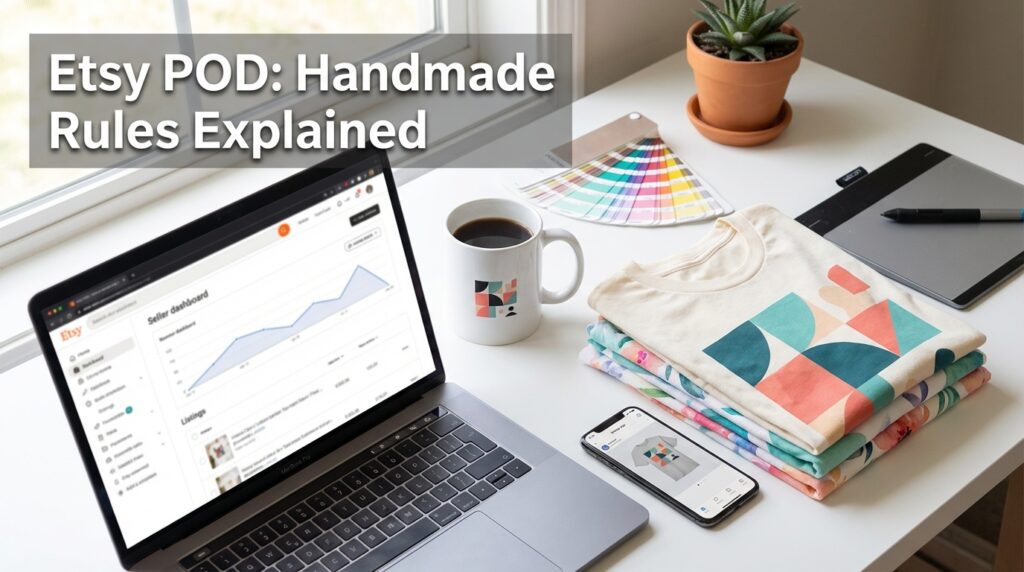

You’ve got a print-on-demand business idea and you’re eyeing Etsy as your marketplace. But there’s a problem: Etsy calls itself a handmade marketplace, and your POD products are printed by a third-party company you’ve never met. So where does that leave you?
The short answer is yes, you can sell POD on Etsy—but only if you follow their specific rules. Etsy doesn’t consider POD automatically “handmade,” but they do allow it under their “production partner” guidelines. The confusion comes from Etsy’s policy updates that changed how sellers must disclose their manufacturing process. Get it wrong, and your shop could face suspension.
Key Takeaways:
• Declare all production partners in your shop settings before listing POD items • Design the product yourself—you can’t resell someone else’s designs • Disclose your production process in each listing description • Avoid dropshipping generic products with zero creative input • Keep proof of your design ownership in case Etsy asks for verification
What Etsy Actually Defines as Handmade
Etsy’s handmade policy isn’t as simple as “made by hand.” The platform recognizes three main selling categories: handmade, vintage, and craft supplies. For POD sellers, you’re working within the handmade category, but with a twist.
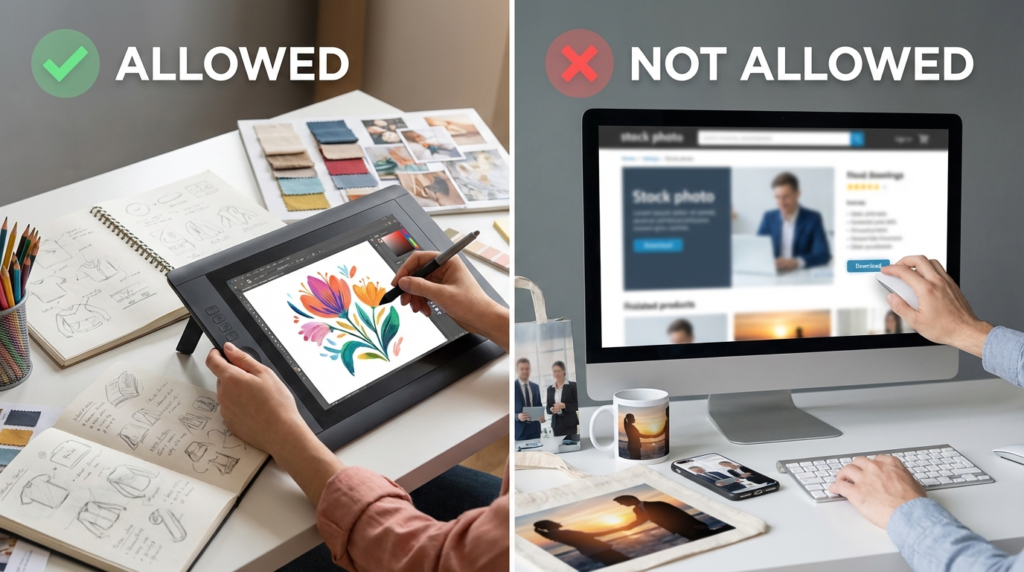
According to Etsy’s Seller Policy, handmade items must be made or designed by you. That “or designed” part is crucial for POD sellers. You don’t need to physically print the shirt or pour the candle yourself. But you do need to create the original design, artwork, or concept that goes on the product.
Etsy draws a hard line at reselling. If you’re downloading generic designs from the internet or buying templates to slap on products, that violates their policy. Your creative input must be substantial and original.
The Production Partner Rule Explained
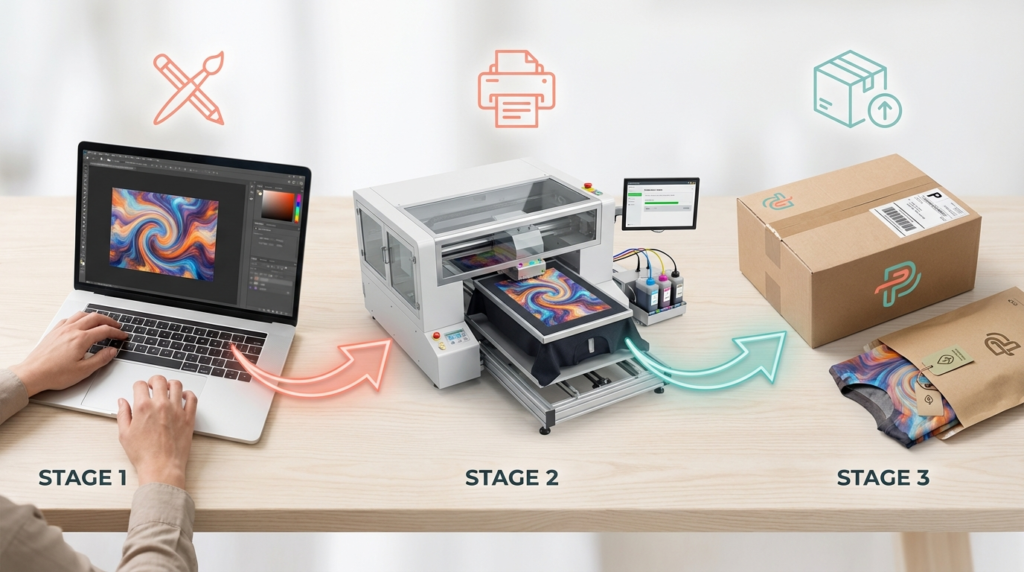
This is where most sellers get tripped up. Etsy allows you to work with production partners, but you must disclose them properly. A production partner is any person or company that helps make your products—including POD companies like Printful, Printify, or Gelato.
Here’s what you need to do:
In Your Shop Settings: Go to Shop Manager, click on Settings, then Production Partners. Add every POD service you use. Include their business name and what they produce for you (shirts, mugs, posters, etc.). This information becomes part of your public shop profile.
In Each Listing: Your product description must mention that you use a production partner. You don’t need to write an essay about it, but buyers should know the item isn’t made in your garage. A simple line like “Professionally printed by my production partner” works fine.
Etsy reviews shops randomly and investigates reports from buyers or competitors. If they find undisclosed production partners, they can suspend your shop without warning. It’s not worth the risk.
What Counts as Your Original Design
Etsy wants to see your creative stamp on every product. But what does “original design” actually mean for POD sellers?
You can create designs using:
• Your own illustrations, drawings, or paintings • Photographs you took yourself • Digital art you made in Photoshop, Illustrator, or Canva • Typography and layouts you designed from scratch • Combinations of public domain images you arranged uniquely
You cannot use:
• Stock graphics you didn’t significantly modify • Fonts or clip art that require commercial licenses you don’t have • Copyrighted characters, logos, or trademarked phrases • AI-generated images you didn’t create yourself (Etsy’s policy on this is evolving) • Templates you bought that don’t allow commercial resale
The legal test is simple: if someone accused you of copying their work, could you prove the design is yours? Keep your original files, sketches, or reference photos. Etsy can request proof of ownership during policy reviews.
POD Categories That Work on Etsy
Not all POD products fit Etsy’s marketplace. The platform favors items with clear creative or artisan value. Here’s what typically succeeds:
| Product Type | Etsy-Friendly? | Why |
|---|---|---|
| Custom art prints | Yes | Original artwork with clear creator value |
| Personalized apparel | Yes | Custom designs, especially niche humor or art |
| Wedding invitations | Yes | Customization for specific events |
| Home decor (pillows, blankets) | Yes | When featuring original patterns or art |
| Phone cases | Maybe | Only if design is unique, not generic quotes |
| Generic motivational posters | No | Oversaturated, low creative value |
| Branded merchandise | No | Trademark violations |
The marketplace skews toward buyers looking for unique, personalized, or artistic items. If your POD product looks like something they could find on Amazon for less money, it won’t gain traction.
Common Mistakes That Get Shops Suspended
Etsy doesn’t always give warnings before taking action. These violations lead to immediate consequences:
Selling resold designs: Buying a design bundle and printing it on products counts as reselling manufactured goods. Even if you purchased a commercial license, Etsy sees this as you acting as a retailer, not a creator.
Missing production partner disclosure: Every POD company must be listed in your shop settings. If you switch from Printful to Printify and forget to update your settings, that’s a violation.
Vague or missing listing descriptions: Writing “handmade with love” when a factory printed it is misleading. Buyers report shops for dishonest descriptions, and Etsy takes these reports seriously.
Copyright infringement: Using Disney characters, sports team logos, or song lyrics without permission gets you shut down fast. Copyright holders actively monitor Etsy and file takedown requests.
Dropshipping prohibited items: Some POD companies offer products Etsy doesn’t allow, like supplements or electronics. Just because your POD partner offers it doesn’t mean Etsy permits it.
How to Set Up Your POD Shop Correctly
Getting started right prevents headaches later. Follow this checklist before listing your first product:
- Create your designs in a program where you can save the original files (PSD, AI, or even high-res PNG files with layers).
- Sign up with your POD service and test their product quality. Order samples to photograph for your listings—Etsy encourages real product photos over mockups.
- Add your production partner in Shop Manager under Settings > Production Partners. Be specific about what they make.
- Write clear listing descriptions that mention your design process and production method. Example: “I designed this pattern digitally and work with a professional printing partner to create each item on-demand.”
- Take mockup photos or real product shots. Etsy’s algorithm favors listings with multiple high-quality images.
- Price your items to compete with Etsy’s market, not Amazon’s. Buyers expect to pay more for unique designs and support independent creators.
- Set realistic processing times. POD products typically take 3-7 business days before shipping. Add that to shipping time in your policies.
The Difference Between POD and Dropshipping on Etsy
Etsy allows POD but prohibits traditional dropshipping. The distinction matters:
Print on Demand (Allowed): You create the design. A production partner prints it on blank products. You control the creative process and customer service. Examples: Printful, Printify, Gelato.
Dropshipping (Not Allowed): You list products made by someone else. A supplier ships directly to customers. You have no creative input. Examples: AliExpress suppliers, wholesale vendors you don’t design for.
The key difference is creative control. If you’re just acting as a middleman between a supplier and a customer, that’s dropshipping and it violates Etsy’s policies. Your role must be designer, curator, or maker—not just retailer.
Balancing Etsy’s Rules with Business Growth
Following Etsy’s guidelines doesn’t mean you can’t scale your POD business. Thousands of successful Etsy sellers use production partners while maintaining the handmade spirit of the platform.
Focus on what makes your designs unique. Etsy buyers aren’t just purchasing a product—they’re buying into your creative vision. Your shop’s story, your design style, and your customer service matter as much as the physical item.
Consider creating variations of your best sellers. If a particular art style or phrase resonates with buyers, develop it into a collection. Etsy’s algorithm rewards shops that regularly add new listings and maintain consistent sales.
Don’t spread yourself too thin across products. Master one or two POD categories before expanding. A shop with 20 excellent shirt designs outperforms a shop with 5 mediocre designs across shirts, mugs, and phone cases.
Stay updated on policy changes. Etsy tweaks its seller requirements periodically, especially around production partners and intellectual property. Check the Seller Handbook quarterly and read announcements in your Shop Manager dashboard.
What Happens During an Etsy Policy Review
Etsy conducts random reviews and investigates seller reports. If your shop gets flagged, here’s what to expect:
You’ll receive an email requesting information about your production process. They might ask for proof of design ownership—original files, timestamps showing when you created the design, or screenshots of your design software.
Respond quickly and completely. Etsy gives you a deadline (usually 48-72 hours) to provide documentation. Missing the deadline can result in immediate suspension.
Be honest in your response. If you made a mistake by not disclosing a production partner, admit it and fix it immediately. Etsy is more lenient with sellers who acknowledge errors and correct them.
If your shop gets suspended, you can appeal. But appeals take time, and your shop stays down during the review. This is why getting it right from the start matters so much.
Frequently Asked Questions
Can I use Canva templates for my POD products on Etsy? Only if you significantly modify them. Basic Canva templates used as-is don’t qualify as your original design. Add your own elements, change colors substantially, or combine multiple templates in unique ways. Keep records showing your modifications.
Do I need to tell buyers exactly which company prints my products? No. You must disclose that you use a production partner in your settings and listings, but you don’t have to name the specific company publicly. Many sellers write “trusted printing partner” or “professional production partner” in descriptions.
Can I sell the same POD designs on other platforms? Yes. Etsy doesn’t require exclusivity. You can sell your designs on your own website, Amazon Merch, Redbubble, or anywhere else. Just ensure you’re following each platform’s individual policies.
What if my POD company makes a mistake on an order? You’re responsible for customer service even if your production partner messes up. Handle the complaint professionally, offer a refund or replacement, then work with your POD company to resolve it on their end. Your Etsy shop’s reputation depends on how you manage these situations.
Moving Forward with Your POD Etsy Shop
Selling print on demand on Etsy works when you respect the platform’s creative marketplace model. You’re not just reselling products—you’re offering buyers access to your original designs on quality items they can’t find in traditional retail stores.
Set up your production partners correctly from day one. Create designs you’re proud to attach your name to. Write honest listing descriptions that tell buyers exactly what they’re getting and how it’s made.
The sellers who thrive on Etsy with POD treat it as a creative business, not a passive income scheme. Your designs should reflect your artistic vision or fill a specific niche that mainstream manufacturers ignore.
What’s your biggest concern about starting a POD shop on Etsy—understanding the design requirements or figuring out which products sell best? Drop your questions in the comments so other sellers can learn from the discussion.