

You’ve spent weeks setting up your Shopify store, uploaded products, ran ads, and finally made your first sales. Then one morning, you check your email and see it: “Your account has been suspended for violating our Acceptable Use Policy.”
Your payments are frozen. Your store is offline. And worst of all, Shopify won’t tell you exactly what you did wrong.
This happens to thousands of merchants every year, and most didn’t even know they were breaking the rules. Shopify’s Acceptable Use Policy isn’t just fine print—it’s a moving target that can shut down your business overnight, especially if you’re selling supplements, CBD products, adult items, or anything in that grey area between legal and “we don’t want the liability.”
The frustrating part? Many of these products are perfectly legal to sell. But Shopify isn’t just following the law—they’re following payment processor rules, brand image concerns, and risk management policies that go way beyond what’s technically allowed.
Key Takeaways:
• Review Shopify’s prohibited products list before choosing your niche—legal doesn’t mean allowed • Understand that payment processors (not just Shopify) dictate what you can sell • Check if your product category requires additional documentation or falls into “high-risk” territory • Know the difference between outright banned items and restricted products that need approval • Have a backup plan if selling borderline products—alternative platforms exist for high-risk niches
What Makes a Product “High-Risk” on Shopify?
Shopify doesn’t use the term “high-risk” in their policy documents, but their payment partners do. When Stripe, PayPal, or Shopify Payments evaluates your store, they’re looking at chargeback rates, fraud potential, and regulatory headaches.
Supplements fall into this category because customers often dispute charges months later claiming the product “didn’t work.” CBD products create legal complications since they’re still federally illegal in some jurisdictions. Even drop-shipped electronics can trigger flags if customers receive knockoff items and file complaints.
The pattern is clear: if your product category has high return rates, unclear claims, or murky legal status, you’re already on thin ice.
Products Explicitly Banned on Shopify
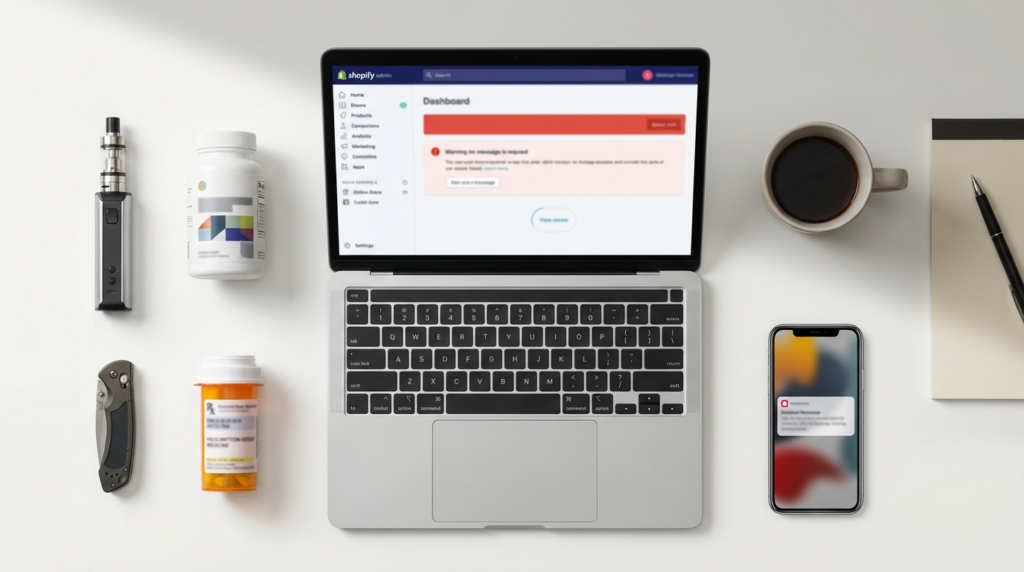
Shopify’s Acceptable Use Policy lists specific categories that will get you shut down immediately. These aren’t suggestions—they’re hard lines.
Weapons and explosives top the list. You can’t sell firearms, ammunition, or even realistic replicas in most cases. Knives are allowed only if marketed for culinary or utility purposes, not self-defense.
Illegal drugs and drug paraphernalia are obvious no-gos, but the definition extends further than you’d think. Kratom occupies a legal grey area in many states, yet Shopify treats it as prohibited. Same goes for certain nootropics and research chemicals, even if they’re not scheduled substances.
Tobacco and vaping products got significantly restricted after 2019. You can’t sell cigarettes, e-cigarettes, vape juice, or related accessories through Shopify Payments anymore. Some merchants find workarounds using third-party processors, but that’s walking a tightrope.
Adult content and services are banned, which includes anything sexually explicit. This extends to certain lingerie if marketed suggestively, sex toys, and escort services. Even educational content about sex can trigger reviews if it includes explicit imagery.
Regulated goods need special approval. This covers alcohol in many regions, prescription medications, medical devices that make health claims, and supplements that promise to cure diseases. The FDA doesn’t play games with medical claims, and neither does Shopify.
| Banned Category | Why It’s Prohibited | Common Mistake |
|---|---|---|
| Weapons/Explosives | Payment processor liability | Selling “tactical” knives marketed for defense |
| Illegal Drugs | Federal law violations | Selling kratom or “legal highs” |
| Tobacco/Vaping | Age verification issues | Drop-shipping vape accessories |
| Adult Content | Brand image concerns | Listing risqué lingerie with suggestive photos |
| Rx Medications | Requires licensing | Selling prescription creams without authorization |
The Supplement Industry’s Shopify Problem
Supplements represent the biggest grey area for Shopify merchants. The category isn’t banned outright, but the rules are strict and inconsistently enforced.
You can sell vitamins and minerals without much issue. Standard protein powders usually pass review. But the moment you start making health claims—”burns fat,” “boosts testosterone,” “cures anxiety”—you’re in violation territory.
The FDA regulates supplement claims under the Dietary Supplement Health and Education Act. You can make structure/function claims (supports immune health) but not disease claims (prevents COVID). Shopify mirrors these rules and actually enforces them more aggressively than many platforms.
Weight loss supplements get scrutinized heavily. Products containing ephedra or DMAA are banned. Even common ingredients like garcinia cambogia trigger reviews if your marketing is too aggressive. The problem isn’t always the ingredient—it’s how you describe it.
Nootropics and “smart drugs” exist in regulatory limbo. Racetams aren’t FDA-approved for any use in the US, so selling them as supplements violates both FDA rules and Shopify’s policy. Merchants often think they’re fine because competitors are doing it, but those stores just haven’t been caught yet.
How Payment Processors Control What You Sell

Here’s what most merchants don’t realize: Shopify doesn’t make these rules in a vacuum. Payment processors are the real gatekeepers.
Stripe and PayPal maintain their own lists of prohibited businesses. When you use Shopify Payments (which runs on Stripe), you’re subject to Stripe’s risk tolerance, not just Shopify’s. And Stripe is notoriously conservative with certain categories.
High chargeback rates are the death sentence. If more than 1% of your transactions result in disputes, processors start asking questions. Supplement companies often hit 2-3% because customers try products for 30 days, don’t see results, and file chargebacks instead of returns.
Reputational risk matters too. Payment processors don’t want their name associated with sketchy products, even legal ones. That’s why CBD was in limbo for years—banks didn’t want the federal complication despite state-level legalization.
The result is a cascading restriction system. The card networks (Visa, Mastercard) set baseline rules. Payment processors add their own restrictions. Then platforms like Shopify layer on additional policies. By the time it reaches you, the merchant, you’re dealing with three levels of prohibition.
CBD and Hemp Products: Still Complicated
The 2018 Farm Bill legalized hemp federally, but that didn’t solve the e-commerce problem. Shopify officially allows CBD products derived from hemp with less than 0.3% THC, but there’s a catch—most payment processors still won’t touch it.
Shopify Payments doesn’t support CBD in most regions. You need a third-party processor that specializes in high-risk accounts. These processors charge higher fees (3-5% instead of 2.9%) and require more documentation.
State laws add another layer of complexity. Even if your CBD product is federally compliant, you can’t ship it to Idaho, Iowa, or South Dakota without risking legal action. Shopify won’t enforce this for you—it’s your responsibility to know where you can ship.
The verification requirements are intense. You need lab reports showing THC content, certificates of analysis, and sometimes state business licenses. If Shopify’s trust and safety team asks for documentation and you can’t provide it within 24 hours, they’ll suspend your account pending review.
Drop-Shipping and Branded Product Restrictions
Drop-shipping isn’t against Shopify’s rules, but it creates unique compliance problems. When you’re not handling inventory directly, you lose control over product quality and authenticity.
Counterfeit items will destroy your store instantly. Shopify takes intellectual property violations seriously because they face legal liability. If you’re drop-shipping branded electronics, watches, or designer goods and can’t prove they’re authentic, expect a shutdown.
Brand name misuse is common among drop-shippers. You can’t list “Nike-style shoes” or “Rolex-inspired watches” in your product titles. The brands monitor this actively and send cease-and-desist letters. Shopify removes the listings and flags your account.
AliExpress suppliers often provide branded packaging photos that merchants use without realizing they’re advertising counterfeit goods. Your supplier might claim the products are “authentic overstock,” but that’s rarely true. The risk sits entirely with you.
| Drop-Shipping Risk | What Triggers Review | How to Protect Yourself |
|---|---|---|
| Counterfeit Goods | Brand name in listings | Only sell unbranded or licensed products |
| Quality Issues | High return rates | Order samples before listing |
| Shipping Delays | Customer complaints | Use reliable suppliers with tracking |
| IP Violations | Copyright holder reports | Avoid using branded product images |
What Happens When Your Store Gets Suspended
The suspension email is vague by design. Shopify won’t detail exactly which product or listing violated policy because they don’t want merchants gaming the system by making minor changes and relisting.
Your payments get held for 120 days minimum. This is standard for high-risk account closures—the processor needs time to handle any chargebacks or refunds. Some merchants never see that money if disputes pile up during the hold period.
You can appeal, but success rates are low unless you have clear documentation. If you were selling supplements with proper FDA disclaimers and lab certificates, you have a chance. If you were making disease claims or selling banned substances, the decision is final.
Creating a new store on the same platform rarely works. Shopify tracks business owners across accounts using tax IDs, bank accounts, and even IP addresses. Getting banned once makes it nearly impossible to return under the same identity.
How to Check if Your Niche Is Allowed
Before you build anything, spend 30 minutes on due diligence. Start with Shopify’s Acceptable Use Policy and read the entire prohibited items section. Not the summary—the actual policy document.
Search Shopify’s help center for your specific product category. They have detailed articles about supplements, CBD, alcohol, and other regulated goods. These articles often include requirements that aren’t in the main policy.
Check payment processor restrictions separately. Look up Stripe’s prohibited businesses list and PayPal’s acceptable use policy. If your product appears on either list, assume you’ll have payment processing problems even if Shopify allows it.
Join merchant communities and ask directly. Reddit’s r/shopify and various Facebook groups have merchants who’ve been through compliance reviews. They’ll tell you what actually gets enforced versus what’s technically written in policy.
Order from competitors selling similar products. If established stores in your niche are using Shopify successfully, that’s a good sign. If they’re all on WooCommerce or custom platforms, there’s probably a reason.
Alternative Platforms for High-Risk Products
WooCommerce gives you more control since you’re self-hosting. You’ll still need a payment processor, but you have more options beyond Stripe and PayPal. Authorize.net and other merchant account providers work with higher-risk categories.
BigCommerce has slightly different restrictions than Shopify. They allow some products in the supplements and CBD space that Shopify flags. Their payment processing is also more flexible since they don’t push their own solution as aggressively.
Custom-built stores eliminate platform risk entirely. You won’t get shut down because a platform changed their policy. But you take on all the technical overhead, security compliance, and payment processing relationships yourself.
Specialized platforms exist for specific niches. For CBD, there’s Sticky.io and THC.direct. For supplements, brands often use SamCart or ClickFunnels with high-risk merchant accounts. These aren’t as user-friendly as Shopify, but they’re built for your category.
The tradeoff is always features versus flexibility. Shopify makes e-commerce easy but restricts what you can sell. Custom solutions let you sell anything legal but require technical expertise and higher costs.
Documentation You Need for Borderline Products
If you’re selling anything remotely high-risk, documentation isn’t optional—it’s survival. Shopify’s trust team can request proof at any time, and you’ll have 24-48 hours to respond.
For supplements, you need certificates of analysis from third-party labs. These verify your ingredients match your labels and don’t contain banned substances. The lab must be ISO certified—random testing facilities won’t cut it.
For CBD, include your supplier’s hemp license and the full-spectrum lab report showing cannabinoid content. Each batch should have its own COA. Using the same generic lab report for multiple products is a red flag.
Business licenses matter for regulated goods. If you’re selling alcohol, you need state and federal permits. Medical devices require FDA registration numbers. Import licenses are necessary for products manufactured overseas in certain categories.
Insurance helps too. Product liability coverage shows you’re taking compliance seriously. Some high-risk merchant account providers require it before approving your application.
Keep all documentation in cloud storage with quick access. When Shopify asks for proof, you don’t have time to request files from suppliers. Having everything ready can mean the difference between a quick review and a permanent ban.
Making Compliant Product Claims
Your product descriptions are legally binding advertisements. The FTC and FDA both monitor e-commerce sites for false claims, and Shopify will shut you down if you’re too aggressive.
Disease claims are the bright red line. You cannot say your supplement “cures diabetes” or “treats depression.” You can say it “supports healthy blood sugar levels” or “promotes positive mood.” The difference seems subtle, but it’s everything.
Before-and-after photos for weight loss products trigger instant scrutiny. The FTC considers these testimonials, which must include disclaimers that results aren’t typical. Most merchants skip the disclaimers and get flagged.
Comparative claims need substantiation. If you say your protein powder has “50% more amino acids than competitors,” you must have test results proving it. Generic statements like “the best supplement” are considered puffery and generally allowed.
Use the FDA’s disclaimer on every product page for supplements: “These statements have not been evaluated by the Food and Drug Administration. This product is not intended to diagnose, treat, cure, or prevent any disease.” It won’t protect you if your claims are egregious, but it shows good-faith compliance.
Red Flags That Trigger Manual Review
Certain patterns make Shopify’s automated systems flag your account for human review. High order volume in your first week is one. If you’re processing thousands in sales immediately after launching, they assume it’s fraud or you’re selling something problematic.
Unusual chargeback language triggers alerts. If multiple customers dispute charges with similar wording—”product doesn’t work,” “subscription I didn’t authorize”—the system assumes your business model is predatory.
Traffic from restricted countries raises flags. If you’re getting orders from regions where your product is illegal, Shopify questions whether you’re properly restricting checkout. You should be using geolocation apps to block sales to prohibited areas.
Sudden category changes look suspicious. If you start as a clothing store then pivot to supplements without explanation, the trust team investigates. They assume you’re trying to evade initial approval by switching niches after getting accepted.
Customer complaints to Shopify support—not just to you—get tracked. If buyers are emailing Shopify directly saying your product made them sick or didn’t arrive, that data goes into your risk score.
Building on Shopify as a High-Risk Merchant
If you’re committed to selling borderline products on Shopify, treat compliance as a core business function, not an afterthought.
Start with the most conservative interpretation of the rules. Don’t test the boundaries with your first store. Build a track record of compliance, then gradually expand your catalog if needed.
Monitor your account health metrics obsessively. Shopify merchants with higher risk profiles need to keep chargeback rates under 0.5% and maintain fast shipping times. Anything that damages customer satisfaction increases your shutdown risk.
Have a backup payment processor ready. Even if you’re using Shopify Payments, set up a Stripe or PayPal account as insurance. If Shopify suspends you, you can potentially migrate to another platform and keep processing orders.
Save customer communications showing you’re shipping real products and honoring refunds. If you face a compliance review, evidence that you’re running a legitimate business helps. Scammers don’t have thousands of satisfied customer emails.
Diversify your revenue streams outside Shopify. Don’t build your entire business on one platform’s terms of service. Use social media, email lists, and potentially a secondary website so a Shopify ban doesn’t kill your business overnight.
FAQs
Can I sell supplements on Shopify without getting banned?
Yes, but you must avoid making disease claims, provide certificates of analysis if requested, and stick to standard vitamins and minerals. Weight loss and performance-enhancing supplements face much stricter scrutiny.
What happens to my money if Shopify suspends my account?
Funds are typically held for 120 days to cover potential chargebacks and refunds. You’ll receive the balance after that period unless disputes consume it. Some merchants lose everything if chargeback rates are high.
Is CBD allowed on Shopify in 2026?
Hemp-derived CBD with less than 0.3% THC is technically allowed, but you’ll need third-party payment processing since Shopify Payments doesn’t support it in most regions. You also need lab reports and compliance documentation ready.
Can I appeal a Shopify ban for policy violations?
You can submit an appeal through their support system, but approval rates are low unless you have clear documentation proving compliance. Shopify rarely reverses decisions for supplement or grey-area product violations.
Conclusion
Shopify’s Acceptable Use Policy exists to protect their payment processing relationships and brand reputation—your business is secondary to those priorities. That’s not cynicism, it’s how platform economics work.
If you’re selling high-risk products, your first step isn’t building a beautiful store. It’s confirming your niche is actually allowed and documenting everything before you launch. Get your certificates of analysis, review your product claims against FDA guidelines, and set up proper disclaimers on every page.
Don’t assume competitors selling similar products means you’re safe. They might be grandfathered in, using different payment processors, or simply haven’t been caught yet. Your compliance is your responsibility.
For genuinely high-risk niches—CBD, aggressive supplements, adult products—consider whether Shopify is even the right platform. WooCommerce gives you more control, specialized platforms understand your industry’s nuances, and custom builds eliminate platform risk entirely.
The worst-case scenario isn’t just losing your Shopify store. It’s having 120 days of revenue frozen while you scramble to rebuild on a new platform and explain to customers why their orders disappeared.
What products have you had flagged or removed on Shopify? Drop a comment with your experience—it helps other merchants avoid the same mistakes.