


You checked your seller account this morning, and your stomach dropped. Suspended. The email says something about “Section 3” and “deceptive practices,” but there’s no clear explanation of what you actually did wrong. Your inventory is stuck, your cash flow just stopped, and Amazon’s response is basically a form letter.
This isn’t just frustrating—it’s a business crisis. Section 3 suspensions are Amazon’s way of saying they think you violated their Code of Conduct, but the actual violation often feels like a mystery. Unlike performance-related suspensions where metrics tell the story, Section 3 hits are usually about suspected manipulation, fraud, or rule-breaking that Amazon’s algorithms flagged.
Here’s the reality: Amazon won’t give you a detailed breakdown of their evidence. They’ll point to their policies and expect you to figure out what triggered the suspension. But with the right approach, most sellers can get reinstated—if they understand what Amazon’s actually looking for.
Key Takeaways
- Identify which specific behavior triggered the suspension by reviewing recent account activity (review solicitation, listing changes, competitor interactions)
- Write a plan of action that acknowledges the issue without admitting fault, explains root causes, and lists concrete preventive measures
- Remove all prohibited tools, services, or practices from your selling operation before submitting your appeal
- Respond within 17 days to avoid permanent deactivation
- Consider hiring a reinstatement specialist if your first two appeals fail
What Section 3 Actually Covers
Section 3 of Amazon’s Business Solutions Agreement covers their Code of Conduct. It’s a catch-all for anything Amazon considers deceptive, manipulative, or abusive. The policy gives Amazon broad authority to suspend accounts for behavior they believe undermines trust in the marketplace.
Common violations include review manipulation (incentivized reviews, fake reviews, review exchanges), misuse of product variations (creating parent-child relationships for unrelated items), related account issues (operating multiple accounts without approval), black hat tactics (keyword stuffing, competitor sabotage), and listing hijacking or inauthentic complaints.
The tricky part? Amazon rarely tells you which specific action triggered the suspension. Their notice usually references “deceptive practices” or “manipulative behavior” without details. This vague language is intentional—they don’t want to reveal exactly how their detection systems work.
Why Amazon Uses Vague Language
Amazon keeps suspension notices intentionally unclear for several reasons. First, they don’t want to educate bad actors on how to avoid detection. If they told you exactly which action triggered the flag, dishonest sellers could game the system more effectively.
Second, their detection systems use machine learning and pattern recognition. Sometimes even Amazon’s enforcement team doesn’t know exactly which data point triggered the algorithm. They see the pattern, but not necessarily every individual factor.
Third, Amazon wants you to review your entire operation, not just fix one isolated issue. If you’re cutting corners in one area, you’re probably doing it elsewhere too. The vague notice forces you to audit everything.
Common Triggers for Section 3 Suspensions
Review manipulation tops the list. This includes paying for reviews, offering free products in exchange for reviews (outside Amazon Vine), using review services, participating in Facebook groups where sellers exchange reviews, or even asking family and friends to leave feedback. Amazon’s algorithms can detect unusual review patterns, shared IP addresses between buyers and sellers, and coordinated review activity.
Related account violations happen when Amazon suspects you’re operating multiple seller accounts without approval. Maybe you had an old account you forgot about, or you’re selling from the same location as another seller, or you used the same bank account across multiple entities. Amazon links accounts through dozens of data points—IP addresses, bank accounts, credit cards, physical addresses, email domains, and even device fingerprints.
Listing abuse covers several sneaky tactics. Merging unrelated products under one parent listing to steal reviews, copying competitor ASINs, using misleading titles or images, or creating duplicate listings for the same product. These tricks might boost short-term sales, but they’re guaranteed suspension material.
Black hat services will eventually catch up with you. Index checkers that flood search with fake queries, software that automates actions Amazon prohibits, services that promise “guaranteed ranking boosts,” competitor attack services, or artificial traffic generation tools. If you paid someone to “boost your listing,” there’s a good chance that’s your problem.
What Your Suspension Notice Actually Tells You

Amazon’s suspension email follows a standard format. It references Section 3 of the Business Solutions Agreement, mentions specific policy violations (usually without details), and demands a Plan of Action. The notice might include phrases like “deceptive, fraudulent, or illegal activity,” “manipulative behavior,” “misuse of our services,” or “abuse of product reviews.”
Read between the lines. If they mention reviews specifically, that’s your focus area. If they reference “related accounts,” they think you’re connected to another suspended seller. Generic language about “Code of Conduct violations” means they detected a pattern but might not have pinpointed one specific action.
The timestamp matters too. Check when the suspension hit, then work backward. What did you do in the 30-60 days before suspension? Launch a new product? Change your review strategy? Use a new service provider? The timing often reveals the trigger.
How to Write a Plan of Action That Works
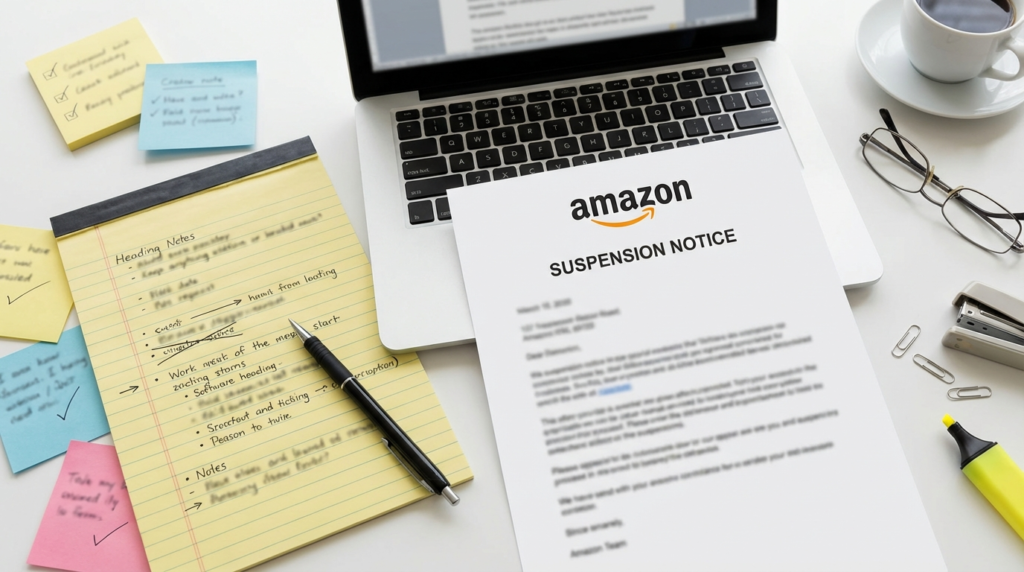
Your Plan of Action needs three parts: acknowledgment of the issue, root cause analysis, and corrective actions. Don’t write a novel—Amazon reviewers process dozens of these daily. Keep it under two pages.
Start by acknowledging the suspension without admitting specific wrongdoing you didn’t commit. Something like: “I understand my account was suspended for suspected Code of Conduct violations related to [review activity/listing practices/account management]. I take Amazon’s policies seriously and have conducted a thorough review of my operations.”
For root cause analysis, identify what likely triggered the suspension. Be honest but strategic. If you used a review service, admit it. If you accidentally violated related account policies, explain the connection. Don’t speculate wildly—stick to what you actually did that could violate policies.
List concrete corrective actions with specific details. “I will follow Amazon’s policies” is worthless. Instead, write things like “Terminated contract with [service name] on [date] and deleted all related software,” “Removed [X] products from shared parent listings and created individual ASINs,” “Implemented a review policy training program for all team members,” or “Established a weekly compliance audit checklist.”
Include preventive measures that show you’ve fixed the systemic issue. This might mean hiring a compliance consultant, implementing new SOPs, setting up monitoring tools, or training staff on Amazon policies.
What Not to Include in Your Appeal
Don’t claim ignorance of the rules. “I didn’t know that was against policy” won’t help—Amazon expects sellers to know their agreements. Don’t blame employees or service providers entirely, though you can mention they were involved. You’re responsible for your account regardless of who made the mistake.
Avoid emotional appeals. Amazon doesn’t care that this is your only income or that you have kids to feed. They care about protecting their marketplace. Don’t threaten legal action in your POA—that’s a guaranteed rejection. Don’t lie or minimize what you did. If they have evidence and you deny it, you’ll never get reinstated.
Skip the lengthy explanations of how you’ll succeed once reinstated. They don’t need your business plan. They need proof you’ve fixed the problem and won’t repeat it.
The Appeal Timeline
Amazon gives you 17 days from the suspension date to submit your Plan of Action. After that, your account moves toward permanent deactivation. Don’t wait until day 16—submit as soon as you’ve prepared a solid POA.
Most sellers get an initial response within 48-72 hours. This is usually a rejection with minimal explanation. Don’t panic. First appeals rarely succeed because Amazon wants to see if you’ll actually fix the issues or just submit a quick form letter.
If rejected, revise and resubmit. Address any specific feedback they provided. If they gave no feedback, strengthen your weakest areas. Be more specific about corrective actions, add more detail to root cause analysis, or acknowledge additional potential violations you might have missed.
After 2-3 rejections, consider hiring a reinstatement service. These companies charge $1,500-5,000 but have relationships with Amazon and know what language works. If your account does significant revenue, the investment usually pays off.
Preventing Future Section 3 Suspensions
Clean up your operation before problems start. Stop using any “gray hat” services immediately—Amazon’s detection gets better every quarter. Follow their Terms of Service literally, not creatively. Stay far away from review manipulation in any form. If someone offers to boost your reviews, run.
Keep detailed records of everything. Save all invoices, correspondence with suppliers, shipping records, and customer service interactions. If Amazon questions you later, documentation proves legitimacy.
Monitor your account health daily. Check your Account Health dashboard every morning. Watch for policy warnings, intellectual property complaints, or unusual metrics changes. Catching issues early often prevents suspensions.
Separate your accounts properly if you legitimately need multiple seller accounts. Get written approval from Amazon first, use different business entities, maintain separate everything (bank accounts, addresses, computers, IP addresses), and document the business justification for multiple accounts.
| Violation Type | Detection Method | Prevention Strategy |
|---|---|---|
| Review manipulation | Pattern analysis, IP tracking, buyer-seller connections | Use only Amazon Vine, never incentivize reviews |
| Related accounts | Shared data points across accounts | Get approval before creating second account, separate all resources |
| Listing abuse | Automated content checks, competitor reports | Follow listing guidelines exactly, one product per child ASIN |
| Black hat services | Traffic pattern analysis, third-party service tracking | Only use Amazon-approved tools and advertising |
Real Recovery Steps You Can Take Today
First, stop all potentially problematic activities immediately. Cancel any services that might violate TOS, remove any products with questionable listings, and pause advertising campaigns that use aggressive tactics.
Second, document everything about your account history. Create a timeline of recent changes, compile evidence of legitimate business operations, and gather invoices and correspondence with suppliers.
Third, identify your most likely violation. Review the common triggers above, check what changed in the 60 days before suspension, and be honest about any shortcuts you took.
Fourth, draft your POA using the structure outlined above. Get feedback from other sellers or a consultant if possible. Make it specific, concrete, and focused on actions rather than promises.
Fifth, clean house before submitting. Actually implement the corrective actions you’ll list in your POA. Amazon can verify some of these, and if you claim you’ve done something you haven’t, you’re done.
When to Get Professional Help
Hire a reinstatement specialist if your first two appeals fail, your account generates over $10,000 monthly, you genuinely don’t understand what triggered the suspension, Amazon mentions legal violations or fraud, or you’re facing related account issues affecting multiple businesses.
Professional services typically cost between $1,500-5,000. They provide POA writing, direct communication with Amazon (sometimes), strategic advice on the appeal process, and help implementing corrective actions. The good ones have connections within Amazon’s seller performance teams.
Research companies carefully. Look for verifiable success rates, specific experience with Section 3 suspensions, transparent pricing, and real client testimonials. Avoid anyone promising guaranteed reinstatement—nobody can guarantee that.
FAQs
How long does Amazon take to review a Section 3 appeal?
Initial responses typically come within 48-72 hours. However, complex cases or multiple appeals can take 1-2 weeks. If you haven’t heard back in 5 business days, you can follow up through Seller Support, though this rarely speeds up the process.
Can I create a new seller account if my appeal fails?
No. Creating a new account after suspension violates Amazon’s policies and will result in that account being suspended too. Amazon tracks this through dozens of data points, and they will find the connection. Focus on getting your original account reinstated.
Will Amazon tell me specifically what I did wrong?
Rarely. They keep notices vague to protect their detection methods. Your job is to review your operations thoroughly and identify likely violations. The best appeals address multiple potential issues rather than waiting for Amazon to specify one.
Does hiring a lawyer help with Section 3 suspensions?
Not usually. These are contractual disputes, not legal matters. Reinstatement specialists who understand Amazon’s internal processes are more effective than attorneys. Save legal counsel for situations where Amazon has truly acted improperly, which is rare.
Conclusion
Section 3 suspensions happen because Amazon detected behavior they consider deceptive or manipulative. The vague language is intentional—they want you to audit your entire operation, not just patch one problem.
Your reinstatement depends on three things: identifying what actually triggered the suspension, implementing real corrective actions before you appeal, and writing a specific, honest Plan of Action that proves you’ve fixed the issue.
Stop any questionable practices immediately. Document your legitimate business operations. Write a focused POA with concrete details. Submit within 17 days. If rejected, strengthen your weak points and resubmit.
Most sellers get reinstated eventually if they’re running legitimate businesses that made honest mistakes. The key is taking Amazon’s concerns seriously and making actual operational changes, not just writing what you think they want to hear.
Have you dealt with a Section 3 suspension? What specific language did Amazon use in your notice, and what ended up being the actual trigger? Drop your experience in the comments—other sellers facing this need real examples of what worked.