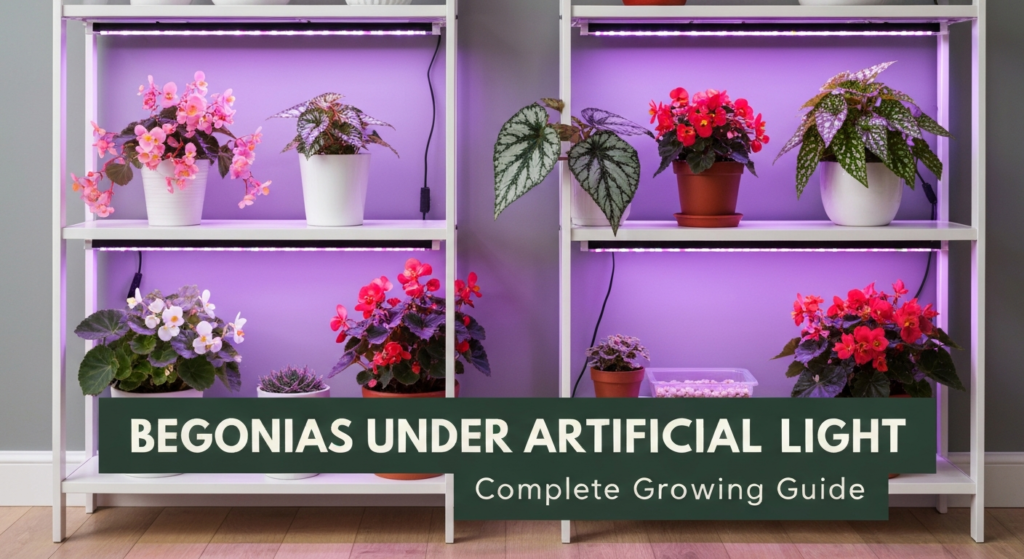

You’ve set up your office desk or that dim corner of your apartment, ready to add some life with plants. Then reality hits—no natural sunlight. You try a few plants, they stretch toward nothing, fade, and eventually give up. It’s frustrating when you just want something colorful and alive in your space.
Here’s the thing: most flowering plants demand bright windows, but begonias are different. Many varieties actually perform better under artificial light than struggling near a drafty window. You get consistent blooms, vibrant leaves, and none of the sunburn or temperature swings that come with windowsill growing.
This guide walks you through exactly which begonia types work under LED or fluorescent bulbs, how to set up your lighting, and the practical details that keep them thriving without constantly misting or fussing over them.
I’m Darcey Wren, and I’ve spent years growing begonias in spaces with zero natural light—from basement apartments to windowless offices. My interest started when a friend gave me a struggling wax begonia that somehow turned into a blooming machine under my desk lamp. That curiosity led me down a path of testing different varieties under various light setups, tracking what actually works versus what sounds good in theory. I share what I’ve learned through hands-on experience, not just recycled advice from other websites.
Why Begonias Work Under Artificial Light
Most indoor plants evolved under forest canopies where light filters through in patches. Begonias naturally grow in these dappled conditions, making them adaptable to the steady, moderate intensity of artificial bulbs.
The advantage shows up in their growth patterns. Under natural light, begonias often stretch toward the brightest spot, creating lopsided plants. Artificial light positioned directly overhead produces compact, symmetrical growth. I’ve had rex begonias develop fuller leaf patterns under LEDs than they ever did near my south-facing window.
Temperature stability matters too. Windows create hot spots during the day and cold drafts at night. Artificial light setups maintain consistent warmth, which begonias prefer. The controlled environment eliminates many common problems like leaf drop from temperature shock.
LED vs. Fluorescent Light Performance
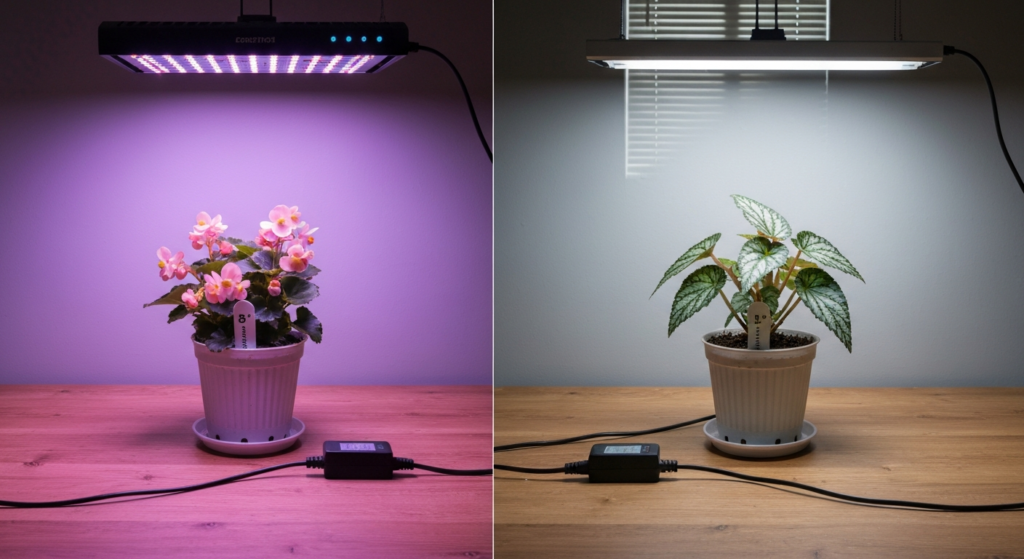
The debate between LED and fluorescent lighting isn’t about which is “better”—it’s about understanding what each offers for your specific setup.
LED Lights for Begonias
LEDs produce targeted light spectrums that plants use efficiently. Modern grow LEDs combine blue wavelengths (promoting compact foliage) with red wavelengths (encouraging flowering). This focused approach means less wasted energy and lower electricity bills.
I switched my begonia collection to full-spectrum LEDs three years ago. The difference showed up within weeks—tighter leaf spacing, more flower buds, and noticeably darker green foliage on wax begonias. The initial cost runs higher (expect $30-80 for a decent LED grow light), but they last 50,000 hours compared to fluorescent tubes that need replacement every year or two.
Heat output matters in small spaces. LEDs stay cool enough to position 6-8 inches above plants without burning leaves. This close placement maximizes light intensity for flowering varieties that need strong illumination.
Fluorescent Tube Performance
Fluorescent lights, particularly T5 or T8 tubes, still work well for begonias despite being older technology. They emit a broader, more diffused light that covers larger areas evenly. If you’re growing multiple plants on a shelf, fluorescent tubes might serve you better than individual LED bulbs.
The spectrum leans slightly blue, which suits foliage begonias perfectly. Rex begonias grown under fluorescent tubes develop intense leaf coloration. However, flowering types like tuberous begonias may produce fewer blooms compared to LED setups with stronger red wavelengths.
Keep tubes 10-12 inches above plants. They run cooler than incandescent bulbs but warmer than LEDs. Replace tubes when they start flickering or dimming, usually after 12-18 months of daily use.
Performance Comparison Table
| Feature | LED Lights | Fluorescent Tubes |
|---|---|---|
| Initial Cost | $30-80 per unit | $15-40 per fixture |
| Lifespan | 50,000 hours | 10,000-20,000 hours |
| Spectrum Control | Adjustable red/blue ratio | Fixed broad spectrum |
| Heat Output | Very low (6-8″ placement) | Moderate (10-12″ placement) |
| Best For | Flowering varieties, tight spaces | Foliage types, shelf setups |
| Energy Efficiency | High (15-30 watts) | Moderate (32-40 watts per tube) |
| Coverage Area | Focused/spotlit | Wide and even |
Wax Begonias Under Artificial Light
Wax begonias (Begonia semperflorens) are the workhorses of artificial light growing. These compact plants bloom continuously with clusters of white, pink, or red flowers above glossy leaves.
Light Requirements
Wax begonias need 12-14 hours of artificial light daily to maintain flowering. I run mine on a timer from 7 AM to 9 PM, matching a typical workday schedule. This consistency signals the plant to keep producing buds.
Position lights 8-10 inches above the foliage. If stems stretch and flower production drops, move the light closer or increase daily hours to 14-16. Compact growth with tight leaf spacing indicates proper light levels.
Varieties That Perform Best
The ‘Cocktail’ series stays under 8 inches tall, perfect for desk setups. I’ve grown ‘Cocktail Vodka’ (red flowers, bronze leaves) under a single LED bulb for two years with constant blooms. The dark foliage actually intensifies under artificial light.
‘Dragon Wing’ begonias reach 15 inches but tolerate lower light better than most flowering types. Their arching form looks attractive on shelves. The red and pink varieties bloom reliably under both LED and fluorescent setups.
For white flowers, try ‘Super Olympia White’. It stays compact and flowers heavily even when light intensity drops slightly—helpful if your bulbs are aging or positioned further away than ideal.
Care Specifics for Wax Types
Water when the top inch of soil feels dry. Wax begonias develop root rot quickly in soggy conditions, especially in the stable temperatures of indoor setups where soil doesn’t dry as fast as outdoors.
Feed every three weeks with half-strength liquid fertilizer during active growth. Too much nitrogen produces lush leaves but fewer flowers. I use a balanced 10-10-10 formula diluted to quarter strength weekly rather than full strength monthly—this prevents fertilizer buildup in the soil.
Rex Begonias: The Foliage Specialists
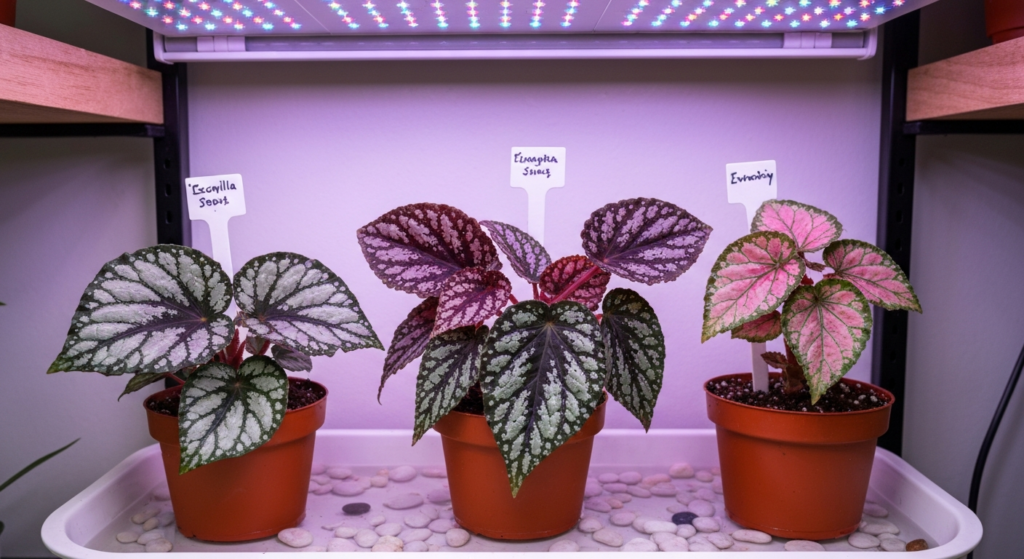
Rex begonias (Begonia rex-cultorum) are grown entirely for their leaves, which display patterns in silver, purple, red, pink, and green. They’re easier to maintain under artificial light than flowering types because you’re not pushing them to bloom.
Ideal Lighting Setup
Rex begonias need 10-12 hours of medium-intensity light. They’re more forgiving than wax begonias if you skip a day or if bulbs dim slightly. The focus shifts from flower production to leaf color development.
Position lights 10-14 inches above rex begonias. Too close and the leaves bleach or develop brown edges. Too far and colors fade to mostly green. When leaves display their full pattern with distinct color zones, you’ve found the right distance.
Fluorescent tubes work exceptionally well for rex types. The broader spectrum brings out the complex leaf pigments. I’ve noticed reds and purples appear deeper under cool white fluorescents compared to LEDs with heavy red wavelengths.
Top Varieties for Artificial Light
‘Escargot’ features silver leaves that spiral from the center with dark green edges. It stays compact (8-10 inches) and the metallic silver sheen actually looks brighter under artificial light than natural sun, where it can wash out.
‘Fireworks’ produces pointed leaves in hot pink and purple with silver spots. This variety tolerates slightly lower humidity than most rex types—around 40% versus the typical 50-60% requirement. That makes it more practical for standard office environments.
‘Green Gold’ works well for beginners. The chartreuse leaves with darker veins tolerate a wider range of light conditions. I’ve grown this variety successfully under basic LED shop lights without any special grow bulbs.
Rex Begonia Care Table
| Care Aspect | Requirement | Signs of Problems |
|---|---|---|
| Light Duration | 10-12 hours daily | Pale leaves = too little; brown edges = too much |
| Light Distance | 10-14 inches | Bleached centers = too close; faded colors = too far |
| Humidity Range | 40-60% | Crispy leaf edges = too dry; mold = too humid |
| Temperature | 65-75°F | Leaf drop below 60°F; wilting above 80°F |
| Watering | When top 2 inches dry | Yellow leaves = overwatered; curling = underwatered |
| Fertilizer | Monthly, half strength | Weak growth = too little; leaf burn = too much |
Tuberous Begonias in Indoor Settings
Tuberous begonias (Begonia × tuberhybrida) produce the largest, most dramatic flowers in the begonia family. Growing them under artificial light takes more effort than wax or rex types, but the payoff comes in dinner-plate sized blooms in orange, yellow, red, pink, and white.
Light Requirements
These plants need strong light—14-16 hours daily under LEDs positioned 6-8 inches above the foliage. Tuberous begonias evolved in high-altitude regions with intense light, so they demand more photon energy than other indoor begonias.
I struggled with tuberous varieties until I upgraded to higher-wattage LEDs (at least 30 watts per square foot). Standard desk lamps don’t provide enough intensity. You’ll see the difference in stem thickness—plants under adequate light develop sturdy stems that support heavy flowers without staking.
Dormancy Challenges
Tuberous begonias naturally enter dormancy in fall. Under consistent artificial light with stable temperatures, they often skip this rest period, which weakens the plants over time. I force dormancy by reducing light to 8 hours daily for 6-8 weeks starting in November, letting the foliage die back naturally.
Store the tubers in dry peat moss at 50-55°F during dormancy. Replant in fresh soil in early spring, gradually increasing light hours from 8 to 14 over two weeks. This reset produces stronger growth and more flowers in the following season.
Recommended Varieties
The ‘Nonstop’ series lives up to its name with continuous flowering and more compact growth (10-12 inches) than traditional tuberous types. ‘Nonstop Rose’ performs reliably under artificial light without the stretched, weak stems common in this group.
‘Illumination’ begonias have a cascading habit that works well in hanging setups. Their flowers aren’t as large as upright varieties but they tolerate slightly lower light levels—12 hours under fluorescents produces decent blooming.
Avoid the giant-flowered exhibition types like ‘Picotee’ for artificial light setups. Those massive blooms need intense natural sunlight that’s hard to replicate indoors without commercial grow equipment.
Creating Humidity Without Constant Misting
Begonias prefer 40-60% relative humidity, which poses a challenge in heated or air-conditioned rooms where humidity often drops to 20-30%. Misting seems like an obvious solution, but it creates more problems than it solves.
Why Misting Fails
Water droplets sitting on begonia leaves under artificial light create magnifying effects that burn the foliage. I learned this after destroying several rex begonias by misting them right before their light cycle started. The brown spots appeared within hours.
Misting also promotes bacterial and fungal diseases. Begonias are prone to powdery mildew and botrytis blight, both of which thrive when moisture sits on leaves. The temporary humidity boost from misting lasts maybe 30 minutes before air circulation evaporates it—not worth the disease risk.
Effective Humidity Solutions
Grouping plants creates a microclimate through transpiration. I keep 5-7 begonias clustered under one light fixture. The moisture they release raises local humidity by 5-10% compared to a single isolated plant.
Humidity trays work better than misting. Fill a shallow tray with pebbles or gravel, add water just below the top of the stones, then place pots on top. The water evaporates slowly, providing steady humidity without wetting the leaves. Refill the tray weekly.
Small humidifiers solve humidity problems in entire rooms. I run a 1-gallon cool-mist humidifier near my begonia shelf, set to maintain 50% humidity. This costs less than replacing plants damaged by low humidity—rex begonias especially struggle when air gets too dry, developing crispy leaf edges that won’t recover.
Humidity Management Comparison
| Method | Humidity Increase | Duration | Disease Risk | Setup Cost |
|---|---|---|---|---|
| Misting | 5-10% | 15-30 minutes | High | $5 (spray bottle) |
| Grouping plants | 5-10% | Continuous | Low | Free |
| Humidity tray | 10-15% | Continuous | Low | $10-15 |
| Room humidifier | 15-30% | Continuous | Very low | $25-50 |
| Enclosed terrarium | 30-50% | Continuous | Very high | $20-100 |
Compact Begonia Varieties for Desks and Small Spaces
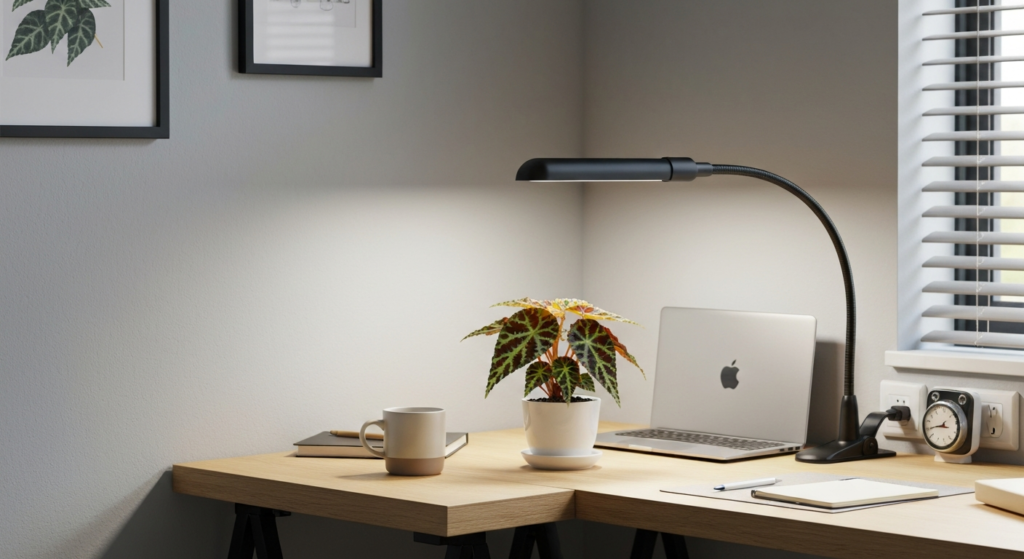
Not everyone has room for shelving units with multiple lights. Desktop growing requires compact varieties that perform well in limited space with a single light source.
Best Small-Space Performers
‘Iron Cross’ (Begonia masoniana) grows 6-8 inches tall with distinctive leaves marked by a dark cross pattern. It tolerates lower light than most begonias—8-10 hours under a basic LED desk lamp maintains the leaf pattern. I’ve kept one on my office desk for three years under a $15 clip-on grow light.
‘Palomar Prince’ stays under 10 inches with dark, textured leaves and light pink flowers. It blooms sporadically rather than continuously, which means less demand for high light intensity. This variety adapts well to the fluctuating light levels common in office settings where lights might stay off during weekends.
Miniature rex begonias like ‘Little Brother Montgomery’ reach only 4-6 inches. These tiny plants fit in 3-inch pots, perfect for cramped desks. Their small size means they receive adequate light even from lower-wattage bulbs that wouldn’t satisfy larger plants.
Light Setup for Single Plants
A 15-20 watt LED grow bulb in a desk lamp provides sufficient light for one compact begonia. Position the bulb 6-10 inches above the plant, adjusting based on how the leaves respond. If edges curl under, move the light higher. If stems stretch, move it closer.
Clip-on gooseneck lamps offer flexibility. You can adjust the angle and height as plants grow without moving the entire pot. This matters for maintaining optimal light distance as begonias develop.
Run lights 10-12 hours daily for foliage types, 12-14 hours for flowering varieties. I use outlet timers ($8-12) to maintain consistency—begonias respond better to reliable light schedules than random on-off patterns.
Getting Colorful Foliage Without Flowers
Many begonias offer vibrant leaf colors that rival any flower display. If you want visual interest without the extra light demands of flowering types, foliage varieties deliver.
Cane Begonias for Color
Cane begonias (also called angel wing begonias) develop tall stems with wing-shaped leaves spotted in silver or white. ‘Lucerna’ grows 2-3 feet tall with olive green leaves covered in silver spots. It occasionally produces clusters of coral-pink flowers but the foliage provides year-round color.
These tall varieties need 12-14 hours of light to prevent leggy growth. Position LEDs directly overhead rather than at an angle—this encourages upright stems instead of plants leaning toward the light source.
Prune cane begonias regularly to maintain shape. I cut stems back by one-third in early spring, which triggers branching and creates fuller plants. The cuttings root easily in water, giving you backup plants or gifts for friends.
Rhizomatous Begonias
Rhizomatous types grow from thick stems that creep across the soil surface. They produce incredible leaf patterns—spirals, stars, and abstract shapes in combinations of green, silver, burgundy, and black.
‘Tiger Paws’ features small, bronze leaves with dark markings and eyelash-like hairs along the edges. It stays compact (6-8 inches) and tolerates lower light than most rhizomatous varieties. Ten hours under fluorescent tubes maintains the dark bronze coloring.
‘Beefsteak’ produces nearly round leaves in burgundy-red with green edges. This variety grows larger (12-15 inches across) but tolerates the dry air of heated rooms better than rex begonias. The dramatic color intensifies under moderate LED lighting.
Foliage Color Development Table
| Begonia Type | Leaf Colors | Light Hours Needed | Key Growing Points |
|---|---|---|---|
| Rex | Silver, purple, pink, red | 10-12 | Needs higher humidity (50-60%) |
| Cane | Spotted silver on green | 12-14 | Prune for shape, can grow tall |
| Rhizomatous | Bronze, burgundy, green patterns | 10-12 | Spreads horizontally, stays compact |
| Iron Cross | Green with dark cross | 8-10 | Most tolerant of low light |
| Wax (bronze leaf) | Bronze to near-black | 12-14 | Plus red, pink, or white flowers |
Practical Troubleshooting for Artificial Light Growing
Even with proper setup, issues appear. Recognizing problems early prevents plant loss.
Stretched, Leggy Growth
When stems elongate with large gaps between leaves, light intensity is insufficient. This happens gradually—you might not notice until comparing current growth to older sections of the plant.
Move lights closer (reduce distance by 2-3 inches) or increase daily hours by 2. If neither option works, your bulbs may be too weak. Begonias need at least 15 watts per square foot of growing area for compact growth.
I replace LED bulbs every 3-4 years even when they still light up. Light output decreases over time, eventually falling below the threshold begonias need for proper growth.
Leaf Color Problems
Pale, washed-out leaves indicate too much light. This especially affects rex and rhizomatous varieties with colored foliage. The pigments bleach under excessive intensity.
Increase the distance between lights and foliage by 2-4 inches. If leaves continue showing stress, reduce daily light hours to 10 rather than 12. Some varieties simply can’t handle the intensity that flowering types require.
Yellowing older leaves usually means overwatering or poor drainage. Check that pots have drainage holes and soil drains freely. I add 30% perlite to potting mix for begonias—this prevents soil compaction and ensures oxygen reaches the roots.
No Flowering on Wax or Tuberous Types
Adequate light is the primary factor for begonia flowering. If plants grow well but refuse to bloom, they’re receiving maintenance-level light but not flowering-level intensity.
Increase light hours to 14-16 daily for flowering varieties. Switch from fluorescent to LED grow lights with strong red wavelengths—these trigger flower production better than blue-heavy spectrums.
Check fertilizer ratios too. High nitrogen promotes leaves over flowers. Switch to a bloom-focused formula (like 10-30-20) applied at half strength every two weeks during the growing season.
Common Issues and Solutions
| Problem | Likely Cause | Solution |
|---|---|---|
| Leggy stems, sparse leaves | Insufficient light intensity | Move lights closer or upgrade wattage |
| Brown leaf edges | Too much heat from lights | Increase distance or switch to cooler LEDs |
| Pale, bleached foliage | Excessive light intensity | Raise lights or reduce daily hours |
| No flowers on flowering types | Wrong spectrum or too few hours | Switch to red-spectrum LED, add 2-4 hours |
| Mold on soil surface | Poor air circulation | Add a small fan, water less frequently |
| Leaf drop | Temperature fluctuations | Check heating/cooling vents, maintain 65-75°F |
| Wilting despite moist soil | Root rot from overwatering | Repot in fresh soil, improve drainage |
Setting Up Your First Artificial Light System
Starting from scratch doesn’t require expensive equipment. A basic setup costs $50-75 and supports 3-5 begonias.
Essential Equipment
Purchase a full-spectrum LED grow light with at least 20-30 watts. Avoid basic white LEDs—they lack the red wavelengths begonias need for flowering. Look for products labeled “full spectrum” or showing a pink/purple glow.
Get an outlet timer with multiple on-off settings ($10-15). Cheap mechanical timers work fine—digital ones offer more programming options but aren’t necessary. Set the timer and forget it.
Use 6-inch nursery pots with drainage holes for most begonias. These provide adequate root space without holding excessive moisture. I prefer plastic over ceramic because it’s lighter and doesn’t wick moisture from the soil as quickly.
Soil and Planting
Mix regular potting soil with perlite at a 2:1 ratio. Begonias need drainage more than most houseplants. Soggy roots lead to rot within days, especially in the consistent temperatures of indoor growing where soil stays moist longer.
Add a 1-inch layer of perlite or small gravel at the pot bottom for extra drainage insurance. This creates an air gap that prevents the lowest roots from sitting in standing water if you accidentally overwater.
Plant at the same depth the begonia was growing in its original pot. Burying stems deeper invites rot. Leave a 1-inch gap between soil surface and pot rim for watering—this prevents water from spilling over when you add moisture.
Positioning and Arrangement
Place your light fixture above the plants with adjustable height options. As begonias grow, you’ll need to raise lights to maintain proper distance. Chains or adjustable hangers make this easy.
Group plants with similar needs together. Don’t mix tuberous begonias (needing 14-16 hours) with rex types (needing 10-12 hours) under the same light unless you’re willing to manually move pots each day.
Keep begonias away from heating vents and air conditioning returns. Artificial light works best when temperature stays stable. Sudden temperature swings cause stress even when light conditions are perfect.
Long-Term Maintenance Tips
Begonias grown under artificial light need ongoing attention to stay healthy. These tasks take minutes but prevent bigger problems.
Weekly Checks
Rotate pots one-quarter turn weekly. Even with overhead lighting, plants develop slight preferences for certain directions. Rotation ensures even growth on all sides.
Check soil moisture by inserting your finger 1-2 inches deep. Begonias prefer consistent moisture but not wetness. Wait until the top inch dries before watering again. In my setup, this means watering wax begonias every 4-5 days, rex types every 5-7 days.
Remove dead leaves and spent flowers immediately. Decaying plant material promotes fungal diseases. I keep small scissors near my growing area and snip off anything dead or dying as soon as I spot it.
Monthly Maintenance
Clean lights and dust leaves. Dirt blocks light transmission—even a thin layer of dust reduces effectiveness by 10-20%. Wipe LED bulbs with a dry cloth, gently clean leaves with a damp paper towel.
Inspect for pests. Spider mites and mealybugs thrive in the stable conditions of indoor growing. Check leaf undersides and stem joints for webbing or white cottony masses. Catch infestations early and they’re manageable—wait too long and you’ll lose entire plants.
Test your timer occasionally. I’ve had timers fail without obvious signs, leaving plants in darkness for days before I noticed. A quick check ensures the light schedule runs correctly.
Seasonal Adjustments
Reduce watering frequency in winter even under artificial light. Shorter days and lower household temperatures slow growth slightly. I water about 30% less often from November through February compared to summer months.
Consider giving foliage varieties a rest period with reduced light hours. While not required like it is for tuberous types, a 2-month period with 8-hour days can rejuvenate rex and rhizomatous begonias. Resume normal hours in spring and you’ll often see a burst of fresh growth.
Frequently Asked Questions
Can I use regular LED bulbs instead of grow lights for begonias?
Regular white LEDs work for low-light foliage plants but won’t support begonia flowering. They emit mostly blue and green wavelengths while lacking the red spectrum that triggers blooming. I tried this with wax begonias—they survived but never produced flowers until I switched to proper grow lights. For rex and rhizomatous types focused on foliage, regular LEDs maintain existing leaves but colors appear less vibrant than under full-spectrum bulbs.
How long until I see blooms on flowering begonias under artificial light?
Wax begonias typically flower within 4-6 weeks of proper light exposure if they’re mature plants. Younger starts need 8-12 weeks to reach blooming size. Tuberous varieties take longer—3-4 months from tuber planting to first flowers. The key is consistency. Irregular light schedules delay flowering even when total hours seem adequate. I keep mine on strict 12-14 hour schedules and see reliable blooming cycles year-round.
What’s the best begonia for someone with zero gardening experience?
‘Iron Cross’ or basic wax begonias from the ‘Cocktail’ series tolerate the most mistakes. They survive occasional missed waterings, adapt to imperfect light distances, and bounce back from minor overwatering. Rex begonias look impressive but react dramatically to inconsistent care—I don’t recommend them as first begonias under artificial light. Start with something forgiving, learn the basics, then experiment with more demanding varieties.
Do I need special fertilizer for begonias under artificial light?
Regular balanced houseplant fertilizer (10-10-10 or 20-20-20) works fine when diluted to half strength. Apply every 2-3 weeks during active growth. The controlled environment of artificial light setups means begonias grow year-round without natural dormancy, so they need consistent but light feeding. I’ve tried specialized begonia fertilizers and noticed no real difference compared to basic formulas. Save your money for better lights instead of premium fertilizers.
Conclusion
Growing begonias under artificial light eliminates the constraints of window space and weather. You control every factor—light duration, intensity, temperature—which means more consistent results than dealing with seasonal changes and inconsistent natural light.
Start with one or two proven varieties like wax begonias or ‘Iron Cross’. Use a basic full-spectrum LED, set a timer, and resist the urge to constantly adjust things. Begonias respond to stability more than perfection.
The real advantage shows up in winter when natural-light plants struggle while your artificial-light begonias keep blooming or displaying colorful foliage. That makes the small investment in equipment worthwhile.
Which begonia variety are you most interested in trying under artificial lights? Have you had success (or struggles) with specific types in low-light spaces? Share your experiences in the comments—your insights help other growers navigate their own setups.