
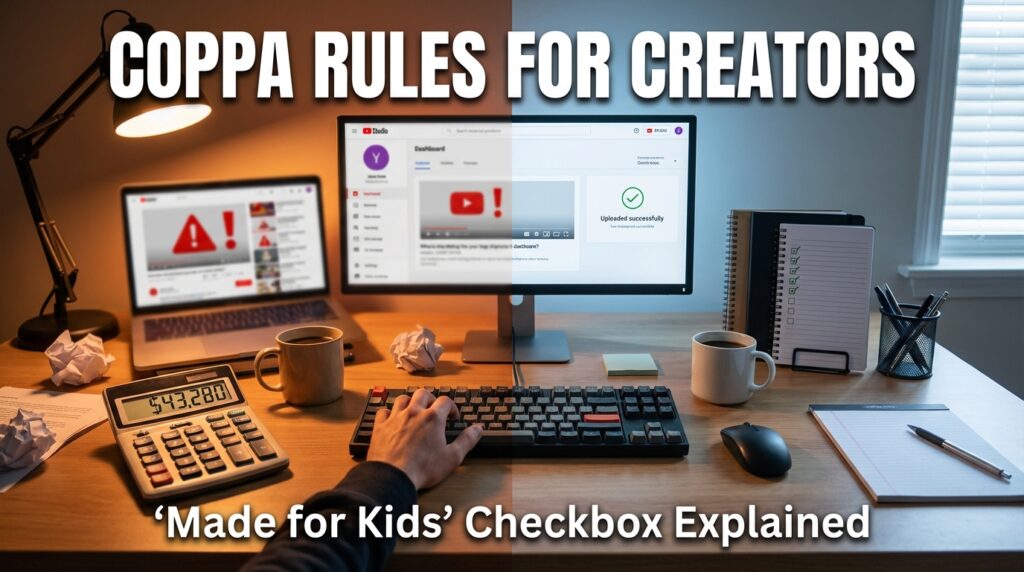

You just uploaded a video about Minecraft builds or an animated cooking tutorial. Now YouTube’s asking if it’s “Made for Kids,” and your palms are sweating. Check the wrong box, and you might face FTC fines up to $43,280 per violation. Don’t check it when you should, and you lose personalized ads—meaning 60-90% less revenue.
This isn’t a simple yes-or-no question anymore. COPPA (Children’s Online Privacy Protection Act) turned content classification into a legal minefield when the FTC fined YouTube $170 million in 2019. Since then, every creator—from gaming channels to craft tutorials—has been forced to make a decision that affects both their income and their legal safety.
Key Takeaways
- Mark content as “Made for Kids” if it targets children under 13, even if adults also watch it
- Misclassifying content can result in FTC fines starting at $43,280 per video
- Child-directed content loses personalized ads, comments, notifications, and community features
- Use specific factors like characters, themes, and primary audience to determine classification
- General audience content targeting teens 13+ doesn’t require COPPA designation
- Review each video individually—blanket channel settings can cause compliance issues
Why COPPA Classification Feels Like Walking a Tightrope
The Federal Trade Commission doesn’t care about your analytics showing 95% adult viewers. They care about the primary audience your content targets. That’s the disconnect causing panic across YouTube.
Here’s what actually happened: In 2019, the FTC ruled that YouTube violated COPPA by collecting data from kids without parental consent. The settlement forced YouTube to shift responsibility to creators. Now you’re the one deciding if your content falls under child-directed regulations.
The penalty structure makes this personal. The FTC can fine you directly—not just YouTube—for willful violations. One creator making cartoon parodies thought their satirical content was safe. Wrong. The FTC looks at the content itself, not your intended audience.
What “Made for Kids” Actually Means Under COPPA
COPPA targets content directed at children under 13. But “directed at” doesn’t mean “watched by.” Millions of adults watch Pokémon content, but if the video features animated characters doing kid-friendly activities, it’s still child-directed.
The FTC uses a multi-factor test borrowed from broadcast TV regulations. They examine:
Subject matter — Does it focus on child-oriented activities like playing with toys, simple games, or basic learning?
Visual content — Do you use bright colors, animated characters, or child actors?
Language — Is the vocabulary simplified for elementary-level comprehension?
Music and sounds — Do you include nursery rhymes, singing, or exaggerated sound effects kids respond to?
Age of models — Are children the primary on-screen talent?
Presence of child celebrities — Do you feature influencers popular with elementary school kids?
No single factor determines everything. The FTC weighs them together. A Fortnite gameplay video with adult commentary and complex strategies? Probably not child-directed. A Fortnite animation with cartoon voices and slapstick humor? Different story.
The Real Cost of Getting Classification Wrong
Checking “Made for Kids” triggers immediate changes that hurt your channel’s growth:
YouTube disables personalized advertising on these videos. Advertisers pay premium rates for targeted ads. Without that targeting, your CPM (cost per thousand views) drops dramatically. Creators report 60-90% revenue decreases on designated content.
The platform removes these features entirely:
- Comments (kills community engagement)
- Notification bell (viewers can’t subscribe for alerts)
- Live chat during premieres
- End screens and cards promoting other videos
- Community posts showing on the feed
- Playlist additions by viewers
- Stories feature
Your analytics also become limited. You lose detailed demographic data showing exactly who watches your content.
But not checking the box when you should creates bigger problems. The FTC investigates based on complaints, automated detection, and random audits. They review your content against those factors above. If they determine you knowingly mislabeled child-directed content to keep ad revenue, that’s a willful violation.
The penalty? Up to $43,280 per affected video. Ten videos equals $432,800 in potential fines. The FTC doesn’t need to prove you read their guidelines—ignorance isn’t a defense.
How to Determine If Your Content Is Child-Directed
Start with honest questions about your creative decisions, not your viewer demographics.
Who did you make this for when you planned it? If you chose bright thumbnails, simple language, and toy-focused content specifically to appeal to kids under 13, that’s your answer.
What would a reasonable person think? Show your video to someone unfamiliar with your channel. Ask them who they think it’s for. Their first impression matters more than your intent.
Does it fit classic “kids content” patterns? Educational videos teaching ABCs, toy unboxing, animated nursery rhymes, or cartoon characters in simple storylines—these clearly target young children.
Review your analytics only as supporting evidence, not as the deciding factor. If 80% of your viewers are 25-34 according to YouTube, but your video features animated baby animals learning to share, the FTC will call it child-directed.
| Your Content Type | Likely Classification | Key Factor |
|---|---|---|
| Minecraft building tutorials with complex redstone | General audience | Advanced technical concepts |
| Minecraft animated roleplay with cartoon voices | Made for Kids | Simplified narratives, character-driven |
| Gaming reviews analyzing mature themes | General audience | Critical analysis, adult perspective |
| Gaming challenge videos with family-friendly commentary | Context-dependent | Evaluate audience intent and presentation |
| STEM experiments for teenagers | General audience | Age 13+ educational content |
| Science experiments with cartoon characters singing | Made for Kids | Simplified presentation for young children |
The FTC provides specific guidance on making this determination. Their FAQ addresses common creator scenarios.
The Mixed Audience Problem Nobody Talks About
Your cooking channel posts both knife skills tutorials and cookie decorating with cartoon frosting characters. What now?
COPPA allows mixed-audience channels, but requires video-by-video designation. You can’t mark your entire channel one way. Each upload needs individual classification.
This creates more work but protects you legally. Your knife skills video stays monetized with full features. Your cookie decorating video gets marked “Made for Kids” but keeps you compliant.
The confusion comes from creators wanting one blanket answer. There isn’t one. Gaming channels often face this—speedruns of retro games appeal to nostalgic adults, but colorful platformer content attracts kids.
Set your channel-wide audience in YouTube Studio, then override it per video when needed. YouTube even provides an option to mark content as “not made for kids” but appropriate for all ages. Use this for general audience content that happens to be family-friendly.
General Audience Content vs. Child-Directed: Know the Difference
General audience content can include kids in the potential viewership without being child-directed. The difference lies in primary targeting.
A travel vlog visiting theme parks isn’t child-directed just because families watch it. The content focuses on adult perspectives—budgeting, hotel reviews, wait time strategies. Kids might watch, but they’re not the target.
Educational content aimed at high schoolers discussing algebra or physics? Not child-directed. The complexity level exceeds what COPPA aims to protect.
Family-friendly doesn’t equal child-directed. You can make clean content without profanity or violence that still targets teens and adults. Many creators confuse “appropriate for kids” with “made for kids.”
The FTC cares about commercial intent too. If you’re reviewing toys but your analysis covers collector value, manufacturing quality, and investment potential, you’re speaking to adult collectors, not children.
How to Mark Your Content Correctly
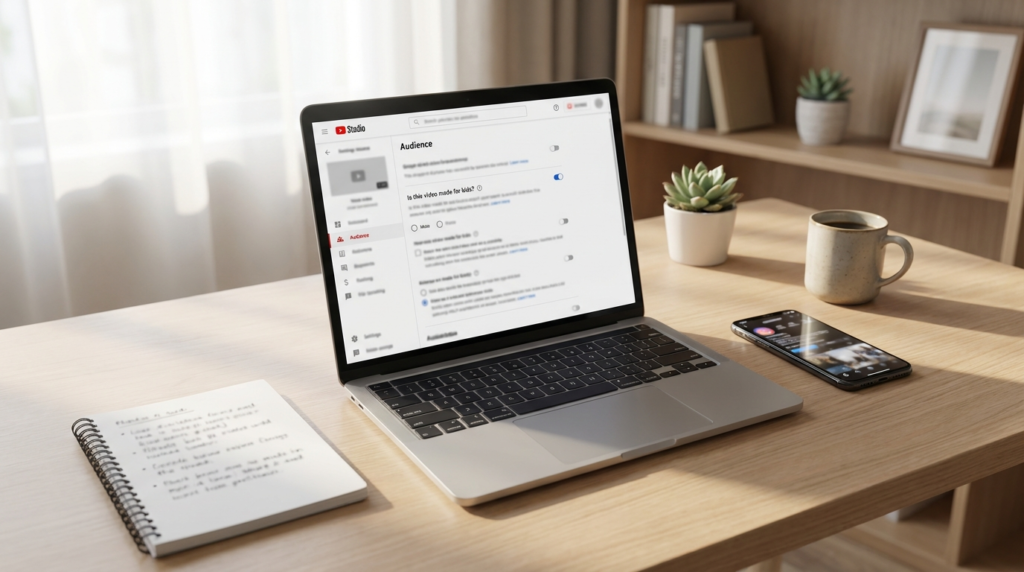
Open YouTube Studio and navigate to the video details. Under “Audience,” you’ll see the question: “Is this video made for kids?”
Three options appear:
Yes, it’s made for kids — Select this if your content targets children under 13 as the primary audience. YouTube automatically disables features and limits data collection.
No, it’s not made for kids — Choose this for content aimed at teens 13+ or adults, even if it’s family-friendly. Full monetization and features remain active.
Let YouTube decide (not recommended) — YouTube’s automated system makes the call. Creators lose control and face potential misclassification in either direction.
Always choose one of the first two options yourself. You know your content better than an algorithm. Document your reasoning—screenshot your decision-making process, save notes on why you classified each video the way you did.
If the FTC ever questions your classifications, having clear reasoning helps demonstrate good faith compliance efforts.
Common Scenarios Creators Struggle With
Animated content for adults — Shows like Rick and Morty or BoJack Horseman use animation but contain mature themes, complex humor, and adult storylines. These aren’t child-directed. But if you create animation with simple plots and characters designed for young kids, that’s different.
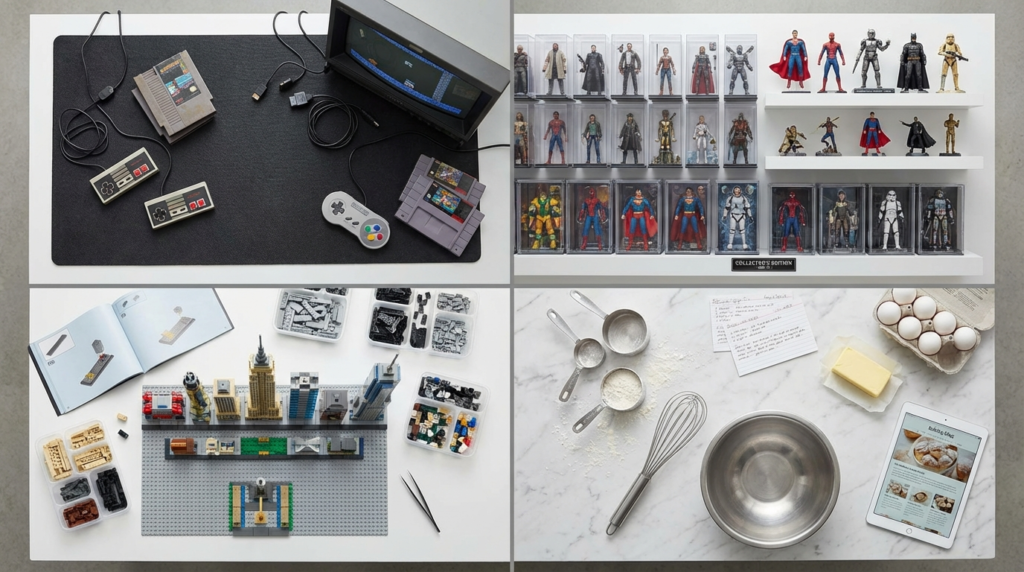
Retro gaming content — Playing NES or SNES games from your childhood doesn’t automatically make it child-directed. If you provide historical context, speedrun strategies, or detailed game design analysis, you’re targeting nostalgic adults and serious gamers.
Toy collecting and reviews — Adult collectors discussing rare action figures, investment value, or restoration techniques create general audience content. Unboxing toys with excited reactions and simple descriptions targets kids.
Music and nursery rhymes — Original songs teaching kids the alphabet or basic concepts? Child-directed. Music tutorials teaching teens how to play instruments or analyzing song composition? General audience.
ASMR content — This depends entirely on presentation. ASMR using children’s toys, cartoon voices, or roleplays as cartoon characters leans child-directed. ASMR for relaxation using adult themes or mature whisper content isn’t.
| Content Example | Classification | Why |
|---|---|---|
| Pokémon competitive battle analysis | General audience | Strategic depth, meta-game discussion |
| Pokémon cartoon episode reactions with kid-friendly commentary | Made for Kids | Simplified presentation targeting young fans |
| Lego speed builds with technical explanations | General audience | Advanced techniques, adult builders |
| Lego stories with character voices and simple plots | Made for Kids | Narrative focused on child entertainment |
| Baking tutorials for beginners | General audience | Skill development for teens/adults |
| Baking with animated characters singing recipes | Made for Kids | Entertainment-focused child presentation |
What Happens If You Change Your Mind
You uploaded a video as general audience six months ago. Now you’re reconsidering whether it might be child-directed. Can you change it?
Yes. YouTube allows you to update audience settings anytime. Go to YouTube Studio, select the video, and change the audience designation under video details.
Changing from “not made for kids” to “made for kids” is straightforward—you’ll lose features and revenue going forward, but you gain compliance.
Changing from “made for kids” to “not made for kids” is riskier. If the FTC previously flagged concerns about that content, switching it back could look like deliberate mislabeling. Only make this change if you genuinely misclassified it originally and can justify why it’s general audience content.
The YouTube Creator Academy offers free courses on COPPA compliance, helping you understand when changes make sense.
The FTC’s Enforcement Track Record
Since the 2019 settlement, the FTC has taken targeted action against specific creators. In 2022, they proposed changes to COPPA rules addressing YouTube specifically, showing continued focus on this platform.
The commission prioritizes cases involving:
- Large channels with clear child-directed content unmarked
- Creators who publicly acknowledge targeting kids but don’t mark content appropriately
- Repeated violations after warnings
- Evidence of deliberate misclassification for financial gain
They typically don’t go after small creators making good-faith errors. But don’t rely on flying under the radar. Enforcement can happen at any time, especially if competitors or concerned parents file complaints.
The FTC investigates tips submitted through their website. One complaint about your channel could trigger a review of your entire content library.
Protecting Yourself Beyond Just Checking Boxes
Document everything. Keep a spreadsheet tracking each video’s classification and your reasoning. Include notes like “uses animated characters with simplified dialogue targeting ages 5-8” or “advanced tutorial for experienced players age 16+.”
Review your content calendar before filming. Decide during planning whether new content will be child-directed. This prevents reactive classification decisions that might be inconsistent.
Consider consulting an attorney specializing in digital media law if your channel generates significant income. The cost of one consultation ($200-500) beats a single FTC violation fine.
Stay current on COPPA updates. The FTC periodically revises enforcement guidelines. Subscribe to the FTC’s business blog for official announcements affecting creators.
Join creator communities discussing COPPA compliance. Reddit’s r/NewTubers and r/PartneredYouTube have ongoing discussions where creators share experiences and interpretations.
AdSense Approval and COPPA Considerations
Channels applying for YouTube monetization face extra scrutiny around child-directed content. Google’s AdSense policies require clear audience designation before approval.
Mixed signals hurt your application. If your channel description says “fun for kids” but your videos aren’t marked accordingly, reviewers flag the inconsistency. Match your branding to your classifications.
Channels entirely focused on child-directed content still get monetized, just with lower rates due to restricted advertising. Don’t avoid marking content correctly hoping to improve monetization chances—AdSense wants accurate classification more than high CPMs.
During the application review, YouTube’s team manually checks your content against COPPA requirements. Incorrect classifications can delay approval or result in rejection requiring reapplication after 30 days.
FAQ
Can I get in trouble if kids watch my general audience content?
No. You’re not responsible for who watches if you didn’t target children when creating it. The FTC evaluates your intent and presentation, not viewer demographics. Family-friendly content aimed at teens and adults doesn’t violate COPPA just because younger kids happen to watch.
What if I genuinely can’t tell if my content is child-directed?
Use the FTC’s multi-factor test as a checklist. If most factors point toward targeting kids under 13, classify it as Made for Kids. When truly uncertain, err on the side of caution and mark it child-directed. You can always create more clearly defined content going forward to avoid gray areas.
Does COPPA apply to content outside the United States?
Yes, if you upload to YouTube. The platform operates under U.S. law, so COPPA applies regardless of where you live. International creators serving American audiences through YouTube must comply with these regulations.
Can I appeal if the FTC fines me for misclassification?
The FTC follows formal complaint procedures allowing responses before finalizing penalties. You can present evidence of good faith compliance efforts, documentation of your classification reasoning, and any mitigating factors. However, appeals don’t guarantee fine reduction—prevention through proper classification from the start is far better than fighting penalties later.
Taking Action on Your Channel Today
Stop treating COPPA classification as a guessing game. Review your last 10 uploads right now. For each one, write down whether animated characters, simplified language, or child-focused activities appear prominently. If they do, and you targeted those elements at kids under 13, update your audience settings.
Create a simple decision tree for future uploads: Does this video feature content elements specifically designed to appeal to children under 13 as the primary audience? If yes, mark it Made for Kids. If no, mark it general audience. Document your reasoning each time.
The classification system protects both children’s privacy and your legal standing. Treat it seriously, but don’t let fear paralyze your content creation. Honest evaluation of each video’s target audience is all the FTC expects.
What content type on your channel creates the most classification confusion? Drop your specific scenario in the comments—helping each other interpret COPPA’s gray areas benefits the entire creator community.