

You listed a baby outfit with “Onesie” in the title and woke up to a VeRO notice. Or maybe you sold hook-and-loop fasteners and called them “Velcro” — now you’re staring at a listing removal and wondering what just happened.
Here’s what’s going on: eBay’s Verified Rights Owner (VeRO) program automatically flags and removes listings that use protected brand names, even if you’re selling legitimate products. Thousands of sellers learn this the hard way every month, losing not just individual listings but sometimes facing account restrictions over terms they didn’t know were trademarked.
This isn’t about counterfeit goods. You can sell a genuine product and still get hit with a VeRO strike if you use the wrong words in your title or description. The system doesn’t care if you bought it retail — it’s programmed to protect intellectual property, and it moves fast.
Key Takeaways
- Avoid using trademarked terms like “Onesie,” “Velcro,” or “Crockpot” in listings unless you’re an authorized seller
- Check eBay’s VeRO list before creating listings to prevent automatic removals
- Use generic descriptions instead (hook-and-loop fasteners, infant bodysuit, slow cooker)
- Respond to VeRO notices within 48 hours to prevent escalation
- Document your product sources to prove authenticity if needed
What the VeRO Program Actually Does
VeRO gives brands legal control over how their products appear on eBay. Companies register their trademarks with the program, then eBay’s automated systems scan every new listing for those protected terms.
When the system finds a match, it doesn’t ask questions first. The listing comes down immediately, and you get a notice explaining the removal. The brand owner made the complaint, but eBay enforced it — often within hours of your listing going live.
This happens because intellectual property law puts the burden on platforms like eBay to police trademark violations. The company would rather remove 100 questionable listings than face one lawsuit from a major brand. That’s why the system errs on the side of caution, which means legitimate sellers get caught in the crossfire.
Why Common Words Like “Onesie” Cause Problems
Most VeRO strikes happen because sellers don’t realize certain everyday words are actually registered trademarks. Gerber owns “Onesie.” Velcro Companies own “Velcro.” Crock-Pot is a brand name, not a product category.
These companies spent decades building brand recognition, and now those terms have become generic in everyday speech. But legally, they’re still protected property. When you use them in a listing, you’re technically suggesting a brand affiliation that doesn’t exist.
The automated system can’t tell if you’re selling an authentic Gerber onesie or a generic infant bodysuit. It sees the trademarked word and applies the rules. Manual review might clear things up, but by then your listing is already down and you’ve lost selling time.
The Most Common VeRO Triggers You Need to Know
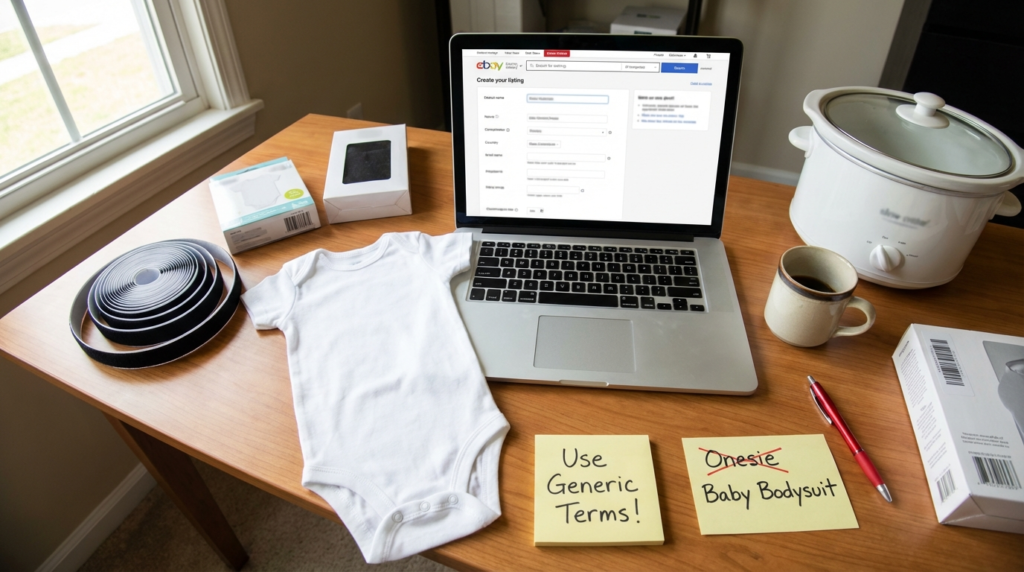
Some trademarked terms show up in VeRO complaints more than others. Here’s what trips up sellers most often:
Baby and Kids Items
- Onesie (use infant bodysuit or baby romper)
- Babygro (use sleepsuit or coverall)
- Lego (when selling building blocks that aren’t official Lego products)
Home and Kitchen
- Crockpot (use slow cooker)
- Velcro (use hook-and-loop fastener)
- Tupperware (use food storage container)
- Styrofoam (use foam insulation or foam cup)
- Pyrex (when it’s not genuine Pyrex glassware)
Sports and Outdoor
- Jet Ski (use personal watercraft or PWC)
- AstroTurf (use artificial turf or synthetic grass)
- Rollerblade (use inline skates)
Office and Craft
- Sharpie (use permanent marker)
- Post-it (use sticky note or adhesive note)
- Scotch Tape (use transparent tape)
| Trademarked Term | Generic Alternative | Product Category |
|---|---|---|
| Onesie | Infant bodysuit | Baby clothing |
| Velcro | Hook-and-loop fastener | Fastening system |
| Crockpot | Slow cooker | Kitchen appliance |
| Jet Ski | Personal watercraft | Recreational vehicle |
| Tupperware | Food storage container | Kitchen storage |
| Chapstick | Lip balm | Personal care |
How to Check If a Term Is Protected
Before you write your listing, spend two minutes checking if your product name is trademarked. The USPTO trademark database lets you search registered terms for free. Type in the word you plan to use and see if someone owns it.
eBay also maintains a VeRO participant list, though it doesn’t show every protected term. You can find it through eBay’s seller help pages under intellectual property protection. Some brands list specific words they monitor, while others just register their company name.
When you’re unsure, flip the question around: would you describe this product to a friend using a brand name, or would you use a generic term? If you’d naturally say “hand me a tissue” instead of “hand me a Kleenex,” that’s your signal to use the generic version in your listing.
What Happens When You Get a VeRO Notice
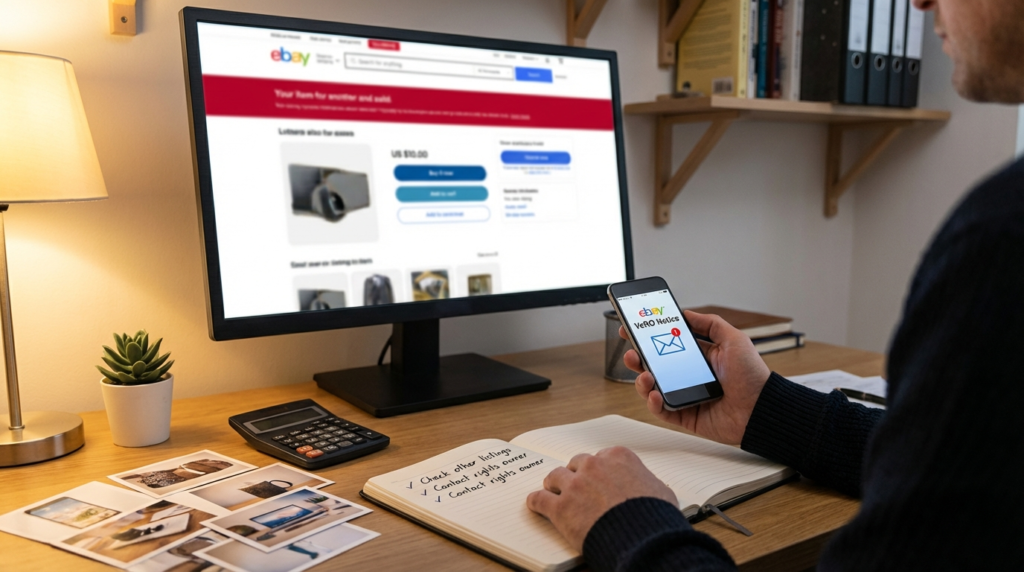
The notice arrives through eBay messages and your registered email. It identifies the listing that was removed, names the rights owner who filed the complaint, and explains what trademark you allegedly violated.
Your listing disappears from search results immediately. If someone already purchased the item, eBay might allow you to complete that transaction, but you can’t relist it using the same title or description.
Here’s what the notice doesn’t do: it doesn’t automatically suspend your account. One VeRO violation won’t get you banned. But repeated violations create a pattern, and eBay tracks those. Three strikes in a short period might trigger a temporary restriction. Five or more could lead to permanent account suspension.
Steps to Take After Receiving a Strike
Within 24 Hours
Review the notice carefully to understand which specific words caused the problem. Don’t ignore it hoping it’ll go away — that just increases the chance of repeat violations.
Check your other active listings for the same trademark. If you used “Velcro” in five different listings, they’ll all get flagged eventually. Pull them down yourself and relist with corrected language.
Within 48 Hours
If you believe the removal was a mistake — maybe you’re actually an authorized seller of that brand — contact the rights owner directly. Their contact information appears in the VeRO notice. Explain your situation and provide proof of authorization if you have it.
Document everything. Save screenshots of the original listing, the removal notice, and any communication with the brand. If this escalates or repeats, you’ll need this evidence.
Before Relisting
Rewrite your title and description using generic terms. Instead of “Velcro strips for crafts,” write “hook and loop fastener strips for crafts.” The product is identical, but the language is legally safe.
Add your own photos if you were using stock images. VeRO complaints sometimes target listings that use manufacturer photos without permission. Original photos strengthen your position as a legitimate reseller.
How to Write Listings That Avoid VeRO Flags
Focus your titles on what the product does, not what brand it resembles. A “portable blender for smoothies” describes function. “Nutribullet-style blender” invites a trademark complaint.
Use your product’s actual features as keywords. Material, size, color, and function all help buyers find your listing without requiring brand names. “Stainless steel insulated travel mug 20oz” works better than “Yeti-type tumbler” anyway.
The description field gives you room to explain compatibility without claiming brand affiliation. You can say “fits Cricut machines” but not “Cricut cutting mat.” One explains compatibility, the other implies you’re selling a branded product.
| Risky Listing Language | Safe Alternative |
|---|---|
| “Onesie 3-pack size 6M” | “Infant bodysuit 3-pack size 6M” |
| “Like new Crockpot 6qt” | “Slow cooker 6 quart programmable” |
| “Velcro strips black 2in” | “Hook loop fastener strips black 2in” |
| “Compatible with Dyson” | “Fits Dyson vacuum models” ✓ |
| “Sharpie markers set of 12” | “Permanent markers fine tip 12 pack” |
Selling Authentic Branded Products Without Violations
You can list genuine branded items — you just need to follow specific rules. If you bought authentic Nike shoes at retail, you’re allowed to resell them. But your listing needs to make clear you’re a third-party seller, not Nike itself.
State the brand name once in the title, then focus on product details. “Nike Air Max 90 Men’s Size 10 White Blue” covers the necessary information without repetition. Don’t stuff the title with “Nike running shoes Nike sneakers Nike athletic.”
Include proof of authenticity when possible. Original receipts, packaging, and tags all help establish legitimacy. This won’t prevent a VeRO complaint, but it strengthens your case if you need to appeal.
Avoid these phrases that suggest brand authorization: “official,” “authentic guarantee,” “licensed seller,” or “authorized dealer.” Unless you actually have a dealer agreement, those claims can trigger complaints even when selling genuine products.
Understanding First Sale Doctrine Rights
First sale doctrine gives you the legal right to resell products you legitimately purchased. Once you buy something, you own it and can sell it to someone else. This applies to everything from books to electronics to clothing.
But first sale doctrine doesn’t let you use trademarks however you want. You can sell a used Rolex watch, but you can’t advertise it in a way that suggests Rolex endorses your listing or that you’re an authorized dealer.
This distinction trips up sellers constantly. The law protects your right to resell the physical item. It doesn’t protect your right to use the brand’s intellectual property in your marketing. That’s why generic descriptions keep you safe — they let you sell the item without making trademark claims.
Regional Differences in VeRO Enforcement
eBay applies VeRO globally, but enforcement intensity varies by region. The US marketplace sees the strictest monitoring because that’s where most major brands focus their intellectual property protection efforts.
UK and European sellers report fewer automated removals, though the same rules technically apply. Australian sellers fall somewhere in the middle. These differences reflect where brands allocate their legal resources, not different policies from eBay.
If you’re selling internationally, don’t assume a term is safe just because it hasn’t been flagged yet. A brand might expand their VeRO monitoring to new regions at any time, and previous listings don’t grandfather in protection.
Building a VeRO-Proof Listing Strategy
Create templates for common product types using generic language. When you list a slow cooker, copy your tested template instead of writing from scratch each time. This reduces the chance of accidentally using a protected term.
Subscribe to eBay’s seller updates. The company occasionally announces when major brands join the VeRO program or when enforcement policies change. Staying informed prevents surprises.
Join seller forums where people share recent VeRO experiences. When someone reports getting flagged for a term you didn’t know was protected, you can fix your listings before you get hit too. The eBay Community Forums have active discussions on VeRO issues.
Keep a running list of terms you’ve learned to avoid. Every time you hear about a VeRO complaint — whether it happened to you or another seller — add that term to your reference document. Over time, you’ll build comprehensive knowledge of what’s safe and what’s risky.
When to Contact eBay vs. the Rights Owner
Contact the rights owner first if you believe you’re authorized to use their trademark or if you’re selling authentic products they mistakenly flagged. They control whether the complaint gets withdrawn, not eBay.
Contact eBay when you have questions about your account status or if you’re facing suspension due to multiple violations. They can explain what’s on your record and what you need to do to protect your selling privileges.
Don’t waste time arguing with eBay’s automated system. The customer service reps can see that a VeRO complaint was filed, but they can’t override the rights owner’s decision. They’re not being unhelpful — they legally can’t reverse a valid trademark claim.
Frequently Asked Questions
Can I use a brand name if I’m selling the authentic product?
Yes, but keep it simple. Use the brand name once in your title to identify what you’re selling, then focus on product specifications. Don’t repeat the brand name multiple times or use phrases like “official” or “authorized” unless you have written permission from the company.
What if I get a VeRO strike for a term I didn’t know was trademarked?
One strike won’t hurt your account. Remove any other listings using that term, make a note to avoid it going forward, and move on. The system doesn’t penalize you for honest mistakes — it’s the pattern of repeated violations that causes problems.
Do I need to respond to every VeRO notice?
Only respond if you plan to dispute the claim or if you need clarification. If the notice is accurate and you’re going to relist with corrected language, no response is necessary. Your account record automatically updates when you don’t contest the removal.
How long do VeRO violations stay on my account?
eBay doesn’t publish specific timeframes, but violations older than 12 months carry less weight than recent ones. The system looks at patterns — if you had violations two years ago but none since, you’re in better standing than someone with three violations in the past month.
Conclusion
Check your active listings right now for trademarked terms. Replace “Onesie” with infant bodysuit. Change “Velcro” to hook-and-loop fastener. Swap “Crockpot” for slow cooker. These small updates take five minutes but prevent listing removals and account restrictions that cost you sales.
Build the habit of searching the USPTO database before listing new product types. When you’re unsure about a term, choose the generic version — it’s always the safer bet. Save your tested, VeRO-proof listing templates so you’re not starting from scratch each time.
Your selling account is worth protecting. One preventable VeRO strike might seem minor, but five strikes could shut you down completely. The brands aren’t going to stop protecting their trademarks, and eBay’s automated system isn’t getting more lenient.
What trademarked terms have you accidentally used in your listings? Drop a comment below with the words that caught you off guard — it might save another seller from the same mistake.