
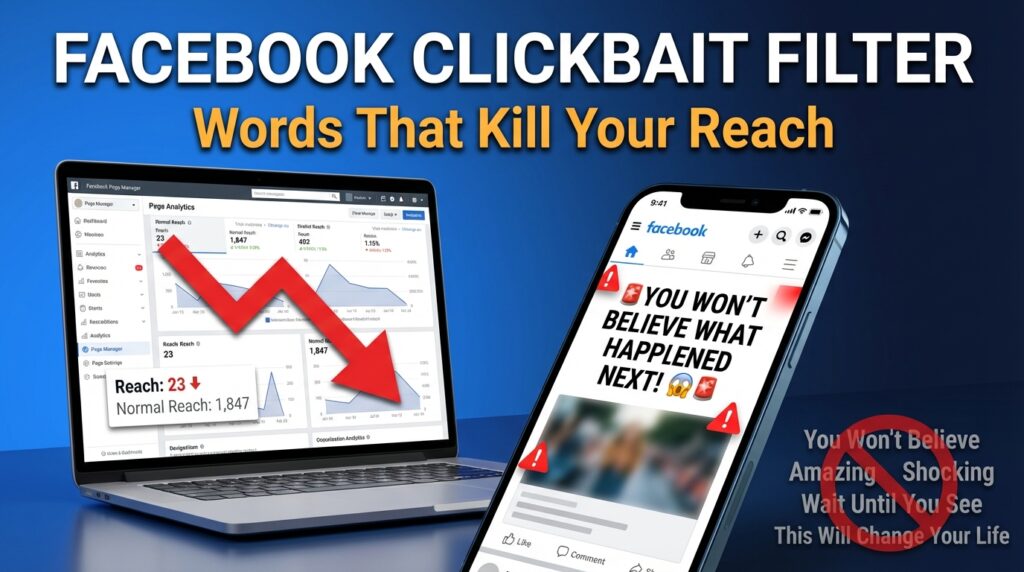

Your Facebook post just got 12 views when you normally get hundreds. You check the content—it’s good. You check the timing—it’s perfect. Then you look at your headline: “You won’t believe this amazing trick!” And there’s your problem.
Facebook’s been quietly demoting posts with clickbait language since 2014, and they’ve gotten really good at it. Page owners are watching their organic reach drop to single digits, wondering why their engagement fell off a cliff. The answer’s usually sitting right in their headline.
This happens because Facebook’s algorithm scans every post for manipulation tactics. When it spots certain words and patterns, it assumes you’re baiting clicks without delivering value. Your post gets buried, your audience never sees it, and you’re left scratching your head about what went wrong.
Key Takeaways
- Remove sensational phrases like “you won’t believe” and “what happened next” to avoid Facebook’s clickbait filter
- Replace curiosity gaps with specific value statements that tell readers exactly what they’ll learn
- Use descriptive headlines that answer questions instead of creating artificial suspense
- Test your posts with Facebook’s transparency tools to monitor reach drops after publishing
- Focus on educational or entertaining content framing rather than emotional manipulation tactics
How Facebook’s Clickbait Detection Actually Works
Facebook doesn’t publish a master list of banned words. That’d be too easy to game. Instead, they use machine learning trained on millions of flagged posts to spot patterns.
The system looks at three things: your headline structure, the gap between promise and delivery, and user behavior signals. If people click your link but bounce back to Facebook within seconds, that’s a red flag. If they click and stay engaged, you’re fine.
Facebook calls it “withholding information.” You’re clickbait when your headline creates curiosity without giving readers enough info to decide if they actually want to click. “This mom discovered one weird trick” tells you nothing. “How to remove wine stains with baking soda” tells you everything.
The detection got more aggressive in 2017 when Facebook started analyzing the actual linked content, not just the headline. They compare what you promised versus what you delivered. Mismatch? You’re demoted.
Words and Phrases That Trigger the Filter
Certain patterns show up in almost every demoted post. Here’s what Facebook’s looking for:
Curiosity Gap Openers
- “You won’t believe…”
- “What happened next will shock you”
- “The secret that…”
- “They don’t want you to know…”
- “Doctors hate this…”
Vague Superlatives
- “This one simple trick…”
- “The best thing ever”
- “Absolutely amazing”
- “Mind-blowing”
- “Life-changing secret”
Forced Mystery
- “Number 7 will shock you”
- “Wait until you see…”
- “The truth about…”
- “What this really means”
- “You’ll never guess…”
These aren’t banned words. You can use “amazing” or “secret” in normal contexts. The problem happens when you stack them together or use them to hide your actual point.
The Real Clickbait Formula Facebook Hates
Pattern recognition matters more than individual words. Facebook’s algorithm spots these structures:
Setup + Withheld Payoff Bad: “She added this to her coffee. What happened next changed everything.” Good: “Adding cinnamon to coffee boosts metabolism by 12%, study finds.”
Numbered Lists Without Context Bad: “15 things about cats. Number 9 is unbelievable.” Good: “15 signs your cat needs a vet visit (including hidden symptoms).”
Emotional Bait + Information Gap Bad: “This teacher’s response left everyone in tears…” Good: “Teacher writes personal note to struggling student, sparks discussion on classroom support.”
The difference? Specificity. The good examples tell you what you’re getting. You can decide if it’s relevant before clicking.
Why Your Reach Drops to Zero
When Facebook flags your post as clickbait, they don’t delete it. They just stop showing it. Here’s the typical death spiral:
Your post goes live. Facebook shows it to maybe 2-5% of your followers as a test. Those people see a clickbait headline, scroll past without engaging. Facebook reads that as “low quality content” and stops distribution.
You might get 10-50 views total on a page with 10,000 followers. That’s a 0.1-0.5% reach rate. It’s brutal.
The worst part? Facebook doesn’t tell you. There’s no notification that says “We flagged this as clickbait.” You just watch your numbers tank and wonder what you did wrong.
| Type of Content | Average Organic Reach | Clickbait Penalty Reach | Engagement Drop |
|---|---|---|---|
| Standard post | 5-10% of followers | 0.1-2% of followers | 60-95% lower |
| Video content | 8-15% of followers | 0.5-3% of followers | 50-85% lower |
| Link posts | 3-8% of followers | 0.05-1% of followers | 70-98% lower |
What Works Instead: The Anti-Clickbait Approach
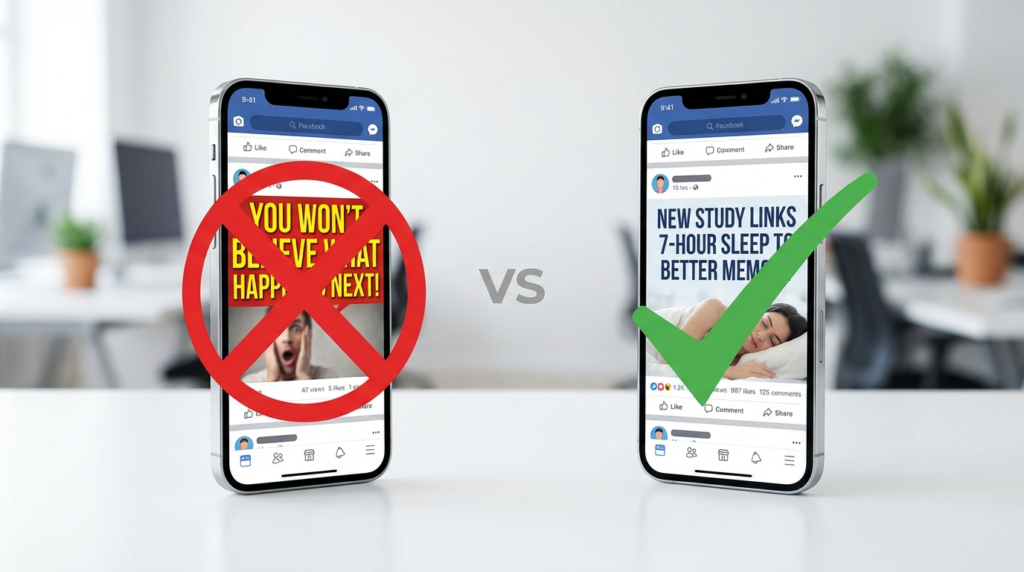
Swap manipulation for clarity. Your headlines should work like newspaper headlines used to—they summarize the story so readers know what they’re getting.
Be Specific About the Benefit Instead of: “This changed my morning routine forever” Try: “Switching to cold showers for 30 days: energy levels and sleep quality results”
Use Numbers Descriptively Instead of: “10 things about budget travel” Try: “10 budget travel apps that saved me $800 on my Europe trip”
Answer the Question in the Headline Instead of: “Is this the end of remote work?” Try: “3 major companies ending remote work policies in 2025”
Include the Actual Finding Instead of: “Scientists discovered something incredible about sleep” Try: “New study links 7-hour sleep schedule to 23% better memory retention”
Notice how none of these create artificial suspense. They’re interesting because they’re useful, not because they’re mysterious.
Testing Your Headlines Before You Post
You can check if you’re headed for clickbait territory before hitting publish. Read your headline out loud and ask:
Does this tell me what I’ll learn? If you can’t summarize the actual content from the headline, that’s a red flag.
Would I feel misled after clicking? If the article doesn’t match the promise, Facebook will notice when people bounce.
Am I creating fake urgency? Words like “before it’s too late” or “limited time” without a real deadline count as manipulation.
Could I rewrite this to be more specific? If yes, do it. More detail almost always means less clickbait risk.
Here’s a quick self-test framework:
- Does your headline include the actual topic? (Yes = good)
- Does it promise something you don’t deliver? (Yes = bad)
- Would it work as a library book title? (Yes = good)
- Does it rely on curiosity instead of value? (Yes = bad)
Monitoring Your Posts for Demotion
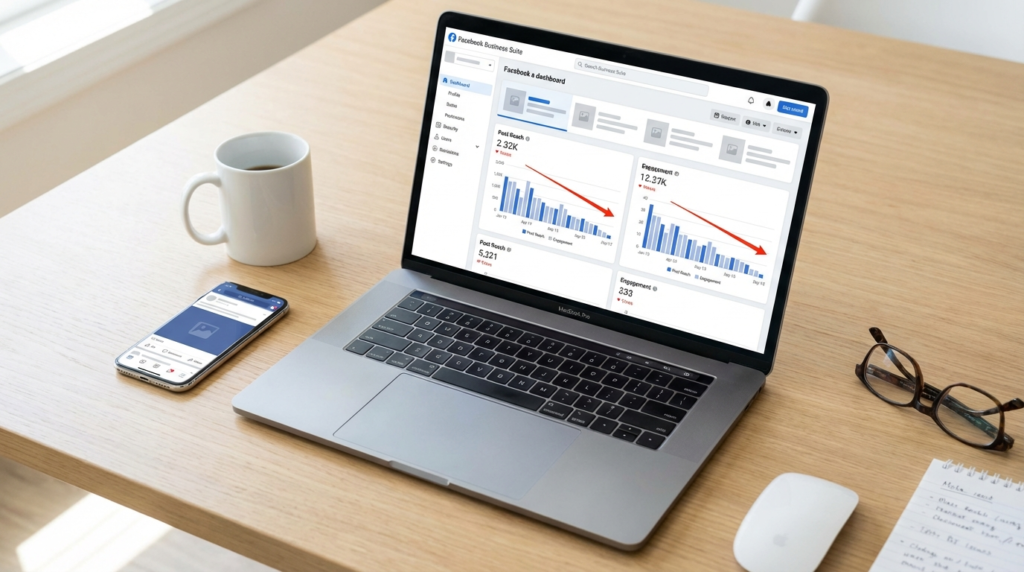
Facebook gives you some tools to spot when you’ve been flagged. Check your Page Insights for sudden reach drops. Look at the “Post Reach” graph—if you see a cliff, go back and check that post’s headline.
The “See Why” feature under each post’s stats sometimes explains reach issues. It won’t say “clickbait,” but it might say “low-quality content” or “user feedback.”
Watch your engagement rate, not just total reach. If reach drops but engagement stays steady, your content’s fine—Facebook’s just showing it to fewer people. If both drop together, you’ve got a quality problem.
Third-party tools like <a href=”https://www.facebook.com/business/help/418604228600939″>Facebook’s Ad Library</a> can show you which posts from other pages get good reach. Study their headlines. You’ll notice they’re almost always specific and clear.
Writing Headlines for Human Readers (Not Algorithms)
The best defense against clickbait flags? Write for people who actually need your information.
Think about search intent. If someone’s searching for “how to fix a leaking faucet,” they don’t want “This homeowner tried one weird thing.” They want “How to fix a leaking faucet in 5 steps (with photos).”
Facebook’s algorithm rewards posts that satisfy the reader’s need. When people click, stay, and engage, that signals quality. When they click and bounce, that signals clickbait.
Format your posts like you’re answering a friend’s question. What would you tell them? That’s your headline.
Add context in the post text itself. Your headline gets them interested, but the first two lines of text (the preview that shows in feed) should add detail. Together, they should give enough info that clicking feels like getting more depth, not finding out the secret.
Platform-Specific Headline Strategies
Facebook isn’t the only platform fighting clickbait, but each one handles it differently.
Facebook: Values specificity and user satisfaction signals. Descriptive wins.
Instagram: Allows more creative freedom since the image matters more. Still avoid pure bait.
LinkedIn: Professional tone matters. Clickbait gets killed faster here because the audience expects substance.
Twitter/X: Character limits force brevity, which actually helps. You can’t fit clickbait patterns into 280 characters easily.
Adapt your approach based on where you’re posting. A headline that works on Instagram might get flagged on Facebook because the platforms measure engagement differently.
Creating Curiosity Without Manipulation
You can still make people interested without resorting to clickbait. The trick? Give them enough to care, not so little they feel tricked.
Use Specific Intrigue Weak: “What this CEO did will change your perspective” Strong: “CEO cuts own salary to $1 to fund employee raises: 3-year results”
Lead with the Surprising Fact Weak: “The truth about coffee will shock you” Strong: “Coffee after 2pm disrupts sleep cycles for 6 hours (even if you feel fine)”
Promise a Solution to a Real Problem Weak: “Struggling with productivity? Try this…” Strong: “The 2-minute rule that helped me finish 6 projects this month”
You’re still creating interest. But you’re doing it by offering value, not by withholding information.
Recovery Strategy When You’ve Been Flagged
Posted something that bombed? Here’s how to fix it:
Delete the original post if it’s getting zero reach. Facebook’s algorithm has a memory, but it’s short-term. A bad post won’t haunt you forever.
Rewrite the headline using the strategies above. Make it specific, clear, and valuable.
Repost with the new headline. Give it at least 24 hours between attempts so Facebook doesn’t flag you for spam.
Some publishers recommend using <a href=”https://transparency.fb.com”>Facebook’s Transparency Center</a> to understand how content moderation works. It won’t reverse a demotion, but it helps you see the bigger picture.
Don’t try to outsmart the algorithm by switching words around. If “you won’t believe” gets flagged, “you won’t imagine” will too. The pattern’s the problem, not the specific words.
Frequently Asked Questions
Can I appeal a clickbait demotion? No official appeal process exists for organic posts. Facebook doesn’t send notifications about clickbait flags, so there’s nothing to appeal. Your best move is to delete and repost with a better headline.
How long does a clickbait penalty last? Individual posts stay demoted permanently, but your page doesn’t get a lasting penalty from one bad post. Each post is judged independently, though repeated violations might affect your overall page quality score.
Do clickbait rules apply to paid ads too? Yes, and they’re stricter. Facebook manually reviews reported ads and will reject them for clickbait. You’ll get a specific rejection reason and can edit before resubmitting.
Will using clickbait words in my post text trigger the filter? The algorithm focuses mainly on headlines and link previews. Post text matters less, but if your entire post reads like spam, user reports can still get you flagged.
Conclusion
Stop playing games with your headlines. Facebook’s algorithm is designed by people who’ve seen every trick, and it gets smarter every month. Your organic reach depends on matching what you promise with what you deliver.
Write headlines that inform, not headlines that manipulate. Tell people what they’ll learn, what problem you’ll solve, or what question you’ll answer. Save the mystery for fiction writers.
Test your headlines by reading them to someone who doesn’t know your content. If they can tell you what the article’s about, you’re good. If they’re confused or feel baited, rewrite it.
Your turn: What’s the worst clickbait headline you’ve seen kill a good post’s reach? Drop it in the comments—let’s learn from each other’s mistakes.