

You’ve landed a brand deal. The contract’s signed, content’s ready, but then you hit a wall—where exactly do you put the #ad disclosure? Bury it in comments? Tuck it behind “See More”? Wrong moves that could land you in hot water with the FTC.
The Federal Trade Commission doesn’t mess around when it comes to sponsored content transparency. Influencers have been fined, campaigns have been pulled, and careers have taken hits because of disclosure mistakes that seemed harmless at the time. The rules aren’t new, but enforcement is getting stricter, and the “I didn’t know” excuse won’t save you.
This guide breaks down exactly what the FTC’s “clear and conspicuous” rule means, where your disclosures need to go, and how to stay compliant without killing your engagement.
Key Takeaways
- Place #ad or #sponsored at the start of your caption, before any “See More” break
- Avoid hiding disclosures in comment sections, hashtag clusters, or collapsed text
- Use platform-specific disclosure tools (like Instagram’s “Paid Partnership” tag) alongside text disclosures
- Update older sponsored posts that don’t meet current standards to avoid retroactive penalties
- Remember disclosures apply to all compensation types—free products, affiliate commissions, and monetary payment
Why the FTC Cares About Your Sponsored Posts
The FTC exists to protect consumers from deceptive marketing. When you recommend a product without disclosing you’re getting paid, followers can’t evaluate your recommendation fairly. They might think you genuinely love that protein powder when really you’re just cashing a check.
This isn’t about the FTC being party poopers. It’s about maintaining trust in the creator economy. When audiences can’t tell what’s an authentic recommendation versus a paid promotion, the entire influencer marketing industry suffers. Brands lose credibility, creators lose followers, and consumers get burned.
The FTC enforces these rules under Section 5 of the FTC Act, which prohibits unfair or deceptive advertising practices. Influencers count as endorsers, and the same rules that apply to celebrity commercials apply to your Instagram stories.
What “Clear and Conspicuous” Actually Means
The FTC uses this phrase repeatedly in their guidelines, but what does it mean in practice? Clear and conspicuous breaks down into two requirements:
Clear means people understand what you’re saying. Using “#sp” or “#collab” doesn’t cut it. Your audience shouldn’t need to decode your disclosure. Plain language works best: #ad, #sponsored, or #paidpartnership.
Conspicuous means people can’t miss it. The disclosure needs to be placed where viewers will see it before they engage with the content. If someone has to click “See More,” scroll past 20 hashtags, or hunt through comments, your disclosure fails the conspicuous test.
Think about how people consume content. On Instagram, users often double-tap photos without reading captions. On TikTok, videos autoplay and viewers might scroll past within seconds. Your disclosure needs to work with these behaviors, not against them.
Where Disclosures Must Go (Platform by Platform)
Instagram Posts and Reels
Put #ad or #sponsored in the first line of your caption. Don’t wait until after the “See More” break—that’s a violation. The paid partnership tag helps, but it doesn’t replace a text disclosure. Use both.
For Reels, add a text overlay at the video’s start that says “Paid Partnership” or “Ad.” Audio moves fast, and viewers might miss a verbal mention. Visual disclosures stick.
TikTok Videos
Place your disclosure in the first three seconds of the video, either as text overlay or verbal mention. The caption should also include #ad near the beginning. TikTok’s branded content toggle is mandatory for paid partnerships, but again, it doesn’t replace your own disclosure.
Don’t hide disclosures at the video’s end. Most viewers scroll away before then.
YouTube Videos
Verbal disclosures should happen at the video’s start, before your content begins. Mention the sponsorship out loud and include the brand name. Written disclosures go in the first few lines of the description, not buried after a wall of links and timestamps.
YouTube’s paid promotion disclosure box helps with ad serving transparency, but you still need clear language telling viewers this content is sponsored.
Blog Posts and Websites
Put your disclosure above the content, before any affiliate links or product recommendations appear. A banner at the top works well. Don’t force readers to hunt for a disclosure policy page—that’s not conspicuous.
For individual product mentions, add disclosures immediately before or after the recommendation. Don’t make readers connect dots between your disclosure and your affiliate links scattered throughout the post.
Common Disclosure Mistakes That Get Influencers Flagged
Hiding Behind “See More”
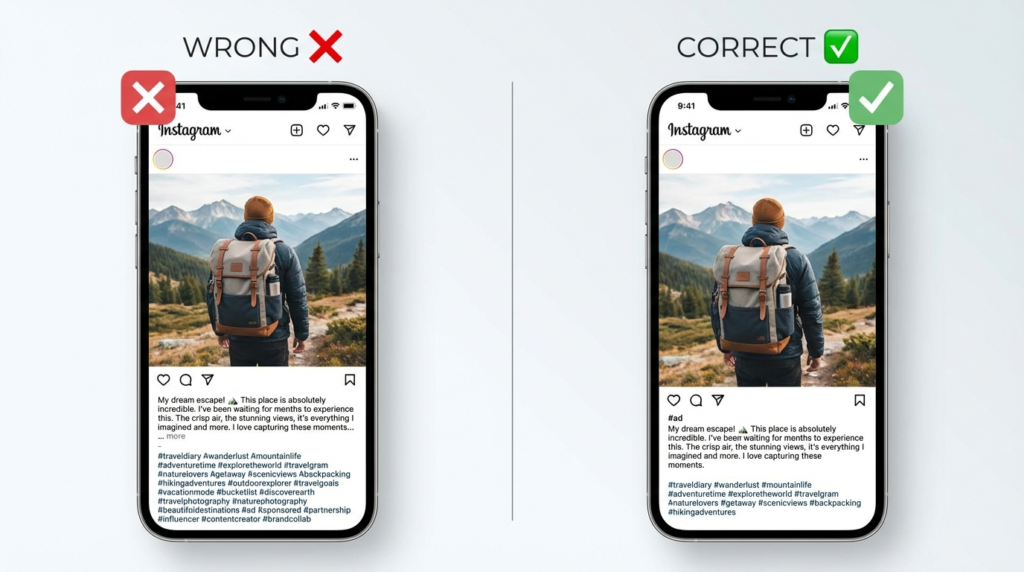
Instagram captions collapse after 125 characters on mobile. If your disclosure sits beyond that point, most users won’t see it. This is the most common violation the FTC calls out. Start your caption with the disclosure, not with storytelling that pushes the important stuff down.
Burying Disclosures in Hashtag Soup
Throwing #ad at the end of 30 hashtags doesn’t work. People scroll past hashtag clusters without reading them. Your disclosure gets lost. Keep it at the top, separate from your hashtag list.
Comment Section Confessions
Posting “This is an ad!” in the comments section violates FTC guidelines. Comments can get pushed down as people interact with your post. New viewers might never see them. Disclosures belong in the original content, not in afterthoughts.
Using Unclear Language
Terms like “thanks to [Brand]” or “#partner” create ambiguity. Did the brand send you a free product, or did they pay you? Your audience can’t tell. Stick with #ad, #sponsored, or #paidpartnership—these terms are universally understood.
Platform-Only Tools Without Text
Instagram’s paid partnership label and TikTok’s branded content toggle are great, but they’re not enough on their own. The FTC wants text-based disclosures that don’t rely on platform features that might change or not display properly across all devices.
What Counts as Material Connection (When You Need to Disclose)
You need to disclose any material connection with a brand. This includes:
Monetary payment for posts, stories, or videos promoting a product or service. This one’s obvious—if you’re getting paid, say so.
Free products sent by brands, even without a posting requirement. If a company gifts you a $200 skincare set hoping you’ll post about it, that’s a material connection. Disclose it.
Affiliate commissions from links or codes. When you earn money from purchases made through your link, viewers deserve to know.
Employment relationships. If you work for the brand you’re promoting, that’s a material connection. Your followers might assume you’re an unbiased customer when you’re actually on payroll.
Family or personal relationships. Promoting your spouse’s business or your best friend’s product line requires disclosure. Your relationship influences your recommendation.
The key test: Would knowing about this relationship change how your audience views your recommendation? If yes, disclose it.
How Different Compensation Types Affect Disclosure Requirements
| Compensation Type | Disclosure Required | Example Language |
|---|---|---|
| Direct payment from brand | Yes | #ad or #sponsored |
| Free product (gifted) | Yes | #gifted or #ad |
| Affiliate commission | Yes | “I earn a commission from purchases” |
| Discount code for followers | Yes | #ad or #affiliate |
| Brand employee | Yes | “I work for [Brand]” |
| No compensation (genuine recommendation) | No | No disclosure needed |
FTC Enforcement: What Happens When You Violate
The FTC doesn’t immediately fine individual influencers for first-time violations. They typically start with warning letters asking you to fix non-compliant posts. Ignoring these warnings escalates things.
Brands face steeper penalties than individual creators. Companies can get hit with fines reaching millions of dollars for deceptive advertising campaigns. As an influencer, you share responsibility with the brand when running sponsored content. Both parties can face consequences.
Recent enforcement actions show the FTC is serious. In 2023, several major influencers received notices about disclosure violations on posts from years ago. The FTC can go back and flag old content, so updating past sponsored posts matters.
Beyond FTC action, platforms can penalize you too. Instagram and TikTok have started removing posts that violate disclosure policies. Repeated violations might result in account restrictions or loss of monetization features.
Updating Old Sponsored Content
Go through your feed and check sponsored posts from the past year. Do they meet current standards? If not, edit them. Move disclosures to the first line, add clearer language, or delete posts you can’t fix.
For posts you can’t edit (like Instagram stories that expired), document them. If the FTC asks about past content, you can show you’ve since corrected your practices.
Brands often include disclosure requirements in contracts now. Review your agreements to confirm you’re meeting both FTC standards and contractual obligations. If a contract tells you to hide disclosures or use unclear language, push back. Protecting your reputation matters more than one brand deal.
Disclosures for Different Content Types
Product Reviews
Disclose at the review’s start, not the end. Readers deserve to know you received the product for free or got paid before they invest time reading your opinion.
Unboxing Videos
Mention sponsorship or gifted products in the video’s first 10 seconds. Viewers who only watch the unboxing portion need to know it’s sponsored content.
Tutorial Content
If you’re teaching something using sponsored products, disclose the relationship before demonstrating the product. Your credibility as an educator depends on transparency.
Giveaway Posts
When a brand sponsors a giveaway, disclose it prominently. The FTC views giveaways as endorsements, and your followers should know the brand is involved beyond just providing the prize.
Building Disclosure Habits That Stick
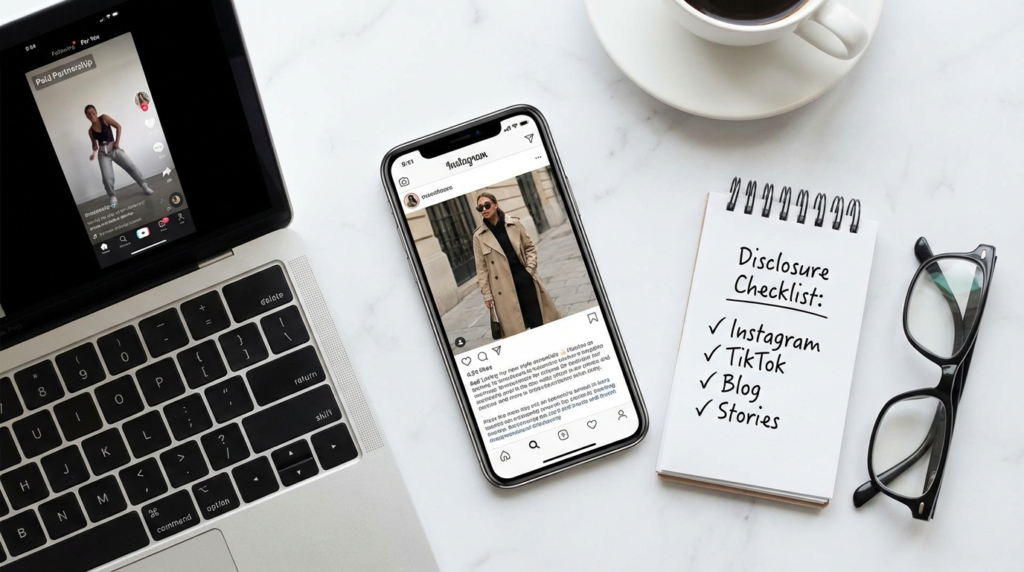
Create a disclosure checklist you follow for every sponsored post:
- Add disclosure to the first line of your caption
- Include platform-specific tools (paid partnership tag)
- Add visual or verbal disclosure within the content itself
- Review the post before publishing to confirm disclosure is visible
- Check the post after publishing on mobile to verify disclosure appears above “See More”
Save disclosure templates in your phone’s notes app. When you’re creating content on the go, you won’t forget the language or placement. Consistency protects you.
The Business Case for Proper Disclosures
Transparency builds trust. Audiences respect creators who are upfront about partnerships. Studies show consumers don’t mind sponsored content—they mind being deceived.
Proper disclosures can actually improve campaign performance. When followers understand you’re being paid to promote something but see you’re selective about partnerships, your recommendations carry more weight. You’re not just another influencer hiding ads.
Brands increasingly prefer working with creators who handle disclosures properly. It protects them from FTC action and shows professionalism. Sloppy disclosure practices make you a liability, not an asset.
Industry Resources and Staying Updated
The FTC publishes updated guidance regularly. Check their website’s <a href=”https://www.ftc.gov/business-guidance/resources/disclosures-101-social-media-influencers”>Disclosures 101 for Social Media Influencers</a> guide for the latest standards.
Trade organizations like the Interactive Advertising Bureau (IAB) offer resources on compliant influencer marketing. Their guidelines often expand on FTC requirements with platform-specific advice.
Legal experts who specialize in influencer marketing can review your disclosure practices if you’re handling major campaigns or working with sensitive industries like health or finance. The investment in legal consultation costs less than FTC penalties.
The <a href=”https://www.ftc.gov/news-events/news/press-releases”>FTC’s press releases</a> announce enforcement actions against brands and influencers. Reading these keeps you informed about what violations they’re currently prioritizing.
Conclusion
Proper disclosure placement isn’t complicated—put #ad at the start of your caption, use platform tools, and make sure viewers can’t miss it. Skip the comment section tricks and “See More” hiding spots. They don’t work, and they’re not worth the risk.
Update your old sponsored posts, build disclosure into your content creation routine, and remember that transparency strengthens your relationship with followers rather than weakening it. The FTC’s rules exist to protect consumers, but following them protects your career too.
What’s your biggest challenge with disclosure placement? Have you had to update old sponsored content, or are you just starting out with brand partnerships?
Frequently Asked Questions
Can I just use the platform’s paid partnership tool without adding #ad to my caption?
No. Platform tools like Instagram’s paid partnership label help, but the FTC requires text-based disclosures in your actual content. Use both the platform tool and a written disclosure like #ad or #sponsored in your caption’s first line.
Do I need to disclose if a brand sent me a free product but didn’t require me to post?
Yes. If you received free product from a brand and you choose to post about it, that’s a material connection requiring disclosure. Use #gifted or #ad to let your audience know you didn’t purchase the product yourself.
How do I disclose affiliate links without hurting conversions?
Add a simple statement near your affiliate link: “I earn a small commission from purchases made through this link.” Most consumers understand affiliate marketing and respect the transparency. Hidden affiliate relationships hurt trust more than disclosed ones.
What if my brand contract says not to make the sponsorship obvious?
Push back or walk away. Any contract asking you to hide or downplay disclosures violates FTC guidelines. Both you and the brand can face penalties. No single partnership is worth compromising your compliance record or reputation.