

You’re ready to sell your digital products or launch a membership, but there’s a problem nobody warned you about: tax compliance. Suddenly, you’re dealing with VAT in Europe, GST in Australia, and sales tax across different US states. The thought of filing tax returns in multiple countries sounds like a nightmare you didn’t sign up for when you decided to monetize your creativity.
Here’s what most creators miss: not all platforms handle taxes the same way. Some act as the merchant of record (MOR), taking full legal responsibility for tax collection and remittance. Others leave you holding the bag, forcing you to navigate complex tax laws across different jurisdictions. The difference isn’t just about convenience—it’s about legal liability and whether you’ll spend your time creating or drowning in spreadsheets.
Key Takeaways
- Patreon acts as merchant of record for most transactions, handling VAT and sales tax collection automatically
- Gumroad serves as merchant of record, managing global tax compliance so you don’t have to file in multiple countries
- Choose Patreon if you prefer recurring memberships with built-in tax handling for subscription revenue
- Pick Gumroad if you’re selling one-time digital products and want straightforward tax automation
- Verify your specific tax situation since platform policies can vary based on your location and product type
What “Merchant of Record” Actually Means for Your Business
A merchant of record is the legal entity that processes customer payments and assumes responsibility for the entire transaction. Think of them as the official seller in the eyes of tax authorities and payment processors.
When a platform serves as your MOR, they become liable for collecting and remitting taxes. You receive your payout minus their fees, and they handle the paperwork with governments worldwide. Without an MOR, you’re technically the seller of record, which means tracking tax rates, collecting the right amounts, and filing returns yourself—potentially in dozens of jurisdictions.
This distinction matters because tax laws are getting stricter. The EU’s VAT rules require digital sellers to charge different rates based on where customers live. Some US states now enforce economic nexus laws, meaning you might owe sales tax even without a physical presence there.
How Patreon Manages Tax Responsibilities
Patreon operates as the merchant of record for creator earnings. When someone pledges to support you, Patreon processes that payment, collects applicable taxes, and sends you the net amount after their platform fee.
For VAT purposes, Patreon registers with tax authorities in required countries and handles compliance. If a patron from Germany subscribes to your tier, Patreon automatically applies German VAT rates, collects it, and remits it to German tax authorities. You don’t need to register for VAT in Germany or file anything there.
The platform charges VAT on top of your membership price in most cases. A €10 monthly tier might cost a European patron €11-12 depending on their country’s VAT rate. Patreon’s system determines the correct rate based on the patron’s location using payment information.
US sales tax works similarly. Patreon collects and remits sales tax where required by state law. They track which states have economic nexus thresholds and handle compliance for creators automatically. Your 1099-K form from Patreon shows your gross earnings, but the actual tax collection and filing happens on their end.
There’s an important caveat: Patreon acts as MOR for digital memberships and benefits delivered through their platform. Physical merchandise sold through Patreon may have different tax treatment depending on your setup. Always verify current policies since tax rules evolve.
Gumroad’s Approach to Being Merchant of Record
Gumroad clearly states they function as the merchant of record for transactions on their platform. When customers buy your ebook, course, or digital asset, Gumroad is the legal seller even though you’re the creator.
This setup means Gumroad handles VAT collection across the European Union and other countries requiring it. They maintain registrations with tax authorities and file returns on your behalf. If someone in France buys your product, Gumroad applies French VAT, collects it from the buyer, and deals with French tax officials.
For US sales tax, Gumroad collects taxes in states where they’ve determined collection is necessary based on economic nexus laws. The platform monitors changing state regulations and updates their collection practices accordingly. You receive your payout after Gumroad deducts their fee and the taxes they’ll remit.
Gumroad provides sales reports showing how much tax was collected on your transactions. This helps with your own accounting and income reporting, but you’re not responsible for submitting those collected taxes to governments—Gumroad does that as the MOR.
One thing creators appreciate: Gumroad handles license key management and EU VAT validation for business customers. When a business buyer provides their VAT number, Gumroad can apply reverse charge mechanisms where appropriate under EU rules.
Tax Documentation You’ll Receive from Each Platform
Both platforms provide documentation for your tax filing, but what you receive differs based on their MOR status.
From Patreon, US creators get a 1099-K form if they earn above IRS thresholds (currently $600 annually). This form reports your gross earnings—the total amount patrons paid before Patreon’s fees. You’ll reconcile this with your actual deposits when filing your return. Patreon also provides monthly statements showing your earnings, fees, and net deposits.
Gumroad sends a 1099-K to US sellers meeting the threshold as well. Their dashboard includes detailed sales reports breaking down each transaction, including what tax was collected. You can export this data for your accountant. The key point: the taxes Gumroad collected aren’t your income, so your actual taxable income is lower than the gross sales figure.
International creators don’t receive 1099 forms since that’s a US tax document. However, both platforms provide sales data and payment histories you can use for your country’s tax requirements. You’ll still need to report your creator income on your domestic tax return.
Neither platform issues documents showing the taxes they collected and remitted on your behalf to various governments. That’s part of their job as MOR—you don’t need to prove you paid French VAT because you didn’t; Gumroad or Patreon did.
When You Still Need to Handle Taxes Yourself
Acting as MOR doesn’t eliminate all your tax obligations. You still owe income tax on your earnings in your home country. If you’re in the US, you’ll pay federal income tax and self-employment tax on your creator income. Other countries have their own income tax structures.
You might need to register for sales tax in your own state or country for certain situations. If you sell physical products directly to local customers, ship merchandise yourself, or have income sources outside these platforms, you could have separate compliance requirements.
Some creators operate as businesses with employees or contractors. Your payroll taxes, business licenses, and other regulatory requirements exist independently of whether Patreon or Gumroad handles sales tax.
Here’s a scenario: you use Gumroad for digital products but also sell physical prints through your own website. Gumroad handles digital sales tax as MOR, but you’re responsible for collecting and remitting sales tax on prints sold through your site in states where you have nexus.
Quarterly estimated tax payments are your responsibility. The IRS expects self-employed individuals to pay taxes throughout the year, not just at filing time. Calculate your estimated payments based on your creator income and submit them according to IRS schedules.
Real Differences That Affect Your Daily Operations
The MOR model creates practical differences in how you price products and communicate with customers.
With both platforms handling tax as MOR, you set your base price and they add applicable taxes at checkout. A $20 digital product becomes $22-24 for EU buyers after VAT. Some creators prefer this because customers see your price first, then taxes added transparently. Others find it complicates pricing strategy since the final amount varies by location.
Customer support becomes simpler. When buyers have questions about tax charges on their receipt, they’re contacting the MOR for explanations. You don’t need to understand why Norwegian VAT is 25% versus Swedish VAT at 25%—the platform handles those inquiries.
Refund processing differs too. Since the platform is the seller of record, they control refund policies to some extent. You initiate refunds through their system, and they reverse the transaction including taxes. This protects you from having to calculate partial VAT refunds manually.
Your business structure matters less from a tax perspective. Whether you’re a sole proprietor, LLC, or corporation, Patreon and Gumroad still act as MOR for the transaction itself. However, your entity type affects how you report income on your personal or business tax return.
Comparing Features Beyond Tax Handling
| Feature | Patreon | Gumroad |
|---|---|---|
| Primary Model | Recurring memberships | One-time sales |
| Payment Processing | Built-in, handles as MOR | Built-in, handles as MOR |
| Creator Fees | 5-12% depending on plan | 10% standard fee |
| Payout Frequency | Monthly | Weekly or monthly |
| Content Delivery | Hosted posts, tiers, rewards | File delivery, license keys |
| Tax Forms Issued | 1099-K for US creators | 1099-K for US creators |
| Community Features | Built-in comments, messaging | Basic customer communication |
| Subscription Management | Advanced tier system | Membership option available |
Making Your Decision Based on Business Model
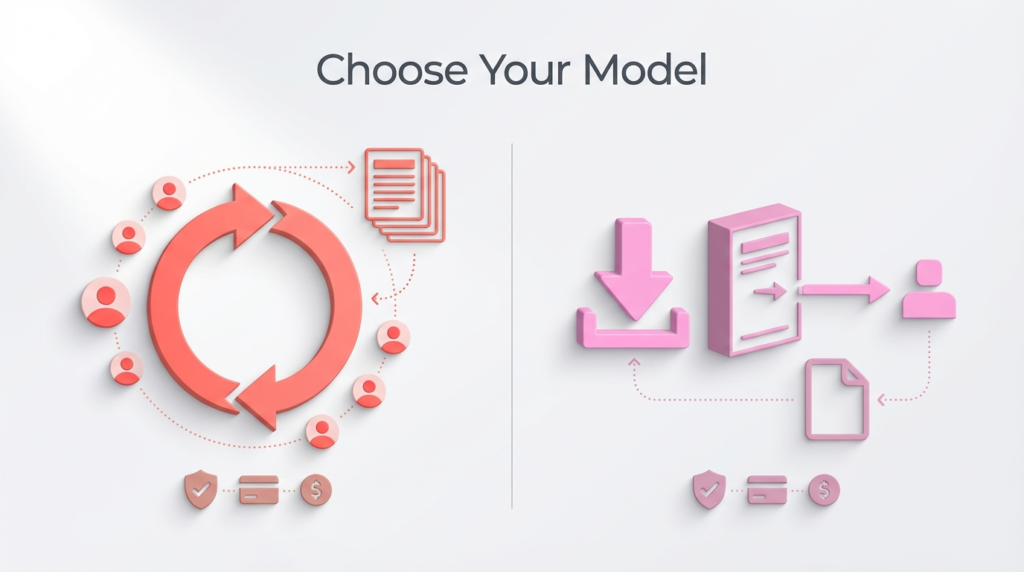
Your choice between these platforms shouldn’t hinge solely on MOR status since both handle it. Instead, consider what you’re selling and how.
Choose Patreon when you’re building a community around recurring support. Artists, podcasters, YouTubers, and writers who release ongoing content fit naturally here. The membership model works best when you’ll provide regular value to patrons month after month. Tax handling is built into a platform designed for sustained creator-patron relationships.
Pick Gumroad when selling discrete digital products. Ebooks, courses, templates, design assets, and software suit Gumroad’s one-time purchase model. You can offer “rentals” or subscriptions, but the platform excels at delivering files to customers who buy once. Tax compliance comes standard without monthly membership complexity.
Some creators use both. You might run a Patreon for exclusive monthly content while selling comprehensive courses on Gumroad. Each platform handles taxes for its respective transactions. This dual approach means navigating two sets of dashboards and two 1099-K forms, but you get specialized tools for different revenue streams.
Consider where your audience lives. Both platforms handle international taxes, but payment method availability varies by region. Check which platform supports payment options your target customers prefer. Patreon integrates well with content platforms like YouTube and podcasts, while Gumroad connects smoothly with email marketing tools for course creators.
Common Tax Mistakes Creators Make (Even with MOR Platforms)
Even when platforms handle sales tax as MOR, creators still mess up their tax situations in predictable ways.
Forgetting to save for income tax is the biggest error. Yes, Patreon collected VAT from your European patrons, but you still owe income tax on those earnings to your home country. Many creators spend 100% of their deposits and face nasty surprises at tax time. Set aside 25-30% of your creator income for taxes.
Mixing business and personal expenses creates accounting headaches. Open a separate bank account for creator income. When Gumroad or Patreon deposits arrive, they go to your business account. This makes tracking income and deductible expenses straightforward when filing your return.
Not tracking deductible expenses means overpaying taxes. Software subscriptions, equipment, home office space, internet, and professional development courses are often deductible. Keep receipts and categorize expenses throughout the year. Your tax liability is based on profit (income minus expenses), not gross revenue.
Ignoring estimated quarterly payments leads to penalties. If you’ll owe more than $1,000 in taxes, the IRS expects quarterly payments. Missing these triggers underpayment penalties even if you pay everything by April 15th. Calculate your liability and submit payments in April, June, September, and January.
Assuming MOR means zero tax responsibility is dangerous. You’re still a self-employed business owner reporting income. The platform handling sales tax doesn’t eliminate your income tax, self-employment tax, or other obligations.
How Tax Laws Are Changing for Digital Creators
Tax requirements for digital products keep evolving, making the MOR model increasingly valuable.
More countries are implementing digital service taxes. These target online platforms and digital transactions. While platforms like Gumroad and Patreon absorb some compliance burden as MOR, these laws affect how they operate and potentially impact their fee structures.
US states continue expanding economic nexus laws. South Dakota v. Wayfair opened the door for states to require sales tax collection from remote sellers. Each state sets its own threshold—often $100,000 in sales or 200 transactions. As a solo creator, you might never hit these limits personally, but your platform does, so they collect and remit on your behalf.
The EU’s VAT OSS (One-Stop Shop) scheme simplifies reporting for businesses selling digital services across member states. Platforms acting as MOR register for this, allowing them to file one return covering all EU sales rather than registering in each country separately. This benefits you indirectly through maintained compliance.
Cryptocurrency payments and NFTs create new tax questions. Some creators accept crypto through these platforms or separately. Tax treatment varies—crypto might be property, currency, or something else depending on jurisdiction. The MOR model doesn’t always extend to crypto transactions, potentially creating separate reporting obligations.
Frequently Asked Questions
Do I need to register for VAT if Gumroad or Patreon is my merchant of record?
No, you typically don’t need to register for VAT in foreign countries when these platforms act as your MOR. They maintain the necessary VAT registrations and handle compliance. However, check your local country’s rules—you might need domestic VAT registration depending on your total business income and local thresholds.
Will I get audited for taxes collected by these platforms?
Tax authorities audit the merchant of record for sales tax compliance, not you. If questions arise about whether correct VAT was charged, Patreon or Gumroad handles those inquiries. You could still face audits regarding your income tax return, so keep accurate records of your earnings and expenses.
Can I deduct the platform fees from my taxes?
Yes, platform fees are ordinary business expenses. When Patreon takes their 5-12% or Gumroad charges 10%, you deduct these fees when calculating your taxable income. Your net deposits (after fees) are what you actually earned, and the fees reduce your tax liability.
What happens if a platform changes their merchant of record status?
Platforms occasionally update their terms and tax handling procedures. You’ll receive notification of changes affecting MOR status. If a platform stops acting as MOR, you’d need to implement your own tax collection system or switch to a platform that provides MOR services. Monitor your email for policy updates from any platform you use.
Wrapping Up Your Tax Compliance Strategy
Both Gumroad and Patreon remove the headache of multi-jurisdiction tax compliance by acting as merchant of record. You won’t file VAT returns in France, calculate GST for Australia, or track sales tax rates across US states. The platforms handle collection and remittance while you focus on creating.
Your remaining responsibility is straightforward: report your creator income accurately, pay your income tax, and maintain basic financial records. Set aside money for taxes quarterly, track your deductible expenses, and consult a tax professional if your situation gets complex. The MOR model doesn’t eliminate taxes—it just handles the messy sales tax part so you can concentrate on what you do best.
Which platform matches your business model better—recurring memberships or product sales? Drop a comment sharing what you’re creating and which tax features matter most to you.