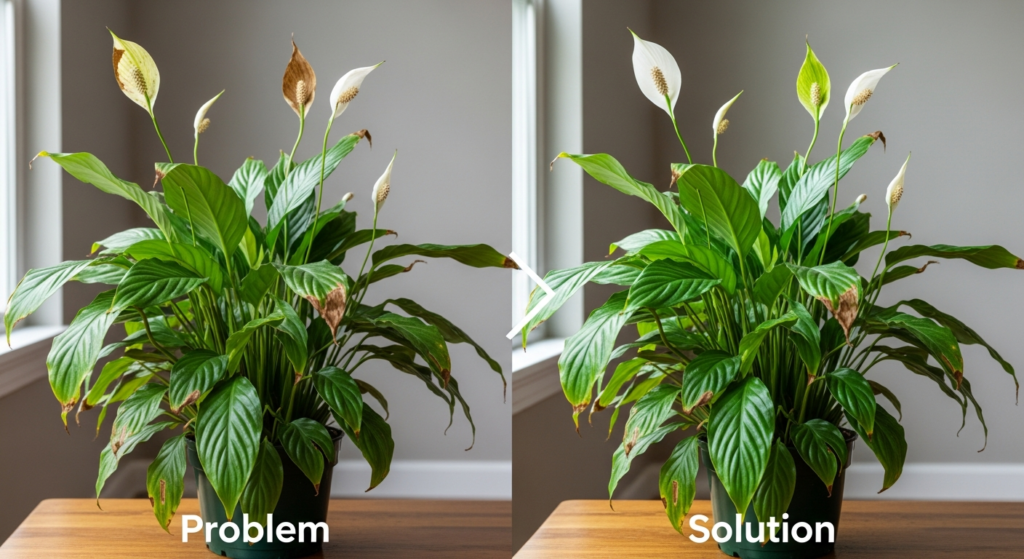

You bought a peace lily because someone said it was “easy.” Now you’re staring at brown leaves, wondering what went wrong. The edges look crispy. Maybe the tips are turning dark. And those beautiful white blooms? Nowhere to be found.
I’ve been there. My first peace lily looked so sad that I almost threw it out. The leaves were more brown than green, and I hadn’t seen a single flower in months. I thought I just had a “black thumb” with houseplants.
But here’s what I learned: peace lilies aren’t actually that hard to care for. They’re just really good at showing you when something’s wrong. Those brown leaves? They’re messages. And once you understand what your plant is trying to tell you, fixing it becomes straightforward.
In this guide, I’ll walk you through exactly how to diagnose what’s causing your peace lily’s brown leaves, how to fix each problem, and most importantly—how to get those stunning white blooms back. By the end, you’ll know more about peace lily care than most people who’ve kept them for years.
I’m Darcey Wren, and I’ve spent years growing and writing about indoor flowering plants. After killing my fair share of peace lilies early on, I started keeping detailed notes on what worked and what didn’t. I’ve tested different watering schedules, moved plants around to dozens of light conditions, and learned to read the signs before minor issues become major problems. What I’m sharing here comes from that hands-on experience—the trial and error that taught me how these plants actually behave.
Why Peace Lily Leaves Turn Brown
Brown leaves aren’t a death sentence. They’re actually your plant’s way of telling you something needs to change. After dealing with this myself and helping others troubleshoot their peace lilies, I’ve learned that brown leaves usually point to one of several issues.
The most common causes:
- Water quality problems (chlorine, fluoride, or mineral buildup)
- Inconsistent watering (too much or too little)
- Low humidity levels
- Direct sunlight exposure
- Temperature stress
- Overfertilizing
Peace lilies are native to tropical rainforest floors in Central and South America. They evolved in humid, shaded environments with consistent moisture. When we bring them indoors, we’re asking them to adapt to drier air, tap water, and artificial light. Sometimes they struggle with the transition.
Brown Tips vs. Brown Edges: What’s the Difference?
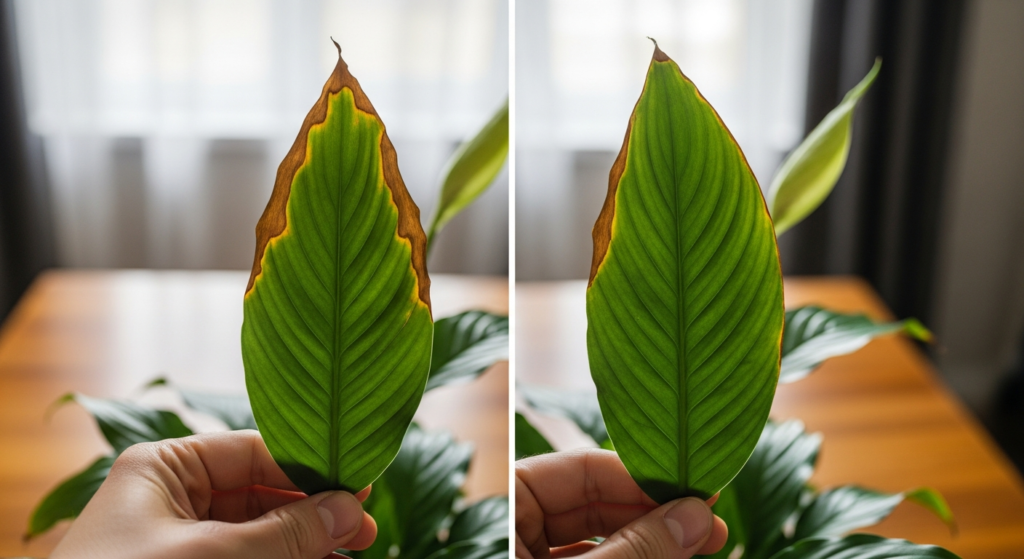
Before you can fix the problem, you need to know exactly what you’re dealing with. I learned this the hard way when I kept adjusting the wrong thing.
| Symptom | Primary Cause | What It Looks Like |
|---|---|---|
| Brown tips only | Fluoride or chlorine in tap water | Dry, crispy points at leaf ends |
| Brown edges | Low humidity or underwatering | Thin brown line along leaf margins |
| Brown patches | Sunburn or cold damage | Irregular brown spots on leaf surface |
| Yellowing then browning | Overwatering or root rot | Starts yellow, progresses to brown and mushy |
When my peace lily first showed brown tips, I assumed it needed more water. I increased watering, which made things worse. The edges started browning too. That’s when I realized the issue wasn’t simply “not enough water”—it was more complicated.
Brown Tips: The Water Quality Problem
If you’re seeing brown tips specifically, tap water is likely the culprit. Peace lilies are sensitive to fluoride, chlorine, and dissolved salts found in most municipal water supplies.
I tested this by switching to filtered water for one month. The new growth came in perfectly green while the old leaves kept their brown tips. This told me the plant was recovering, but existing damage doesn’t reverse itself.
How to fix water quality issues:
- Use distilled, filtered, or rainwater for watering
- If you must use tap water, let it sit out overnight so chlorine evaporates
- Water deeply until it drains from the bottom, then discard excess
- Flush the soil every few months to remove salt buildup
Brown Edges: The Humidity Issue
Brown edges typically mean your peace lily is losing moisture faster than it can replace it. This happens in dry indoor air, especially during winter when heating systems run constantly.
I measured the humidity near my peace lily with a basic hygrometer. It read 32%. Peace lilies prefer 50-60% humidity. No wonder the edges were crisping up.
Ways to increase humidity:
- Place the pot on a pebble tray filled with water (don’t let the pot sit in water)
- Group plants together to create a microclimate
- Run a humidifier nearby
- Move the plant to a bathroom with natural light
After placing my peace lily on a pebble tray and moving it closer to other plants, new leaves grew in without brown edges. The change took about three weeks to become noticeable.
About My Experience With Peace Lilies
I’m Darcey Wren, and I’ve been growing and writing about indoor flowering houseplants for several years now. My interest started with a single peace lily gifted by a friend, which quickly became five, then ten different varieties as I experimented with care techniques and troubleshooting.
What I share here comes from hands-on experience—trial and error in my own home, research into plant physiology, and conversations with other growers. I’m not a certified horticulturist, but I’ve spent considerable time learning what these plants need to thrive indoors, especially when they show signs of stress. My goal is to help you understand your plant better and give you practical solutions that actually work.
Light: Finding the Right Spot
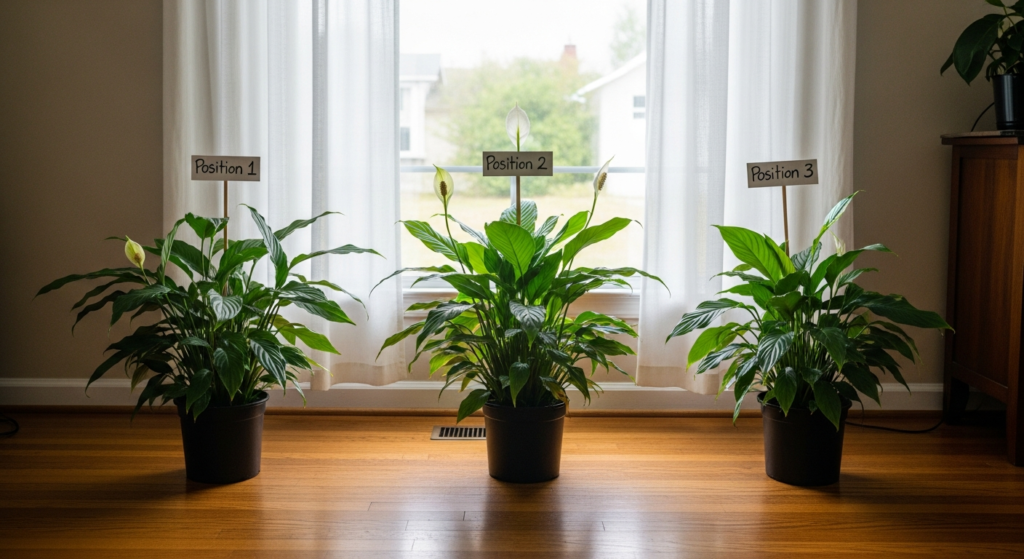
Peace lilies tolerate low light, but that doesn’t mean they prefer it. I had mine sitting in a dark corner for months. It survived, but it didn’t bloom. When I moved it closer to a window with indirect light, everything changed.
My Light Experiment
I tested three different positions over 12 weeks:
Position 1: Dark corner (3-4 feet from north-facing window)
- Result: Slow growth, no blooms, leaves looked dull
Position 2: Bright indirect light (2 feet from east-facing window with sheer curtain)
- Result: Steady growth, one bloom after 8 weeks, vibrant green leaves
Position 3: Direct morning sunlight (right next to east-facing window, no curtain)
- Result: Brown patches appeared within 5 days, had to move it back
The sweet spot for my peace lily was position 2—bright light filtered through a sheer curtain. Direct sun scorched the leaves, while too little light prevented blooming.
How to find the right light:
- Place your peace lily near an east or north-facing window
- Use a sheer curtain if the light feels intense
- Watch for signs: pale leaves mean too much light, dark green without blooms means too little
- Rotate the pot every week so all sides get even exposure
Watering: Getting the Balance Right
This is where most people struggle. I did too. Peace lilies like consistent moisture but hate wet feet.
The Finger Test
Stick your finger about two inches into the soil. If it feels dry, water thoroughly. If it feels damp, wait another day or two. This simple test prevented both overwatering and underwatering for me.
My watering routine:
- Check soil every 3-4 days (more often in summer, less in winter)
- Water when top 2 inches feel dry
- Use room temperature filtered water
- Pour until water drains from bottom holes
- Empty the drainage tray after 15 minutes
Signs you’re overwatering:
- Yellow leaves that turn brown and mushy
- Soil stays wet for days
- Mold growing on soil surface
- Root rot (roots look black and smell bad)
Signs you’re underwatering:
- Entire plant droops dramatically
- Leaves curl inward
- Brown, crispy edges and tips
- Soil pulls away from pot edges
I learned that peace lilies are dramatic about underwatering—they’ll completely collapse. But they bounce back quickly once watered. Overwatering causes slower, more serious damage.
Temperature and Environmental Stress
Peace lilies do best in temperatures between 65-80°F. They can’t handle sudden temperature drops, cold drafts, or hot air from heating vents.
I had mine near a drafty window during winter. The temperature dropped to 55°F at night. Within a week, several leaves developed brown patches. I moved it away from the window, and the damage stopped spreading.
Temperature tips:
- Keep plants away from exterior doors
- Don’t place them near heating or cooling vents
- Maintain consistent temperatures
- Avoid moving plants frequently between rooms with different temperatures
The Recovery Timeline (What to Expect)
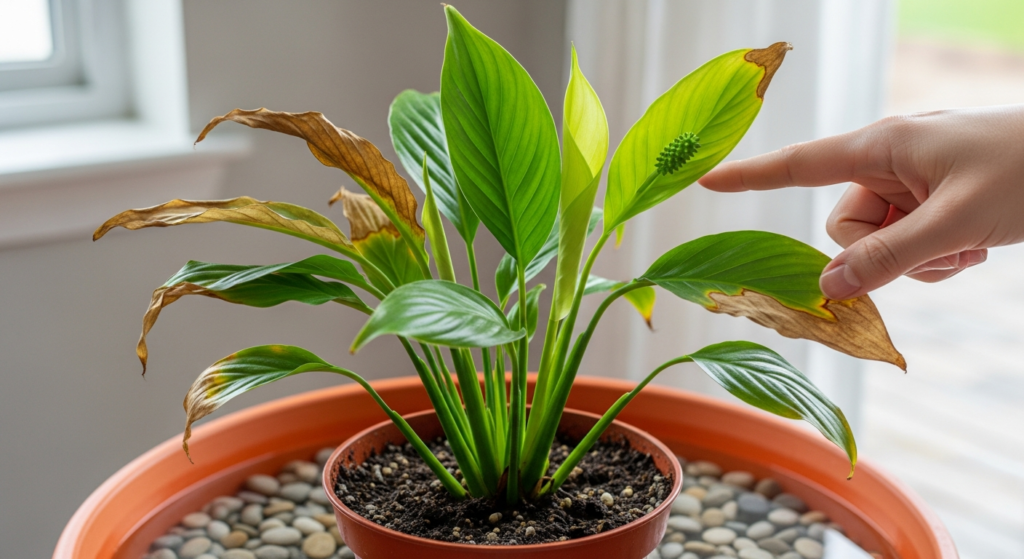
When I first started treating my peace lily’s brown leaves, I expected immediate results. That’s not how it works. Here’s the realistic timeline based on my experience:
| Time Period | What Happened |
|---|---|
| Week 1 | Adjusted water quality and humidity. No visible change yet. |
| Week 2-3 | Stopped watering with tap water, moved to better light. Brown leaves stayed brown but no new damage appeared. |
| Week 4-5 | First new leaf emerged completely green with no brown tips. |
| Week 6-8 | Plant produced three more healthy leaves. Started looking fuller. |
| Week 10-12 | First white bloom appeared after I started fertilizing lightly. |
The key insight: existing brown leaves won’t turn green again. You’re waiting for new growth to show your changes are working.
Should You Cut Off Brown Leaves?
I trim brown sections for cosmetic reasons, but it’s not required for the plant’s health. If the entire leaf is brown, cut it at the base. If only tips or edges are brown, trim just the brown part with clean scissors, following the natural leaf shape.
My approach to trimming:
- Wait until at least 50% of a leaf is brown before removing it
- Cut at an angle to match the leaf’s natural shape
- Sterilize scissors with rubbing alcohol between cuts
- Remove no more than 20% of the plant’s leaves at once
How to Trigger Blooming
Getting your peace lily to bloom again requires more than just fixing brown leaves. You need to meet all its needs consistently.
My Blooming Strategy
After addressing the brown leaf issues, I focused on creating conditions that encourage flowering. This took patience, but it worked.
Steps that brought back blooms:
- Provide adequate light – Moved to bright indirect light near an east window
- Maintain consistency – Watered on a regular schedule based on soil dryness
- Feed monthly – Used diluted liquid fertilizer (half strength) during growing season
- Keep humidity up – Maintained 50%+ humidity with pebble tray
- Be patient – Waited 10-12 weeks before seeing results
Fertilizing for Blooms
Peace lilies don’t need heavy fertilization, but they do need some nutrients to produce flowers. I use a balanced liquid fertilizer (20-20-20) diluted to half strength once a month from spring through early fall. I skip winter fertilizing entirely because the plant’s growth slows down.
Fertilizing mistakes I made:
- Using full-strength fertilizer (caused salt buildup and brown tips)
- Fertilizing dry soil (burned roots)
- Fertilizing in winter (plant didn’t need it)
What works better:
- Always water first, then fertilize
- Use half the recommended dose
- Fertilize only during active growth (spring and summer)
- Flush soil with plain water every few months
Troubleshooting Specific Situations
My Peace Lily Dropped All Its Leaves
This usually happens after severe underwatering. The plant goes into shock and drops leaves to conserve energy. If the roots and stems are still firm (not mushy), the plant can recover.
Cut back any dead stems, water thoroughly, and place in moderate light. New growth may appear in 4-6 weeks if the plant is still viable.
Brown Spots Appeared Suddenly
Sudden brown spots often mean cold damage, sunburn, or pest problems. Check for:
- Recent temperature drops
- New light conditions
- Tiny insects on leaf undersides (spider mites, scale, mealybugs)
I once found spider mites causing brown stippling on leaves. I wiped down all leaves with diluted neem oil solution and isolated the plant. The infestation cleared up in two weeks.
The Blooms Turned Brown Immediately
Peace lily flowers naturally turn from white to green to brown as they age. This process takes 4-6 weeks. If your blooms turn brown within days, check for:
- Ethylene gas from nearby fruit
- Extreme temperature changes
- Water stress during bloom development
I had blooms turn brown quickly when I kept bananas next to my plant. Ethylene from ripening fruit causes premature aging in flowers.
Room-by-Room Guide: Where Peace Lilies Thrive
Based on growing peace lilies in different rooms, here’s what I’ve learned:
| Room | Pros | Cons | Best For |
|---|---|---|---|
| Living room | Bright indirect light, stable temperature | Can be dry, far from water source | Display blooming plants |
| Bathroom | High humidity, easy watering | Often low light | Plants recovering from stress |
| Bedroom | Quiet growth space, stable temperature | May lack light | Smaller peace lilies |
| Kitchen | Easy access for care, good light | Temperature fluctuations from cooking | Not recommended |
My healthiest peace lily lives in the bathroom with a frosted window. The humidity stays naturally high, and the moderate light is perfect. It blooms more consistently than the one in my living room.
Common Myths About Peace Lilies
Myth 1: “Peace lilies clean the air significantly” While NASA’s study showed peace lilies can remove some toxins, you’d need dozens of plants to noticeably improve air quality. Don’t choose them for air purification—choose them because you enjoy them.
Myth 2: “They bloom year-round easily” Peace lilies bloom when conditions are right, usually once or twice per year. Constant blooming requires exceptional care and often commercial greenhouse conditions.
Myth 3: “Brown leaves mean the plant is dying” Brown leaves indicate stress, but peace lilies are resilient. Address the underlying cause and the plant will recover.
Myth 4: “They need very little light” They tolerate low light but won’t bloom or thrive long-term. They need bright indirect light for best health.
Long-Term Maintenance for Healthy Peace Lilies
Once your peace lily recovers, maintaining its health becomes easier. Here’s my routine:
Weekly tasks:
- Check soil moisture
- Wipe dust off leaves with damp cloth
- Rotate pot for even growth
Monthly tasks:
- Fertilize during growing season
- Inspect for pests
- Add water to humidity tray
Yearly tasks:
- Repot if roots are crowded (every 2-3 years)
- Flush soil with plain water to remove salt buildup
- Divide large plants if desired
Repotting Basics
I repot my peace lilies when roots start growing through drainage holes or when the plant needs watering every single day. This usually happens every 2-3 years.
My repotting process:
- Choose a pot 2 inches larger than the current one
- Use well-draining potting mix (I add perlite to standard mix)
- Water thoroughly the day before repotting
- Gently remove plant and shake off old soil
- Trim any black or mushy roots
- Plant at same depth in new pot
- Water lightly and place in moderate light for a week
Frequently Asked Questions
Can I save a peace lily with mostly brown leaves?
Yes, if the stems are firm and roots aren’t completely rotted. Trim dead leaves, address the underlying problem, and give the plant 6-8 weeks to produce new growth. I’ve revived peace lilies that looked nearly dead by fixing water quality and light conditions.
How long does it take for brown tips to go away?
Brown tips never turn green again. You’re waiting for new leaves to grow in healthy. With proper care, you’ll see new growth within 3-4 weeks, but it takes several months for the plant to look completely refreshed.
Why does my peace lily bloom green instead of white?
Peace lily flowers start white, fade to green, then turn brown as they age. This is normal. If blooms start green immediately, the plant may need more light or the “bloom” might actually be a new leaf (which emerges green).
Should I mist my peace lily daily?
Misting provides temporary humidity but isn’t as effective as a pebble tray or humidifier. I tried daily misting for a month and saw minimal difference compared to using a humidity tray. Save yourself the time and use a more lasting solution.
Final Thoughts
Fixing brown leaves on a peace lily isn’t about one quick solution. It’s about understanding what your specific plant needs and making small adjustments until you find the right balance.
My peace lily went from brown-edged and bloom-less to healthy and flowering by changing water quality, improving humidity, and repositioning for better light. The process took three months, but the results were worth it.
Start with the most obvious issue—usually water quality or humidity—and give your plant time to respond before making more changes. Watch the new growth, not the old damaged leaves. That’s where you’ll see progress.
Your peace lily can absolutely recover and bloom again. Mine did, and I’ve seen dozens of others do the same.
What’s the biggest challenge you’re facing with your peace lily right now? Drop a comment below and let’s figure it out together.