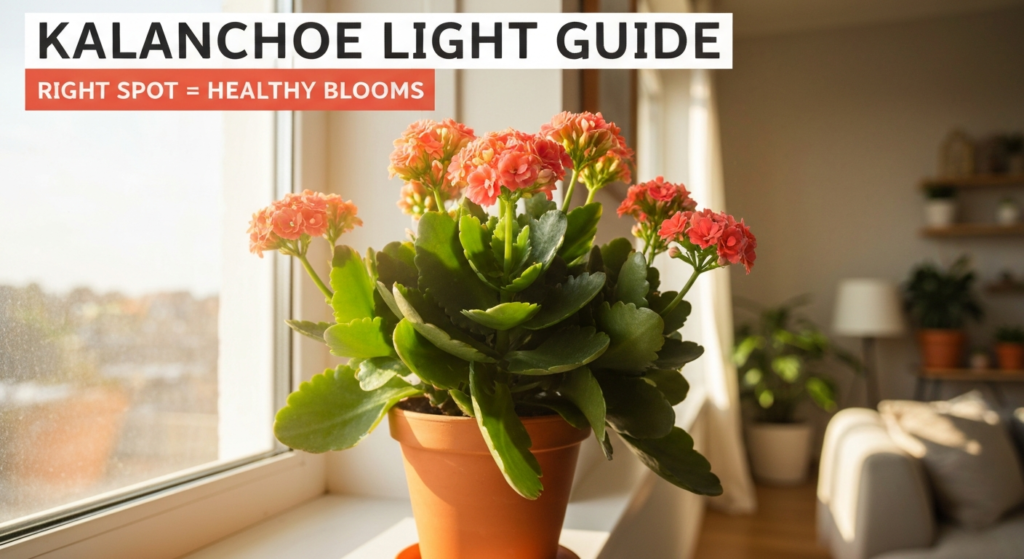

You bought a kalanchoe with bright flowers, but now it looks stretched and sad. The leaves feel mushy, or maybe the plant refuses to bloom again. You’re not alone—these issues pop up when kalanchoe sits in the wrong spot or gets the wrong care routine.
Here’s what’s happening: Kalanchoe needs specific light conditions to stay compact and produce flowers. Too little light creates tall, weak stems. Too much direct sun burns the leaves. Wrong watering drowns the roots. And if you miss the seasonal care shifts, those colorful blooms might never return.
This guide walks you through exactly where to place your kalanchoe, how to recognize and fix common problems, and what changes to make as seasons shift. By the end, you’ll know how to keep your plant compact, healthy, and blooming.
I’m Darcey Wren, and I’ve spent years testing how different indoor flowering houseplants respond to light, water, and seasonal changes. I started growing kalanchoe after watching my first plant stretch toward a dim window, and I’ve learned through trial and error what actually works. My goal is to share practical information that helps you avoid the mistakes I made early on.
Understanding Kalanchoe Light Requirements
Kalanchoe is a succulent native to Madagascar, where it grows in bright conditions with periods of direct sun. Indoors, it needs strong light to maintain its compact shape and trigger flowering.
The plant uses light for two purposes: daily photosynthesis and seasonal bloom signals. During active growth, it needs 4-6 hours of bright light each day. For flowering, it also responds to day length—shorter days in fall and winter tell the plant to form buds.
When light intensity drops below what the plant expects, it stretches upward searching for more. This process, called etiolation, creates long spaces between leaves. The stems become weak, and the plant loses its bushy appearance. I’ve seen kalanchoe triple in height over a few months when placed too far from a window.
Direct sun through glass can scorch the leaves, especially during summer afternoons. The fleshy leaves hold water, and intense heat causes brown or white patches that don’t heal. Finding the balance between enough light and protection from burns is the key to healthy growth.
Best Indoor Locations for Kalanchoe
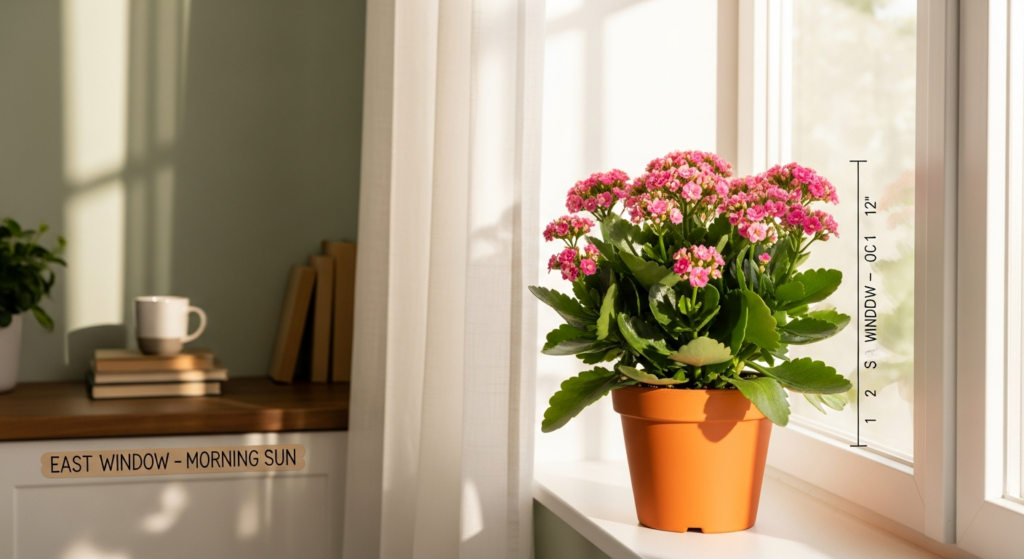
Place your kalanchoe near an east or west-facing window. East windows provide gentle morning sun that won’t burn the leaves, followed by bright indirect light for the rest of the day. West windows work well if you pull the plant back 1-2 feet during summer months when afternoon sun is strongest.
South-facing windows offer the most light, but you need to position the plant carefully. During winter, a south window works perfectly—the sun is lower and less intense. In summer, either move the plant 3-4 feet back from the glass or use a sheer curtain to filter the strongest rays.
North windows rarely provide enough light unless you live in a bright climate or the window is large and unobstructed. I tried growing kalanchoe in a north window once, and within six weeks, the stems had doubled in length with leaves spaced far apart.
Distance from the window matters more than most people realize. Light intensity drops quickly as you move away from glass. At 2 feet from a window, your plant receives about half the light it gets right at the glass. At 5 feet, it drops to roughly one-fifth.
| Window Direction | Best Season | Distance from Glass | Special Notes |
|---|---|---|---|
| East | Year-round | 0-1 feet | Morning sun is safe |
| West | Fall through spring | 1-2 feet | Pull back in summer |
| South | Winter only | 2-3 feet in summer | Use sheer curtain if needed |
| North | Not recommended | Directly at glass | Only works in very bright climates |
Recognizing and Preventing Leggy Growth
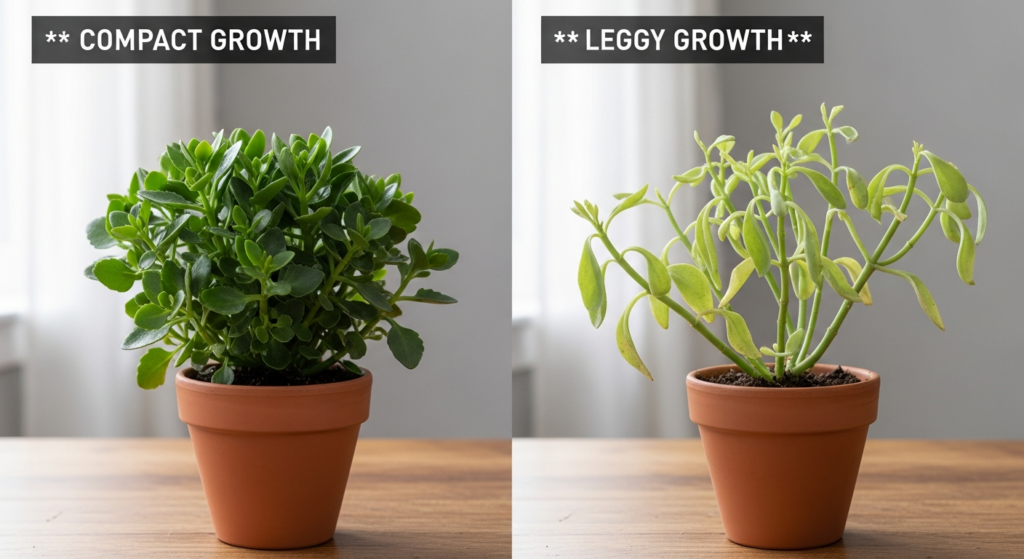
Leggy growth appears as stretched stems with large gaps between leaves. Instead of a compact, bushy plant, you get tall, weak stems that flop over. The leaves may also be smaller and paler than normal growth.
This happens when your kalanchoe doesn’t receive enough light intensity. The plant prioritizes height over leaf production, trying to reach better light conditions. Once stretching starts, it continues until you fix the light situation.
I moved a leggy kalanchoe from a dim corner to a bright east window. The stretched growth stayed stretched—those stems don’t shrink back. But new growth came in compact and healthy. After a few months, I pruned off the old leggy stems, and the plant looked full again.
Prevention is simple: watch the new growth. If you notice leaves spacing out or stems getting thin, move the plant closer to a window immediately. Don’t wait for severe stretching.
You can also rotate your plant every few days. This prevents one side from leaning toward the light while the other side stretches away from it. A quarter turn twice a week keeps growth even.
For plants that have already stretched, pruning helps. Cut stems back to 2-3 inches above the soil line. New shoots will emerge from the cut points and grow in compact if the light is strong enough. Do this in early spring when the plant enters its active growing phase.
Light Intensity Experiments: What Actually Works
I tested kalanchoe growth at different light levels using three identical plants. One sat directly in an east window, receiving morning sun and bright light. The second stayed 4 feet back from the same window. The third went in a west window with afternoon sun protection.
After three months, the differences were clear. The east window plant stayed compact with thick stems and dark green leaves. New growth appeared regularly, and the plant maintained its shape without any intervention.
The plant 4 feet back from the window showed moderate stretching. Leaves developed normally but with slightly longer gaps between them. The stems stayed reasonably strong, but the overall shape became less compact. This plant needed pruning to maintain appearance.
The west window plant (with afternoon shade) performed similarly to the east window plant. It received strong light for several hours daily without leaf burn. This confirmed that multiple window directions work if you adjust placement based on sun intensity.
I also tried using a light meter app to measure intensity. East windows in my space showed readings of 800-1200 foot-candles at peak morning hours. Four feet back, the reading dropped to 300-400 foot-candles. Kalanchoe stayed compact at 800+ foot-candles but stretched below 500.
These numbers help explain why placement matters so much. Your goal is to keep light levels above 500 foot-candles for most of the day. If you don’t have a light meter, just watch the plant’s response over 2-3 weeks.
Deadheading for Continuous Blooms
Deadheading means removing spent flowers before they form seeds. This redirects energy back into new bud formation instead of seed production. Kalanchoe can bloom for months if you deadhead regularly.
Wait until each flower cluster fades completely. The individual flowers will shrivel and turn brown. At this point, trace the flower stem down to where it meets the main plant. Cut the entire stem at this junction using clean scissors or pruning shears.
Don’t just pull off dead flowers—this can damage the stem and create entry points for disease. A clean cut heals faster and looks better.
Some kalanchoe varieties produce flowers in tight clusters at the stem tips. Others have flowers on individual stalks rising from the leaves. Regardless of type, the same rule applies: remove the entire spent flower structure at its base.
After deadheading, the plant typically takes 2-4 weeks to produce new buds if conditions are right. This requires adequate light, proper watering, and correct seasonal timing. Deadheading in summer may not trigger new blooms because the long days signal the plant to focus on leaf growth instead.
I deadhead my kalanchoe every 5-7 days during blooming season. This keeps the plant looking fresh and encourages the longest possible bloom period. One year, I deadheaded consistently from December through March and got nearly continuous flowers.
Identifying Overwatering Signs
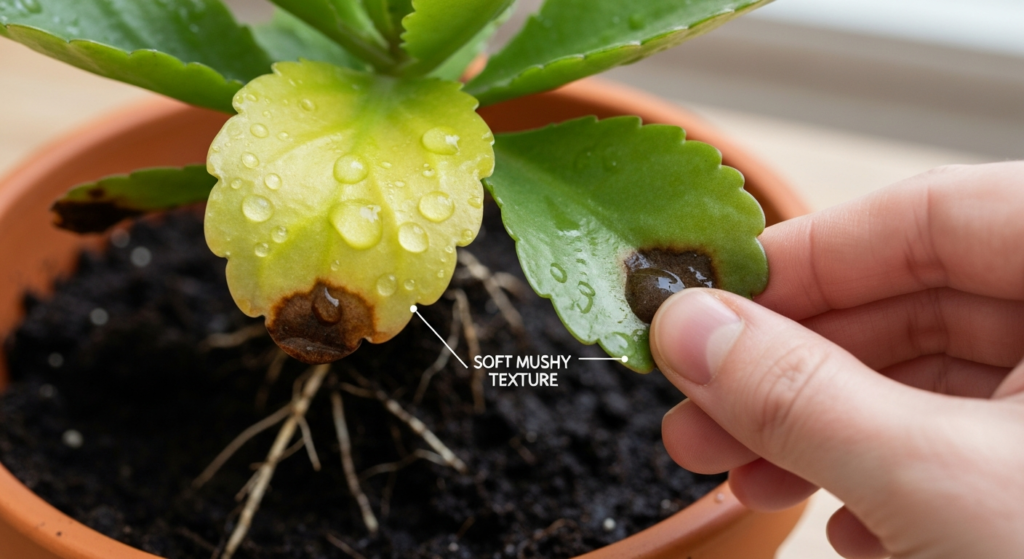
Overwatering kills more kalanchoe than any other problem. The symptoms start subtle but progress quickly to root rot.
Early signs include soft, mushy leaves that feel waterlogged when you touch them. The leaves may turn yellow or translucent, especially near the base. If you press a leaf gently, it might collapse or leak water.
Stems can also become soft at the soil line. When you wiggle the plant gently, an overwatered kalanchoe feels loose in its pot because the roots have started breaking down.
The soil stays wet for days or even weeks after watering. Healthy soil dries within 3-7 days depending on pot size and conditions. If your soil remains dark and damp for longer, you’re either watering too often or the soil doesn’t drain well.
Black or brown spots on leaves sometimes indicate rot spreading from the roots upward. These spots feel wet and may have a slight odor. Once rot reaches the leaves, saving the plant becomes difficult.
I overwatered a kalanchoe by watering on a schedule instead of checking soil moisture. Within two weeks, three leaves turned yellow and felt squishy. I stopped watering immediately, removed the affected leaves, and let the soil dry completely. The plant survived but took months to fully recover.
Prevention is better than treatment. Always check soil moisture before watering. Stick your finger 1-2 inches into the soil—if it feels even slightly damp, wait. Kalanchoe tolerates dry conditions far better than wet ones.
| Symptom | What It Means | Action Needed |
|---|---|---|
| Soft, mushy leaves | Water-logged tissue | Stop watering, remove affected leaves |
| Yellow leaves at base | Early root stress | Let soil dry completely |
| Loose plant in pot | Root rot progressing | Check roots, may need repotting |
| Soil wet for 10+ days | Poor drainage or too frequent watering | Improve drainage, water less often |
| Black spots on leaves | Advanced rot | Remove infected parts, treat with fungicide if needed |
Proper Watering Technique
Kalanchoe stores water in its leaves and stems, making it drought-tolerant. Water deeply but infrequently—this mimics its natural habitat where rain comes in spurts followed by dry periods.
Wait until the top 2 inches of soil feel completely dry. In most homes, this means watering every 7-14 days depending on pot size, soil type, temperature, and humidity. Smaller pots dry faster than large ones.
When you water, pour slowly until water runs from the drainage holes. This ensures the entire root zone gets moisture. Let all excess water drain away—never leave the pot sitting in a saucer of water.
Empty the drainage tray 15-30 minutes after watering. Roots sitting in standing water can’t access oxygen and will rot. This is especially important for kalanchoe because its roots are adapted to well-drained, airy conditions.
Temperature and light affect watering frequency. Plants in bright, warm spots use water faster than those in cooler, dimmer areas. During summer, you might water every 7-10 days. In winter, you might water every 14-21 days.
I use the finger test every time before watering. Push your finger straight down into the soil near the pot edge. If you feel any coolness or dampness in the top 2 inches, wait another 2-3 days and check again. This simple test has prevented countless overwatering issues for me.
Spring vs. Winter Care Differences
Kalanchoe follows natural seasonal patterns that affect growth and flowering. Understanding these patterns helps you adjust care throughout the year.
Spring (March-May) marks the end of the blooming period and the start of active growth. Days lengthen, temperatures rise, and the plant shifts energy to producing new leaves and stems. Increase watering frequency as the plant uses more water for growth. You can also fertilize monthly with a balanced, diluted fertilizer during this period.
Summer (June-August) brings the longest days. Kalanchoe focuses on vegetative growth and typically won’t bloom during these months. The plant may need watering more frequently due to heat and stronger light. Watch for signs of sun stress if your plant is in a south or west window—leaves may develop brown edges if light is too intense.
Fall (September-November) triggers bloom preparation. As days shorten, kalanchoe begins forming flower buds. This is when day length becomes important. The plant needs 12-14 hours of darkness each night to initiate flowering. Reduce watering slightly as growth slows. Don’t fertilize after September—excess nutrients can prevent blooming.
Winter (December-February) is prime blooming season. The plant produces colorful flowers that last for weeks or months with proper deadheading. Water less frequently because cooler temperatures and lower light reduce water use. This is when your placement near a bright window matters most—winter sun is less intense, so you can keep the plant closer to glass without burn risk.
| Season | Primary Activity | Watering Frequency | Fertilizer | Light Needs |
|---|---|---|---|---|
| Spring | Active growth | Every 7-10 days | Monthly, diluted | Bright, watch for stretch |
| Summer | Vegetative growth | Every 5-10 days | Monthly, diluted | Bright, protect from intense afternoon sun |
| Fall | Bud formation | Every 10-14 days | Stop after September | Bright, ensure 12-14 hours darkness |
| Winter | Blooming | Every 14-21 days | None | Bright, can tolerate more direct sun |
Troubleshooting Common Problems
Plant won’t bloom: Check day length first. Kalanchoe needs long nights to form buds. If your plant sits near artificial lights that stay on in the evening, it thinks days are still long. Move it to a room that gets naturally dark at night, or cover it with a box for 14 hours daily starting in September.
Age also matters. Young kalanchoe under six months old rarely bloom. If you propagated from cuttings, give the plant time to mature. Also check your fertilizer—too much nitrogen promotes leaves instead of flowers. Switch to a low-nitrogen fertilizer or stop fertilizing entirely in fall.
Leaves turning brown at tips: This usually indicates low humidity or salt buildup from tap water or fertilizer. Kalanchoe tolerates dry air better than most houseplants, but extremely low humidity (below 20%) can cause tip browning.
Flush the soil with distilled water every few months to remove salt accumulation. Water until it runs freely from drainage holes, then water again 30 minutes later. This pushes salts out of the root zone.
Plant falling over: Leggy growth from insufficient light makes stems too weak to support the plant’s weight. Move to brighter light and stake if needed. Prune back leggy stems to encourage compact new growth. Sometimes top-heavy plants need repotting into wider, more stable containers.
Leaves dropping: Sudden leaf drop often signals shock from temperature changes, drafts, or dramatic watering shifts. Kalanchoe prefers stable conditions. Keep it away from heating vents, air conditioners, and drafty windows. When you do change care routines, make adjustments gradually over days rather than all at once.
White, cottony spots on leaves: This is mealybugs, a common succulent pest. Dab affected areas with rubbing alcohol on a cotton swab. For heavy infestations, spray the entire plant with neem oil or insecticidal soap, making sure to cover leaf undersides where pests hide. Repeat treatment weekly for three weeks.
Repotting and Soil Considerations
Kalanchoe grows slowly and rarely needs repotting more than once every 2-3 years. Repot when roots grow through drainage holes or when the plant becomes top-heavy and unstable.
Choose a pot only one size larger than the current container. Kalanchoe prefers slightly cramped conditions—too much soil stays wet too long and increases rot risk. The new pot must have drainage holes.
Use a well-draining soil mix. Standard potting soil retains too much moisture. I mix regular potting soil with perlite or coarse sand at a 1:1 ratio. You can also use commercial cactus and succulent mix, which is formulated for plants that need fast drainage.
The best time to repot is early spring, right before the growing season starts. This gives roots time to establish in fresh soil before winter dormancy.
Gently remove the plant from its old pot. Shake off loose soil and inspect the roots. Healthy roots are white or tan and firm. Black, mushy roots indicate rot—cut these away with clean scissors. If more than half the roots are damaged, the plant may not survive.
Place the plant at the same depth it grew in the old pot. Fill around the roots with fresh soil mix, tamping lightly to remove air pockets. Water lightly after repotting, then wait 7-10 days before watering again. This gives any damaged roots time to heal before facing moisture.
Frequently Asked Questions
Can kalanchoe survive in low light?
Kalanchoe survives in low light but won’t thrive or bloom. It will stretch toward available light, creating leggy growth with weak stems. For healthy, compact growth and regular flowering, provide bright light from an east or west window. If you only have low-light spaces, consider using a grow light positioned 12-18 inches above the plant for 10-12 hours daily.
How do I know if my kalanchoe is getting too much sun?
Too much direct sun causes brown, crispy patches on leaves that feel dry and papery. The patches typically appear on the side facing the window. Leaves may also develop a reddish or bronze tint as a stress response. If you see these signs, move the plant back from the window or provide afternoon shade with a sheer curtain.
Why did my kalanchoe stop blooming after the first time?
Kalanchoe needs specific conditions to rebloom: at least 12 hours of darkness nightly for 6-8 weeks, adequate light during the day, and no fertilizer during fall. Many people give up after the first bloom cycle without realizing they need to recreate the short-day conditions that trigger flowering. Start the darkness period in late September for winter blooms.
Is it normal for kalanchoe leaves to feel soft?
Healthy kalanchoe leaves feel thick and firm with some give, similar to a grape. Truly soft, mushy leaves that collapse when pressed indicate overwatering. Slightly softer leaves that firm up after watering are normal—this means the plant used its stored water and needs a drink. Learn your plant’s normal texture when properly watered so you can spot problems early.
Final Thoughts
Finding the right spot for your kalanchoe changes everything. That east or west window with bright light keeps stems compact, leaves healthy, and flowers coming back year after year. The plant tells you what it needs—stretched stems mean more light, mushy leaves mean less water, missing blooms mean longer nights in fall.
Start by checking your current setup. Is your kalanchoe within 2 feet of a bright window? Does the soil dry out between waterings? Is the plant exposed to natural darkness at night during fall and winter? Fix these basics first, and most problems resolve themselves.
I’ve killed kalanchoe by ignoring these fundamentals, and I’ve kept them blooming for years by following them. The plant is forgiving if you pay attention and adjust when something looks off. Watch the new growth, feel the soil, and notice how seasonal changes affect your plant. That awareness makes all the difference.
What challenges are you facing with your kalanchoe right now? Drop a comment below—I’d like to hear what’s working or what problems you’re troubleshooting.